•
•
•
•
•
•
•
•
•
•
•
•
•
•
•
•
•
•
•
•
•
•
•
•
•
•
•
•
•
•
•
•
•


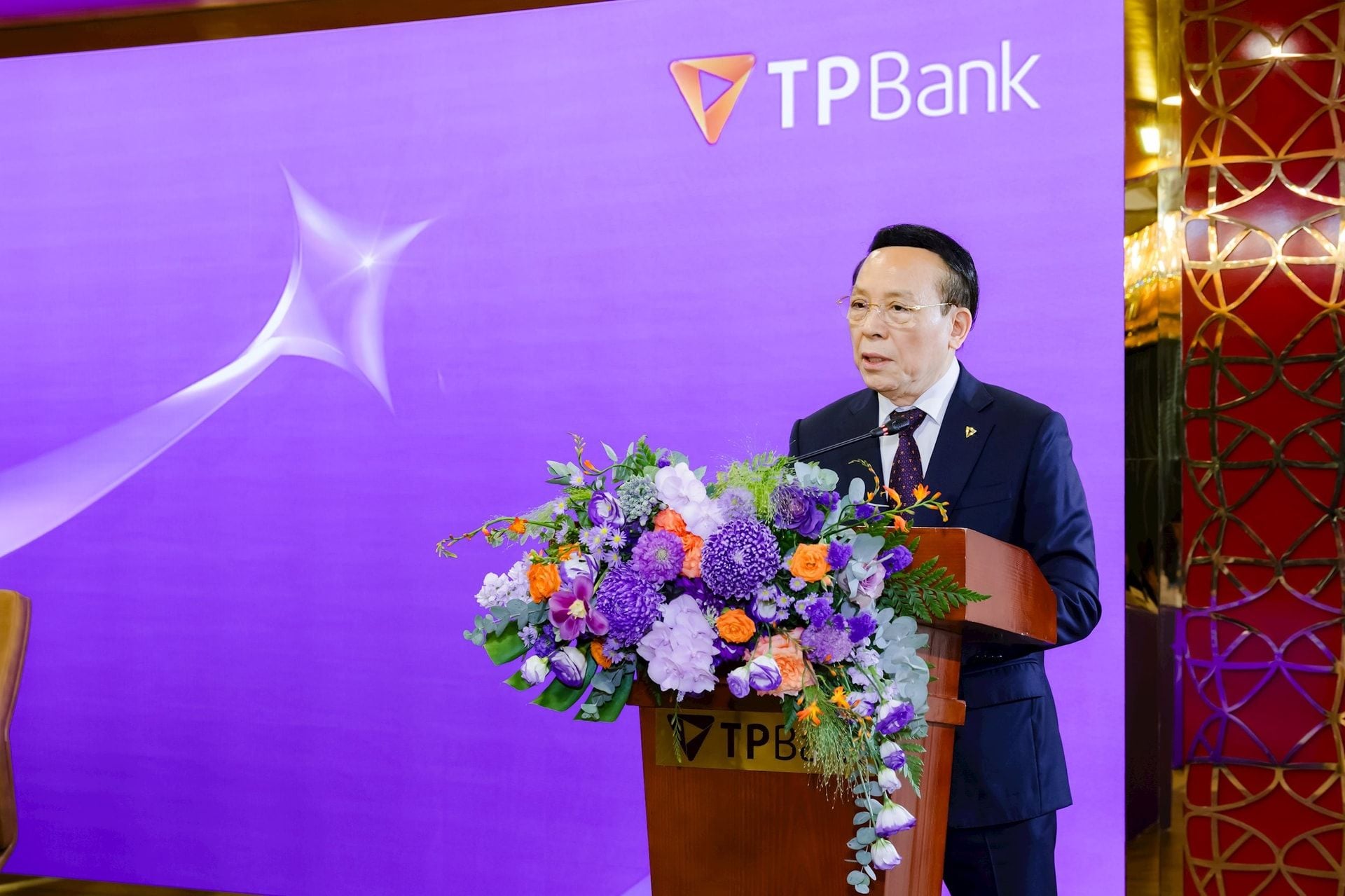
TPBank’s 2026 Annual General Meeting (AGM) focused on how the bank plans to execute its strategy and strengthen governance amid a tight credit environment. Chairman Do Minh Phu described the operating context through three metaphors: a “narrow blanket” for limited credit room, a “compass” for disciplined governance, and a “ship crossing the oceans” to reflect the need for effective execution.
Phu said TPBank aims to grow loans by about 15% in 2026, aligned with banking sector guidance. The bank is classified as an A-bank by the State Bank of Vietnam, with an overall rating above 4 out of 5. Under the rating formula, the credit growth cap is about 11.7%.
He emphasized that the challenge is not only the total growth figure, but also the timing and allocation of growth across the year. In Q1, the bank could use at most 25% of its credit limit, equivalent to about 2.8%.
“I liken this to a blanket that is not wide enough; pull it up and your feet are uncovered; pull it down and your feet get cold. Therefore, management must be highly flexible to ensure growth while controlling risk,” Phu said.
Pressure increased at the start of 2026 due to carryover effects from late 2025, when many banks had already used up their credit room, leaving some customers waiting until the next year. In addition, a rule limiting growth to 25% of the credit limit in Q1 raised governance complexity.
“We have to tighten our approach—meet customer demand for capital while obeying the limits,” Hung said.
Beyond overall credit room, TPBank said real estate-related lending remains constrained. 2026 guidance requires that credit growth tied to real estate—including corporate lending and home loans—must grow slower than the bank’s overall credit growth.
Hung noted the difficulty: “That is a tough point, given ongoing demand for real estate funding but capital is being constrained to prioritize production and business activities.”
In 2025, industry credit growth was about 19%, while TPBank’s was about 18%. For 2026, central bank guidance is around 15%, and TPBank targets roughly that level. Hung added that the actual figure could be lower due to macroeconomic and geopolitical uncertainties.
By end of Q1, TPBank’s credit growth was around 2.8%, close to the Q1 cap. In Q2, the bank expects more room to grow in the absence of new regulatory constraints, though credit to real estate will remain restricted.
Phu said governance discipline is the “compass” for volatile periods. He highlighted key areas including resource management (human, material, and financial), asset management, data governance, and risk management.
TPBank described itself as a data-driven organization, saying data must be accurate, complete, clean, shared, and controlled. Phu also stressed that governance requires a strong “crew,” including the board of directors, executive management, supervisory board, and staff.
On technology and AI, the bank said it views AI as a tool to replace only routine tasks, rather than human roles. It also said AI use must align with ethics, noting that nations are expected to regulate AI to prevent misinformation or harmful impacts. TPBank’s internal rules require that employees not rely on AI to do all their jobs; AI assists while humans retain final responsibility.
The bank also said customer experience cannot be fully automated, and that personalization remains essential. TPBank serves about 17 million customers, which it frames as trust and relationships rather than just numbers.
Phu said 2026 will be challenging as follow-up targets are “bolder.” TPBank aims for consolidated pre-tax profit of 10,300 billion VND, up 12%, and retail pre-tax profit of 10,000 billion VND, up 10% from 2025.
If achieved, TPBank would join the group of banks with double-digit pre-tax profits, a milestone referred to in the bank’s internal language as “lãi vạn tỷ.”






Premium gym chains are entering a “golden era” that is ending or already in decline, as rising operating costs collide with shifting consumer preferences toward more flexible, community-based ways to exercise. Long-term memberships are shrinking, margins are pressured by higher rents and facility expenses, and competition from smaller, more personalized…