•
•
•
•
•
•
•
•
•
•
•
•
•
•
•
•
•
•
•
•
•
•
•
•
•
•
•
•
•
•
•
•
•


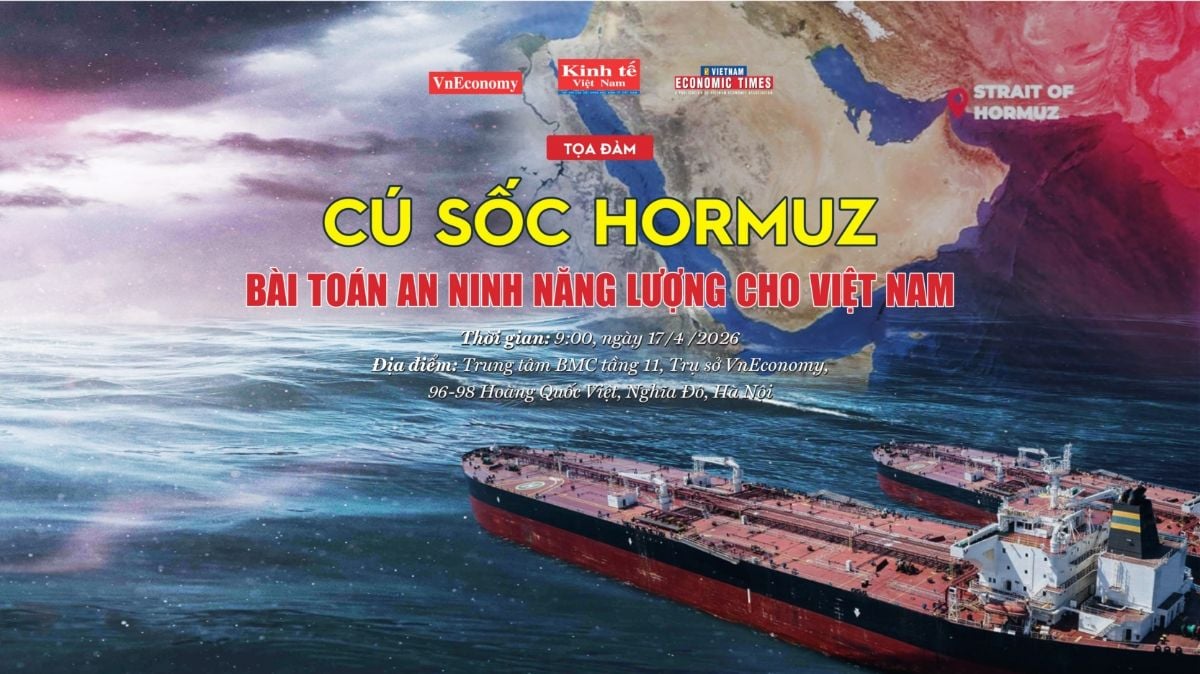
Conflict in the Middle East, particularly involving Iran, is not only a geopolitical dispute but also a direct threat to disrupt energy supplies. Crude oil prices are volatile, shipping routes are being disrupted, and energy security concerns are becoming more tangible. With a highly open economy and a strong recovery, Vietnam cannot be outside this risk environment.
Vietnam has taken a major step toward energy security by becoming self-sufficient for about 70-75% of its gasoline and diesel supply. However, in a globalized market, no country is an “oasis.” Vietnam’s continued need to import millions of tons of crude oil each year means domestic fuel prices cannot be fully decoupled from global price movements.
The article raises key questions about where Vietnam stands on the global energy-risk map and how it can ensure the continuity of domestic fuel flows in the face of external shocks.
To clarify these issues, Vietnam Economic Times / VnEconomy will host a panel titled “Hormuz shock: The energy-security challenge for Vietnam.”
The panel will focus on:
The panel will feature experts:
Panel moderator: Journalist Ngo Xuan Vu, Deputy Secretary General of Vietnam Economic Times / VnEconomy.
Readers are invited to follow the panel “Hormuz shock: The energy-security challenge for Vietnam.” The discussion will be livestreamed on VnEconomy.vn and the VnEconomy FanPage at 9:00 on 17 April 2026.





Premium gym chains are entering a “golden era” that is ending or already in decline, as rising operating costs collide with shifting consumer preferences toward more flexible, community-based ways to exercise. Long-term memberships are shrinking, margins are pressured by higher rents and facility expenses, and competition from smaller, more personalized…




