•
•
•
•
•
•
•
•
•
•
•
•
•
•
•
•
•
•
•
•
•
•
•
•
•
•
•
•
•
•
•
•
•


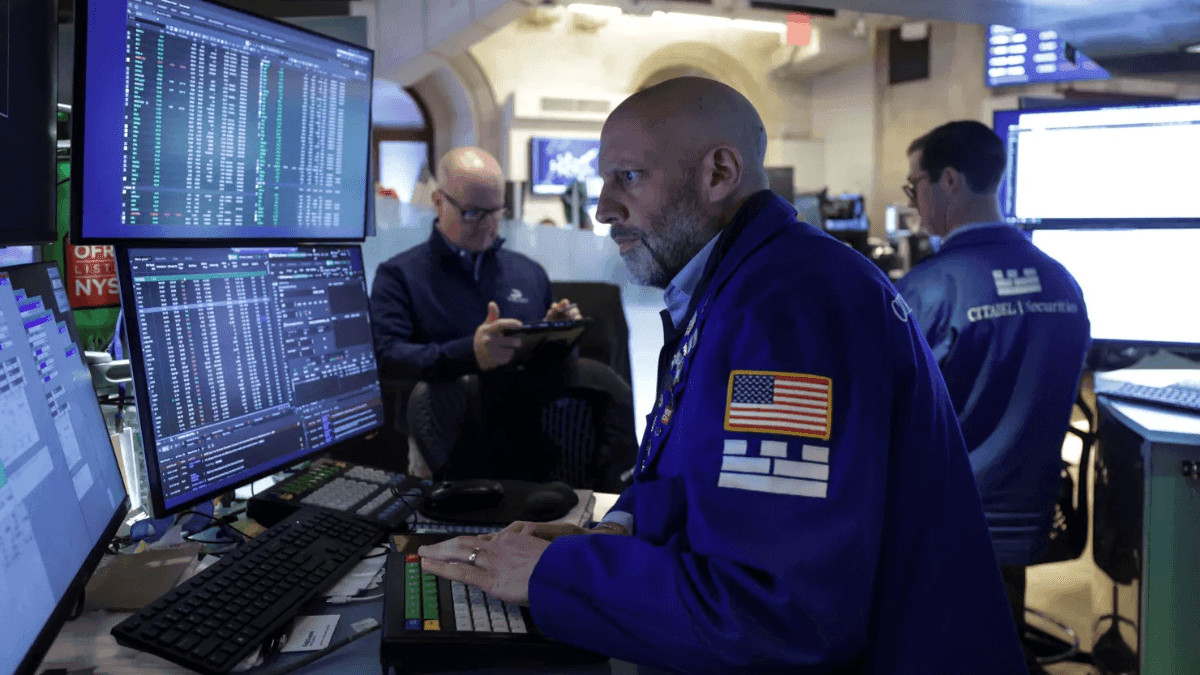
U.S. stocks slipped from intraday highs on Thursday as some technology shares fell sharply and oil prices surged, renewing inflation concerns. Uncertainty tied to the U.S.–Iran conflict continued to weigh on investors, even as major indices had been reaching new record levels in recent sessions.
At the close, the S&P 500 fell 0.41% to 7,108.4. The Nasdaq Composite declined 0.89% to 24,438.5. The Dow Jones Industrial Average dropped 179.71 points, or 0.36%, to 49,310.32.
During the session, both the S&P 500 and Nasdaq posted intraday records. The indices had closed at record highs on Wednesday.
A sharp decline in software stocks weighed on the broader market. IBM fell 8%, while ServiceNow dropped about 18% after both companies reported first-quarter 2026 results.
IBM posted revenue and earnings above forecasts but kept full-year guidance, which disappointed investors. For ServiceNow, renewal revenues growth was weaker due to the impact of the Middle East conflict.
Other software-related names also declined, including Microsoft down 4%, Palantir down more than 7%, and Oracle down about 6%.
Some analysts said the market’s rebound since March—supported by war-related optimism—has been strong enough that pullbacks are expected. Chris Kampitsis, a portfolio manager at Barnum Financial Group, said the market is trying to stabilize after the March bottom and is likely to remain range-bound in the near term as investors wait for the next catalyst. He added that the market has become less sensitive to war-related news, though the conflict still exerts pressure on Wall Street stocks.
In the Strait of Hormuz, the stalemate remains unresolved. Iran continues to require ships to obtain permission to pass through the strait. Iranian state media broadcast a video on Thursday showing Iranian special forces attacking a large cargo vessel in Hormuz.
Separately, President Donald Trump said the United States had gained “full control” of the waterway, and that ships would need to be cleared by the U.S. Navy to pass through Hormuz. In a Truth Social post, Trump ordered the Navy to “shoot down any vessel” that lays mines in Hormuz.
Israel’s defense minister said Jerusalem is waiting for the U.S. to greenlight a resumption of hostilities against Iran. Israeli Channel 12 also reported that Iran’s top negotiator, Parliament Speaker Mohammad Bagher Ghalibaf, had resigned amid IRGC interference. The report was described as unconfirmed, but the possible involvement of the IRGC raised concerns that Tehran could take a tougher line in talks with the U.S.
Oil prices climbed. Brent crude in London rose about 3% to close at $105.07 per barrel, while WTI crude in New York rose about 3% to close at $95.85 per barrel.
After market close on Thursday, Trump said Israel and Lebanon had agreed to extend the ceasefire by three weeks following a White House meeting with Israeli and Lebanese officials mediated by the United States. The extension provides additional time for diplomatic measures as the ceasefire—initially set for 10 days last week—approaches expiration.
U.S. stocks have recovered in recent weeks on optimism that the U.S. and Iran will eventually reach an agreement to end the conflict, and expectations for solid first-quarter results have also supported the market.
Among the 123 S&P 500 member companies that had reported first-quarter results so far, more than 82% delivered profits above expectations, with an average earnings growth of 15.6%.





Premium gym chains are entering a “golden era” that is ending or already in decline, as rising operating costs collide with shifting consumer preferences toward more flexible, community-based ways to exercise. Long-term memberships are shrinking, margins are pressured by higher rents and facility expenses, and competition from smaller, more personalized…




