•
•
•
•
•
•
•
•
•
•
•
•
•
•
•
•
•
•
•
•
•
•
•
•
•
•
•
•
•
•
•
•
•


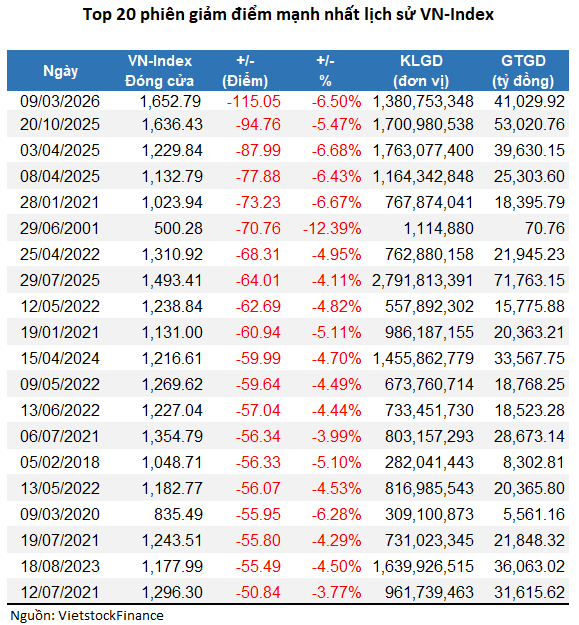
Stocks posted a record decline as the energy shock hit markets. The VN-Index fell a record 114.4 points in the morning session on March 9, 2026, the first reaction to the oil price shock. By the close, the VN-Index declined 115.05 points (6.51%) to 1,652.79, while the HNX-Index dropped 18.28 points (7.21%) to 235.36. Market breadth showed the bears dominating with 857 decliners versus 66 gainers, marking the largest point drop in the VN-Index in Vietnam’s market history.
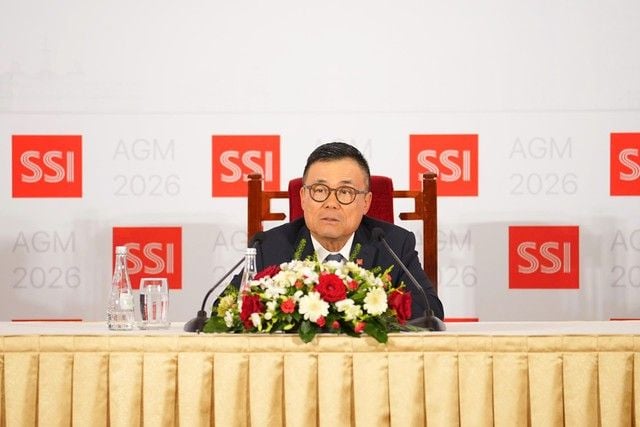
With selling pressure building, SSI Chairman Nguyen Duy Hung posted on his personal Facebook, asking whether the oil-driven “oil shock” would push the market into panic. Market participants remained cautious ahead of further global developments.
Nguyen The Minh, Head of Macro-Research and Personal Client Development at Yuanta Vietnam, said regional tensions had pushed oil above $100 per barrel, creating a substantial near-term shock. If oil remains above $100 in the coming weeks, U.S. inflation could re-accelerate above 3%, complicating the Fed’s path to rate cuts.
Minh added that the sharp drop was driven largely by market psychology and panic. He said the worst-case scenario seen in 2022—triggered by a combination of housing market stress, the Ukraine war, high inflation, and aggressive Fed tightening—seems unlikely to recur. In his view, the 2026 environment is shaped mainly by geopolitical tensions.
Minh noted there have been 12 instances of Middle East geopolitical tensions, with conflicts typically intensifying in the first 1–2 weeks and cooling from the third week onward. He said such shocks are usually short-term, taking about a month for markets to regain balance.
Tran Duc Anh, Macro-Economy and Market Strategy Director at KB Vietnam (KBSV), warned that a protracted conflict—keeping oil elevated—could cause meaningful economic damage. He cited inflation pressures and currency volatility that could drive interest rates higher and amplify the impact of prior rate hikes. He also pointed to potential supply disruptions of gasoline and supply-chain interruptions affecting production and exports to the Middle East.
In a worst-case scenario, the Vietnamese stock market could fall 20–25% from the previous peak before a recovery.
Experts advised prioritizing risk management. Nguyen The Minh emphasized reducing margin risk to avoid forced liquidations that could rapidly erode portfolios. If cash is available, he said deploying it to lower leverage rather than panicking into sales is advisable.
He also suggested that if investors own shares with their own capital and the position is safe, they should hold and wait for signs of a new market trend, avoiding indiscriminate panic selling. He recommended waiting for favorable signals before averaging down.
Duc Anh recommended limiting margin use and maintaining moderate stock exposure. He cautioned against bottom-fishing at present and said investors should wait for clearer positive signals, such as the reopening of key chokepoints like Hormuz.
Premium gym chains are entering a “golden era” that is ending or already in decline, as rising operating costs collide with shifting consumer preferences toward more flexible, community-based ways to exercise. Long-term memberships are shrinking, margins are pressured by higher rents and facility expenses, and competition from smaller, more personalized…