•
•
•
•
•
•
•
•
•
•
•
•
•
•
•
•
•
•
•
•
•
•
•
•
•
•
•
•
•
•
•
•
•


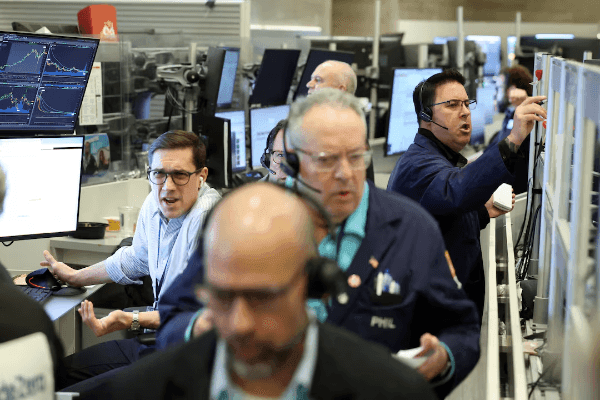
U.S. stock markets fell again on Thursday, March 5, as intensifying conflict in the Middle East pushed crude oil prices sharply higher. Since the conflict began, oil prices have risen more than 20%, raising concerns about inflation and slower economic growth, which weighed on equities.
At the close, the Dow Jones Industrial Average dropped 784.67 points, or 1.61%, to 47,954.74. The S&P 500 fell 0.56% to 6,830.71, while the Nasdaq Composite declined 0.26% to 22,748.99.
The Dow led the declines as investors sold blue-chip stocks including Boeing and Caterpillar, citing fears they could be hit hardest if the global economy slows.
U.S. WTI crude rose above $80 per barrel during the session, the highest level since July 2024, after reports that Iran fired missiles at a tanker.
Oil-price volatility kept U.S. stock indices choppy throughout the day. When WTI hit $80, the Dow was down about 1,000 points; at the session trough it fell as much as 1,100 points, or roughly 2.4%. The Nasdaq and S&P 500 were down about 1.4% at their lows.
Oil developments have been the primary focus for investors on Wall Street. After oil steadied on Wednesday—helping the Dow rebound by more than 200 points—losses reversed later on Thursday.
This week, WTI crude has risen more than 20% and Brent crude has gained 18% in line with the escalation involving the United States, Israel, and Iran. Both benchmarks were on track for their strongest weekly gains since March 2022, when the Russia-Ukraine war began.
At Thursday’s close, NYMEX WTI crude futures rose by $6.35 to $81.01 per barrel, up 8.51%—the largest daily gain for the contract since May 2020. Brent futures settled at $85.41 per barrel, up $4.01, or 4.93%.
Alongside oil, U.S. average regular gasoline prices increased by $0.27 per gallon this week to $3.25, according to AAA. The last time gasoline prices rose at a similar pace was in March 2022.
Iranian Foreign Minister Abbas Araghchi said on March 5 that Iran “does not seek a cease-fire” from the U.S. and Israel and “we see no reason to negotiate,” suggesting tensions may not ease soon.
CFRA Research strategist Sam Stovall said investors are questioning whether the U.S. has gone too far in its confrontation with Iran. He cited concerns about whether the U.S. can escort all ships through the Hormuz Strait, what obligations the U.S. is taking on, and how that could affect U.S. debt levels.
On Wednesday, concerns about disruptions to oil flows from the Middle East eased after President Donald Trump said the U.S. was prepared to provide insurance and escort ships moving through the Gulf to ensure safe passage through the Hormuz. The White House has not provided a timeline for that assurance.
Berkshire Hathaway shares were among the few gainers on Thursday, rising more than 2%, after the conglomerate announced it would begin repurchasing its shares for the first time since 2024. CEO Greg Abel, who assumed the top executive role earlier this year, purchased about $15 million of the firm’s stock since the start of the year.







Premium gym chains are entering a “golden era” that is ending or already in decline, as rising operating costs collide with shifting consumer preferences toward more flexible, community-based ways to exercise. Long-term memberships are shrinking, margins are pressured by higher rents and facility expenses, and competition from smaller, more personalized…




