•
•
•
•
•
•
•
•
•
•
•
•
•
•
•
•
•
•
•
•
•
•
•
•
•
•
•
•
•
•
•
•
•



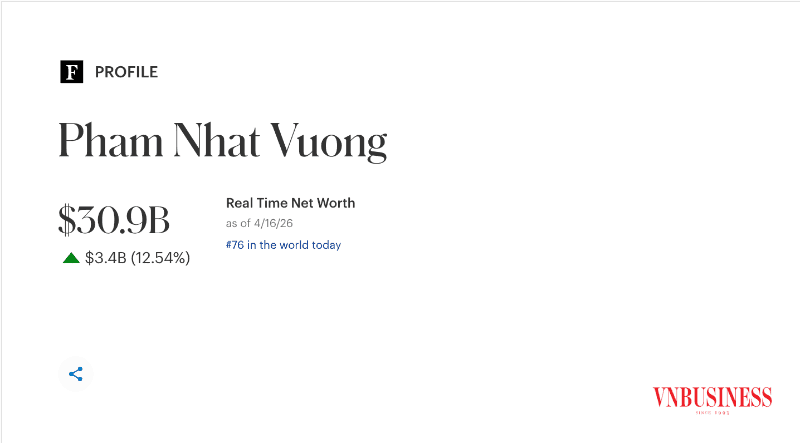
Trading session on April 16 continued the momentum after VN-Index surpassed the 1,800-point level, though many investors remained less bullish. The rally was driven mainly by VIC and the VinGroup group, while market breadth was clearly skewed to declines. The number of declining stocks exceeded advances, signaling a 'green on the outside, red inside' situation. The market's focus remained on the Vin group, especially VIC. The stock surged to the ceiling at 189,300 dong per unit, hitting a new all-time high and extending a sharp rally in a short period. Since the end of March, VIC had risen about 50%, becoming the key leader of the VN-Index. Moreover, VIC contributed more than 20 points. Not only VIC; peers VHM, VPL, and VRE also rose, forming an almost absolute pull on the index. VIC alone contributed over 20 points, while the VIC-VHM-VPL trio added nearly 28 points to the VN-Index. This explains why the index rose strongly even though most stocks declined. VIC's rally lifted market capitalization as well. At current prices, Vingroup's market cap approached 1.5 quadrillion dong, the highest ever. Forbes also noted Pham Nhat Vuong's wealth at about $30.9 billion, ranking 76th in the world. However, behind the halo of the group's leadership, the market faced a broad profit-taking pressure. Many hot sectors such as oil and gas, steel, and even parts of real estate turned lower. Even the banking and securities sectors, which had led the earlier recovery, could not maintain leadership. The VN30 basket saw 18 declines and 11 gains. Notable stocks like GVR, PLX, SSB, FPT, CTG fell. Notably, foreign investors continued to pull a net sale of over 1,100 billion dong, focusing on large-cap stocks like FPT and VHM. While they remained net buyers of VIC, overall foreign selling added pressure on sentiment. At the close, VN-Index rose 19.18 points (1.07%) to 1,819.83. HNX-Index up 3.77 points to 256.49. UPCoM-Index down 0.63 points to 128.22. Liquidity improved with more than 27,800 billion dong traded on HoSE.




Premium gym chains are entering a “golden era” that is ending or already in decline, as rising operating costs collide with shifting consumer preferences toward more flexible, community-based ways to exercise. Long-term memberships are shrinking, margins are pressured by higher rents and facility expenses, and competition from smaller, more personalized…