•
•
•
•
•
•
•
•
•
•
•
•
•
•
•
•
•
•
•
•
•
•
•
•
•
•
•
•
•
•
•
•
•


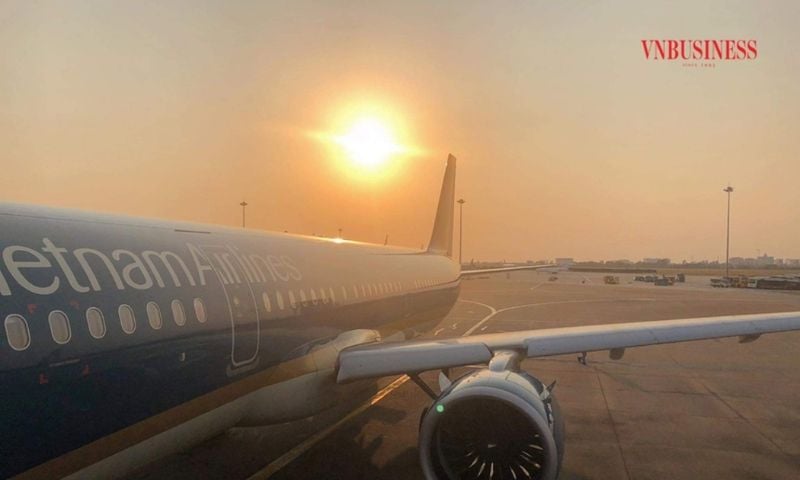
Vietnam Airlines reported solid operating and financial results for the first quarter of 2026, supported by a rebound in international demand and continued efforts to optimize flight scheduling and control costs.
In the quarter, the Vietnam Airlines group operated nearly 43,000 flights and served over 6.9 million passengers, up 11% and nearly 12% year over year, respectively. During the peak Tet period in 2026, flight frequency at times reached 660–670 per day, up more than 13% year over year.
Consolidated revenue for Q1 2026 exceeded 37.5 trillion VND, with after-tax profit of 4.514 trillion VND. The parent company recorded revenue of over 29.5 trillion VND and after-tax profit of 3.948 trillion VND.
The airline attributed the results to improving international demand and flexible operations. It also continued expanding its international network, with output up 28.6% year over year. Vietnam Airlines currently operates 11 direct routes to Europe using widebody aircraft including the A350 and Boeing 787.
Looking ahead, the carrier plans to launch the Hanoi–Amsterdam route from June 16 and increase the Hanoi–Moscow frequency to four flights per week from July.
Vietnam Airlines signed contracts to purchase 50 Boeing 737-8 aircraft to support fleet modernization over the medium and long term.
Management cautioned that the aviation industry in Q2 2026 will face several challenges as uncertainties become more evident, particularly around fuel price volatility. The ongoing Middle East conflict is weighing on energy markets globally.
Fuel accounts for roughly 30–40% of airline operating costs, meaning fluctuations in fuel prices can quickly affect operating costs and profitability. By end-April 2026, Jet A1 fuel prices remained elevated, averaging around $190–220 per barrel and spiking above $240 per barrel at times due to geopolitical factors—nearly three times the typical range of $80–90 per barrel.
The company noted that for the aviation sector, every additional $1 per barrel rise in fuel costs could lift Vietnam Airlines’ annual costs by more than VND 300 billion, potentially squeezing margins in upcoming quarters.
Separately, Vietnam Airlines is advancing divestment from subsidiaries and associates as part of a comprehensive restructuring plan aimed at erasing accumulated losses and strengthening financial capacity. As of year-end 2025, the airline reported accumulated losses of nearly VND 33.887 trillion.
The group said divesting from profitable units could generate substantial cash flow to offset the shortfall. It plans to transfer up to 49% of Skypec, the 100%-owned “golden goose,” with profits exceeding VND 600 billion in 2025; the deal is expected to extend to 2027.
Beyond Skypec, Vietnam Airlines is evaluating capital-restructuring options at profitable units, including VIAGS (ground services) with pre-tax profit close to VND 360 billion in 2025, VACS (in-flight catering) with profit over VND 225 billion, and NCT (Nội Bài cargo services) with profit around VND 480 billion.
In the market, despite record 2025 results, HVN shares remain under trading restrictions as determined by HoSE.



Premium gym chains are entering a “golden era” that is ending or already in decline, as rising operating costs collide with shifting consumer preferences toward more flexible, community-based ways to exercise. Long-term memberships are shrinking, margins are pressured by higher rents and facility expenses, and competition from smaller, more personalized…



