•
•
•
•
•
•
•
•
•
•
•
•
•
•
•
•
•
•
•
•
•
•
•
•
•
•
•
•
•
•
•
•
•


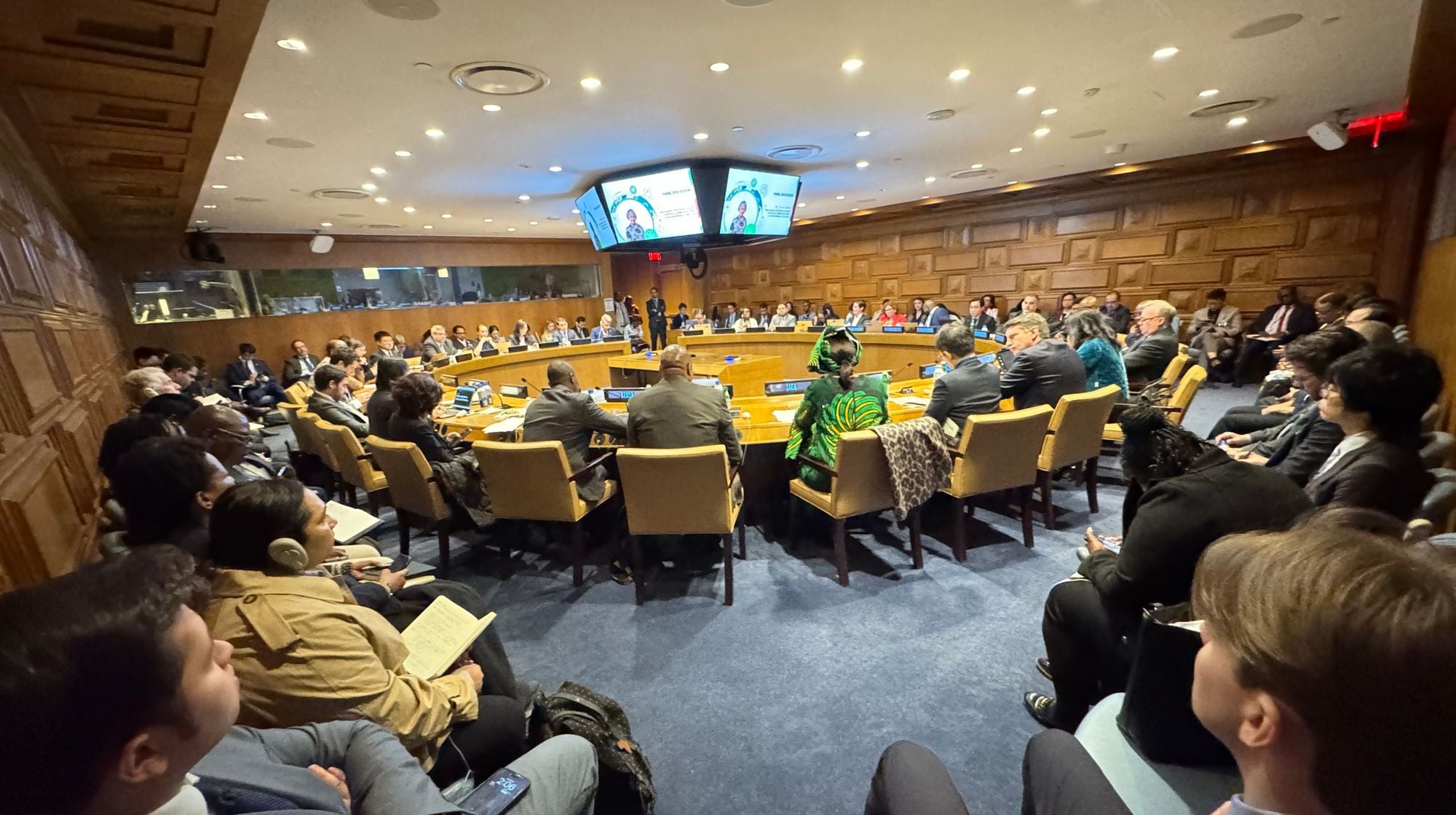
On April 29, on the sidelines of the 11th Review Conference of the Treaty on the Non-Proliferation of Nuclear Weapons (NPT) at United Nations headquarters in New York, Vietnam chaired a roundtable titled “Nuclear for Development: Technology, Capacity and Financing for the peaceful use of nuclear energy to achieve the Sustainable Development Goals (SDGs).” The event was co-hosted by Japan, the Philippines, Belgium, South Africa, Senegal, Kenya, Zimbabwe and Guatemala.
Deputy Foreign Minister Le Thi Thu Hang, head of Vietnam’s delegation to the NPT Review Conference, said nuclear energy can contribute to health, agriculture, industry, food security, energy security, and climate change adaptation. She pointed to Vietnam’s experience in diagnostic imaging, cancer screening and treatment, and pest control in agriculture.
Hang also emphasized that developing countries face constraints in facilities, technical capacity, and sustainable financing. She called for ensuring fair access to nuclear energy for the Global South, and urged intensified international cooperation to build capacity, provide training, promote technology transfer, and mobilize sustainable financing.
Hang said the International Atomic Energy Agency (IAEA) should play a coordinating role in advancing peaceful applications of nuclear energy and in strengthening partnerships among the IAEA, international financial institutions, development partners, and South-South and triangular cooperation.
Representing the IAEA, speakers proposed new approaches within the NPT framework and introduced IAEA Technical Cooperation Programs.
Japan outlined efforts to promote international cooperation and support developing countries in applying peaceful nuclear energy and enhancing capacity. Finland underscored the need to improve access to financial resources and technology, and suggested that Small Modular Reactors (SMRs) could be a suitable solution for developing countries.
Delegates from Kenya, Zimbabwe, South Africa, the Philippines, Senegal, Guatemala and other participating countries reaffirmed the practical role of peaceful nuclear energy in promoting sustainable development. They expressed a desire for more favorable conditions to access technology, strengthen capacity, and mobilize financial resources to ensure affordable investment in nuclear energy for developing countries.
All delegates praised Vietnam’s initiative in organizing the roundtable. The discussion highlighted the peaceful-use pillar of nuclear energy as essential to the balance and effectiveness of the NPT, with speakers conveying that nuclear energy—if well-governed and equitably accessible—can be a major driver of inclusive growth, innovation, and progress toward the SDGs.
During the 11th NPT Review Conference (27–29 April 2026), Deputy Foreign Minister Le Thi Thu Hang and the Vietnamese delegation held meetings with IAEA Director General Rafael Grossi, UN Deputy Secretary-General Izumi Nakamitsu, Japan’s Deputy Foreign Minister Kunimistu Ayano, Korea’s Deputy Foreign Minister Yeondoo Jeong, Singapore’s Deputy Foreign Minister Zhulkarnain Abdul Rahim, Finland’s State Secretary Jukka Salovaara, Poland’s Deputy Foreign Minister Robert Kupiecki, Norway’s Deputy Foreign Minister Eivind Vad Petersson, Sweden’s State Secretary Dag Hartelius, Latvia’s State Secretary Andžejs Viļumsons, and Australia’s Assistant Minister for Foreign Affairs and Trade Matt Thistlethwaite.
The discussions focused on measures to strengthen Vietnam’s ties with these partners across bilateral and multilateral tracks. Hang emphasized the role of multilateralism and the responsibility of NPT member states to uphold the treaty’s three pillars: nonproliferation, disarmament, and peaceful use of nuclear energy.
Partners noted Vietnam’s development and affirmed Vietnam as an important regional partner. They expressed willingness to advance political-diplomatic ties, expand economic, trade and investment cooperation, and support collaboration in science, technology, renewable energy, and sustainable development. They also congratulated Vietnam on chairing the 11th NPT Review Conference and said they were ready to continue contributing to its success.

Premium gym chains are entering a “golden era” that is ending or already in decline, as rising operating costs collide with shifting consumer preferences toward more flexible, community-based ways to exercise. Long-term memberships are shrinking, margins are pressured by higher rents and facility expenses, and competition from smaller, more personalized…