•
•
•
•
•
•
•
•
•
•
•
•
•
•
•
•
•
•
•
•
•
•
•
•
•
•
•
•
•
•
•
•
•


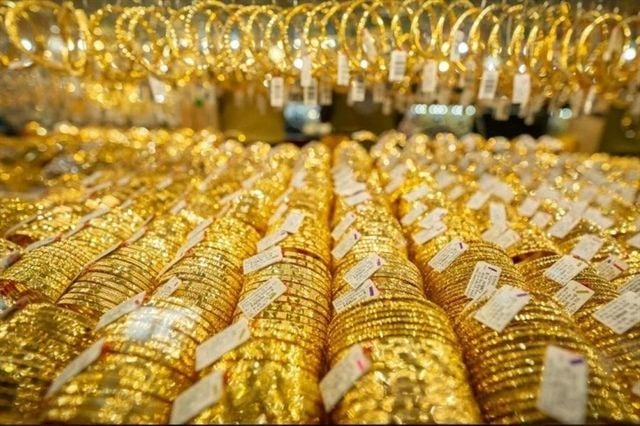
Vietnam Gold Business Association (VGTA) has submitted a proposal to the Prime Minister seeking to concretize policies governing the jewelry gold trading and processing sector. Among its key recommendations is allowing enterprises to borrow gold from the public at negotiated interest rates to support production.
VGTA said that appropriate mechanisms and policies are needed to promote the jewelry gold industry and help Vietnam develop into a regional center for high-quality jewelry gold processing and export. The association argued that a transparent framework is required so enterprises can proactively secure input materials, including imported gold and gold mobilized from the public, while avoiding an ad-hoc “give-and-take” approach that could undermine competitiveness and make it harder to meet domestic demand at near-global prices.
The association noted that there is currently no specific legal document guiding the sale or mobilization of domestically sourced gold to be used as input for jewelry production. As a result, gold resources available in the public are not being effectively tapped.
“Due to the absence of defined regulations or guidance from state authorities, activities of gold purchase or mobilization in forms such as buying or borrowing always carry legal risks. Recently, many enterprises have faced administrative penalties or been referred to authorities to clarify related activities,” VGTA said.
VGTA therefore urged the government to issue specific regulations on mechanisms for mobilizing and purchasing gold from the public as production inputs. It proposed that jewelry manufacturing and trading enterprises be allowed to borrow gold from the public at negotiated interest rates, in line with civil law.
The association also recommended clearly identifying the parties involved in gold transactions, including individuals who buy/sell not for business purposes, household businesses, and individuals trading gold. VGTA said this would provide a basis for uniform application of invoicing, taxation, and payment regulations, helping unlock gold resources in the economy.
For imported gold inputs, VGTA proposed a “breakthrough” mechanism under which jewelry manufacturers and exporters would be allowed to import gold inputs according to volumes signed with foreign partners and registered with commercial banks, similar to arrangements in sectors such as textiles, leather, or mechanical engineering.
Under the proposal, when an enterprise needs to import, it would only need to present valid documentation to banks. Enterprises would also be required to register annual import plans and periodically report on the use of gold inputs for production, domestic consumption, and exports. VGTA said these reports would be sent to the State Bank of Vietnam (SBV) and the Ministry of Industry and Trade to support management of the trade balance and foreign exchange demand.
VGTA estimated that Vietnam’s demand for gold inputs for jewelry production is about 50 tonnes per year, equivalent to about USD 5 billion (or an average of about USD 416 million per month). After processing, about half of the output would be for the domestic market, while the remainder—about 25 tonnes—would be exported.
The association said exported gold could generate USD 3.5 to 4 billion per year. It argued that importing raw gold would both meet domestic demand and contribute to foreign exchange through export activities.
VGTA said that with a suitable mechanism to mobilize gold from the public and facilitate input imports, Vietnam’s jewelry sector could develop more strongly, increasing value-added and contributing positively to economic growth.
In addition, the association asked the Prime Minister to consider removing business conditions and permits for jewelry and precious metals trading under current regulations to align with the Investment Law 2025 and treat jewelry as a normally traded commodity.
VGTA also urged the rapid clarification of regulations related to jewelry trading as ordinary goods, including removing business conditions and licenses for jewelry and handicrafts under Decree 24/2012 and Decree 232/2025 (amending Decree 24).








Premium gym chains are entering a “golden era” that is ending or already in decline, as rising operating costs collide with shifting consumer preferences toward more flexible, community-based ways to exercise. Long-term memberships are shrinking, margins are pressured by higher rents and facility expenses, and competition from smaller, more personalized…



