•
•
•
•
•
•
•
•
•
•
•
•
•
•
•
•
•
•
•
•
•
•
•
•
•
•
•
•
•
•
•
•
•


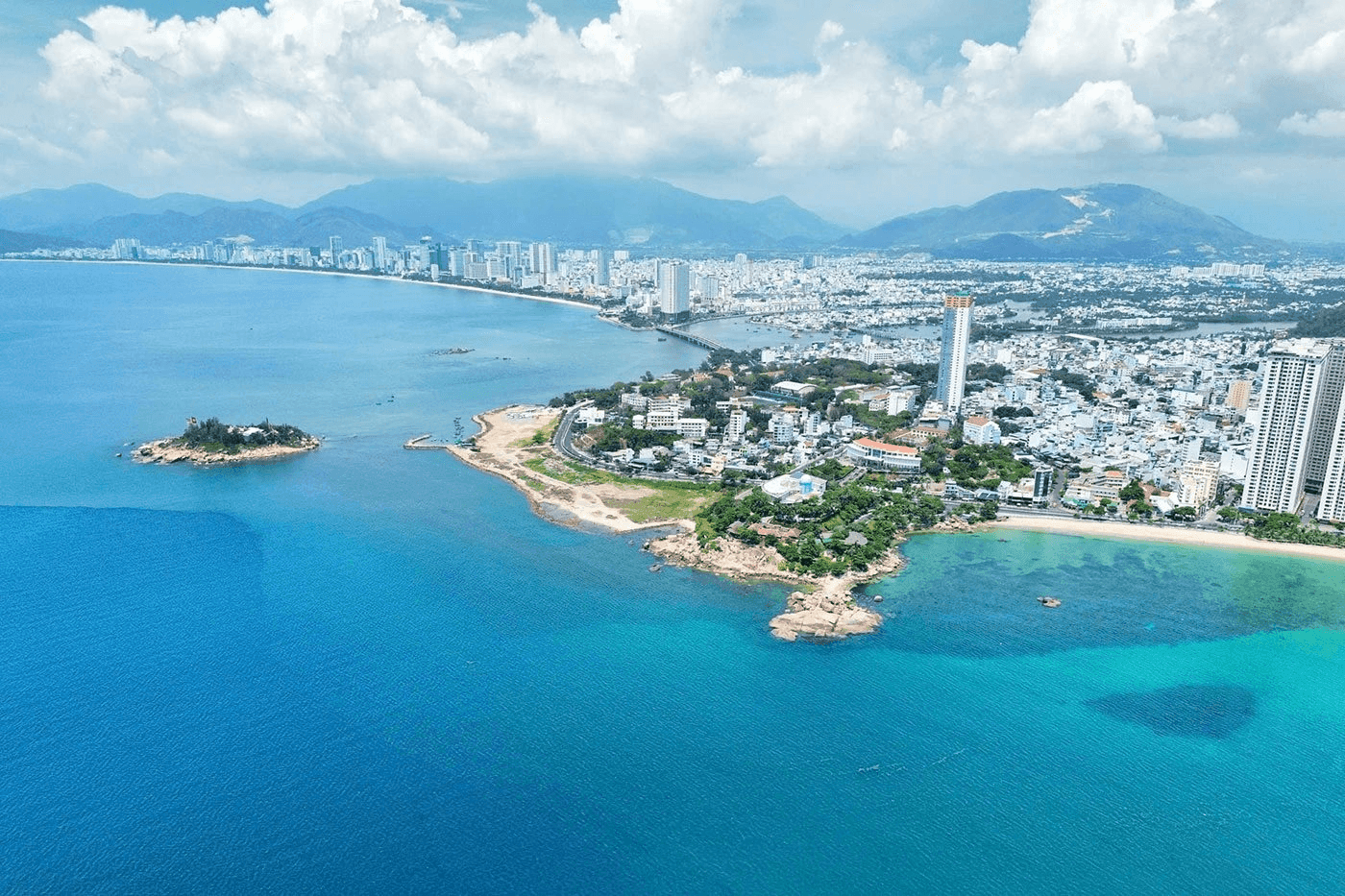
Acting Prime Minister Pham Gia Tuc has signed Decision 757/QĐ-TTg approving the master urban planning task for Khanh Hoa until 2050, with a vision to 2075. The plan sets out objectives to develop Khanh Hoa into a first-class, centrally governed municipality—modern, smart, green and sustainable—while positioning it as a growth pole and an international coastal gateway with high competitiveness.
The urban population of Khanh Hoa is projected to reach about 2.7–2.8 million by 2030, including 2.4–2.5 million permanent residents. By 2040, the population is expected to rise to about 3.7–3.8 million, with 3.2–3.3 million permanent residents.
By 2050, the province’s urban population is forecast at about 5.0–5.1 million, including 4.1–4.2 million permanent residents.
For land use, the built-up land area for the entire urban area is planned at 120,000–130,000 hectares by 2040, about 150,000–160,000 hectares by 2045, and about 170,000–180,000 hectares by 2050.
The planning characteristics define Khanh Hoa as a comprehensive center for the economy, culture, science-technology and international trade. It is also intended to function as a national growth pole and a key dynamic area of the region.
The province is expected to become a center for a marine-based economy, high-tech industry, logistics, high-quality services, clean energy, and science-technology and innovation. Its role includes linking coastal economic corridors, inter-regional connections and international integration.
In addition, Khanh Hoa is set to develop as an international coastal service, tourism and events hub for both the region and the country, with a strategic coastal position for organizing space-based development along Vietnam’s coastline. The plan emphasizes modernization, smart development, and green and sustainable growth.
The decision requires synchronized development of transport infrastructure across five modes: road, rail, inland waterways, sea and air, with modern, connected intra-regional and inter-regional links.
It also calls for studying advanced urban transport models, particularly smart transportation, autonomous vehicles, sensor-equipped infrastructure and charging stations. The plan includes exploring the feasibility of large-volume public transit lines and coastal rail systems to improve connectivity among urban centers, functional areas, airports and the seaport network in Khanh Hoa.
With expanded development space following the newly expanded Khanh Hoa province—formed by the merger of Khanh Hoa and Ninh Thuan—the province is expected to become a leading coastal economy, tourism and renewable energy hub for Vietnam’s Central region.
The year 2025 is described as a milestone after the merger. The province’s GRDP is expected to exceed VND 209,000 billion (current prices), with growth of about 7.11% compared with the previous year. Last year, it attracted about 80 off-budget projects with registered capital of around VND 495.3 trillion.
Key projects cited as primary growth drivers include the Ca Na Industrial Park, the Ca Na LNG thermal plant, and the Cam Lam new urban area.
In tourism, Khanh Hoa welcomed about 15 million visitors, reinforcing its role as an international tourism hub.

Premium gym chains are entering a “golden era” that is ending or already in decline, as rising operating costs collide with shifting consumer preferences toward more flexible, community-based ways to exercise. Long-term memberships are shrinking, margins are pressured by higher rents and facility expenses, and competition from smaller, more personalized…





