•
•
•
•
•
•
•
•
•
•
•
•
•
•
•
•
•
•
•
•
•
•
•
•
•
•
•
•
•
•
•
•
•


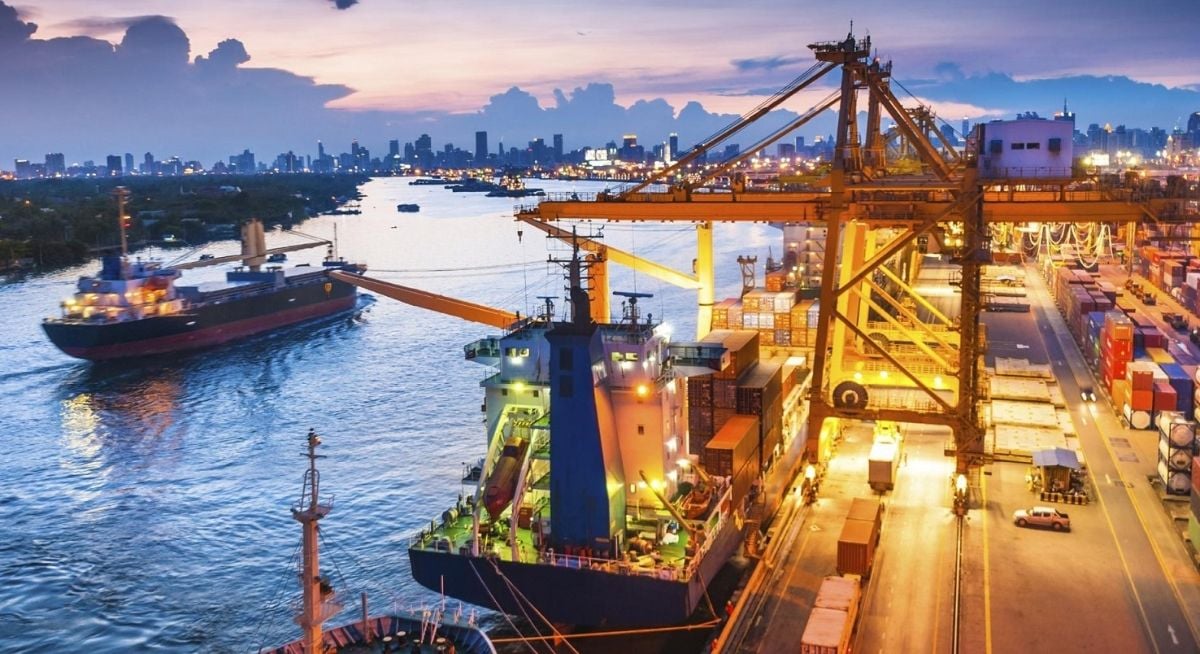
Vietnam’s total import-export value continued to rise in the first half of April 2026, but the trade deficit widened to US$4.25 billion—the highest level for the period since the start of the year. The increase reflects stronger demand for production inputs, while also adding pressure to the overall balance of payments.
In the first half of April 2026, total import-export value reached about US$47.37 billion, up 14.89% from the first period of March 2026. By the end of the first half of April 2026, total import-export value stood at US$297.06 billion, up 22.83% year on year.
Export value in the first period of April 2026 was about US$21.56 billion, up 5.94% from the first period of March. Cumulatively, exports reached US$144.58 billion, up 20.86% year on year.
While overall export growth was modest, the export structure showed notable changes across product groups.
The processing and manufacturing sector continued to lead exports, supported by large-scale items. Computers, electronics and components remained the top export category at about US$5.81 billion, up 3.92% from the prior period. Machines, equipment, tools, and parts followed at US$2.81 billion, up 19.8%, indicating sustained demand from partner markets.
However, divergence within the high-tech group became more evident. Mobile phones and components declined 28.78%, which weighed on growth in the high-tech segment.
In the first period of April 2026, the processing and manufacturing sector reached about US$17.47 billion, up 6.56% versus the previous period, and accounted for more than 80% of total exports. The report noted that export growth is occurring as total exports rise modestly, suggesting the foreign-invested (FDI) sector remains the main growth engine.
The data also points to Vietnam’s reliance on FDI for key export lines such as electronics, phones, and machinery. With FDI firms maintaining export growth, production appears stable and firms are leveraging orders from international markets. The report cautioned that any adjustments in production strategy, supply chains, or multinational corporations’ market choices could affect Vietnam’s export value quickly.
Traditional labor-intensive groups also posted growth. Textiles and garments reached about US$1.37 billion, up 0.75%, while footwear rose to US$1.02 billion, up 25.31%.
The modest increase in textiles suggests the recovery may not yet be fully sustainable, as the sector faces competition from lower-cost countries and increasingly stringent environmental and origin-tracing requirements.
In the first period of April 2026, total import value reached about US$25.81 billion, up 23.61% from March’s first period. Year-to-date through mid-April, import value stood at US$152.48 billion, up 28.83% year on year.
Imports continued to focus on production inputs and raw materials, consistent with Vietnam’s role in the global supply chain.
The computers, electronics and components group was the largest import item at US$9.34 billion, up 11.48% from the prior period. Machines, equipment, tools, and parts followed at about US$3.06 billion, up 35.72%, indicating firms are importing equipment to expand or maintain production capacity.
The FDI sector accounted for about US$18.61 billion of imports, up 23.25% versus the prior period, and represented about 72% of total imports. The report said this dependence highlights the sensitivity of Vietnam’s supply chains to external shifts and underscores limitations in domestic supporting industries.
In the short term, the energy group continued to increase. Fuels and oils reached about US$764.85 million, up 55.55%. Crude oil rose 34.28%, while liquified petroleum gas increased 28.34%.
The report linked the rise to production-related energy demand and global energy price volatility amid geopolitical tensions in key oil-producing regions. It also noted that uncertainties in supply and higher transport costs are encouraging firms to import more to diversify sources and strengthen near-term energy security.
Overall, exports and imports in the first half of April 2026 moved in parallel trends, with a base from processing and manufacturing and a pronounced influence from high-tech and energy. In the near term, if global demand recovers and large corporations increase production, exports may improve quickly.
In the longer term, the report identified challenges from heavy dependence on the FDI sector and a limited number of key export lines. It said Vietnam will need to diversify its export structure and strengthen domestic capabilities to support more sustainable growth.




Premium gym chains are entering a “golden era” that is ending or already in decline, as rising operating costs collide with shifting consumer preferences toward more flexible, community-based ways to exercise. Long-term memberships are shrinking, margins are pressured by higher rents and facility expenses, and competition from smaller, more personalized…