•
•
•
•
•
•
•
•
•
•
•
•
•
•
•
•
•
•
•
•
•
•
•
•
•
•
•
•
•
•
•
•
•


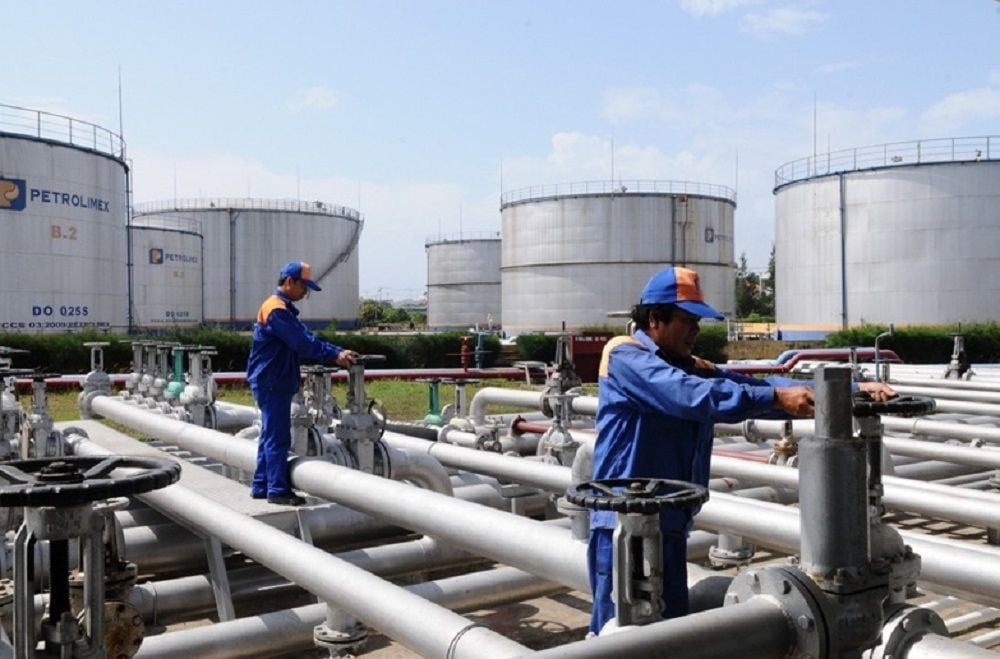
The concept of energy security in the 21st century has shifted from a narrow focus on ensuring sufficient fossil-fuel volumes to a broader framework built around four core aspects: Availability, Accessibility, Affordability, and Acceptability.
After four decades of rapid transformation from an agricultural economy into an industrial production hub—along with strong inflows of foreign direct investment (FDI)—energy security has become a foundation for growth in Vietnam, directly influencing macroeconomic stability and national security.
To achieve double-digit GDP growth in the 2026–2030 period, Vietnam requires substantial energy resources. Electricity demand is projected to grow by 12–14% per year. Industrialization, digital infrastructure, logistics, and urbanization all depend on a stable energy supply at reasonable costs.
Rapid expansion has pushed Vietnam’s national energy system to a turning point. The country has moved from being a net traditional energy exporter to a net importer with a growing import scale.
In 2024, total primary energy consumption across Vietnam was approximately 1,457.179 TWh (about 126 Mtoe), with an average growth rate of around 9% per year during 2022–2024.
Fossil fuels remain dominant, accounting for up to 78.46% of total national consumption. Coal leads with 693.435 TWh (47.58%), followed by oil at 388.967 TWh (26.69%) and natural gas at 60.987 TWh (4.18%). The article notes that domestic production and extraction capacity for coal, oil, and gas have reached technical limits and are entering a natural, irreversible decline.
Energy costs play a central role in Vietnam’s inflation transmission mechanism. According to a linear regression model cited in the article, each 1% increase in total energy costs raises the overall inflation rate (CPI) by about 0.2 percentage points.
The pressure is described as flowing through both direct channels—such as shipping costs and electricity prices with very short lags—and indirect channels that can amplify inflation across the economy, including through fertilizers and construction materials.
Structural gaps and price sensitivity were highlighted in late February to early March 2026, when the global energy system faced a serious shock linked to Operation Epic Fury in the Middle East. Airstrikes on Iran’s nuclear facilities and retaliatory missile strikes led Iran to declare a blockade of the Hormuz Strait, a key maritime chokepoint handling about one-fifth of global oil and LNG.
Throughput through the strait fell from 153 ships per day to 13 by March 2, 2026, and was nearly completely blocked on March 8–9, 2026. Brent crude reportedly peaked at around $126 per barrel.
Because of deep integration and dependence on Asian maritime logistics, the macroeconomic spillover was felt in Vietnam quickly. In the first 2.5 months of 2026, Vietnam’s fuel imports cost about USD 5.27 billion to import 13.8 million tons of coal (nearly USD 1.49 billion); 2.8 million tons of crude oil (USD 1.44 billion); 2.7 million tons of refined petroleum products with prices rising to USD 717.6 per ton (totaling USD 1.94 billion); and USD 403 million of LNG.
To curb the transmission from import prices to retail prices, Prime Minister Pham Minh Chinh directed that energy shortages must be avoided under any circumstances and activated emergency fiscal tools through Decree No. 72/2026/ND-CP, effective from March 9 to April 30, 2026.
The article describes the decision as accepting a trade-off: sacrificing part of budget revenue to reduce the MFN tariff to 0% on essential items, including unleaded gasoline (previously taxed at 10%), diesel, aviation turbine fuel (previously 7%), and key petrochemical feedstocks. This is intended to allow Vietnamese importers to buy fuel from any source worldwide without origin-certification constraints.
Resolution 70-NQ/TW is presented as a policy shift that elevates energy security to a pillar of national security. The strategic goal is to increase total crude oil and petroleum product reserves to the equivalent of 75–80 days of net imports by 2030, moving toward 90 days after 2030. The article notes that this will require tens of billions of USD in investment in storage and logistics infrastructure.
It also highlights the foundation of the transition: accelerating self-reliance through renewable and low-emission energy sources to reduce dependence on external fossil-fuel supply chains. The article links this to the need to avoid stringent environmental tariffs such as the EU’s Carbon Border Adjustment Mechanism (CBAM), which it says directly threatens the competitiveness of Vietnam’s exports.
Note: The full article was published in Vietnam Economic Times Magazine No. 13-2026.





Premium gym chains are entering a “golden era” that is ending or already in decline, as rising operating costs collide with shifting consumer preferences toward more flexible, community-based ways to exercise. Long-term memberships are shrinking, margins are pressured by higher rents and facility expenses, and competition from smaller, more personalized…



