•
•
•
•
•
•
•
•
•
•
•
•
•
•
•
•
•
•
•
•
•
•
•
•
•
•
•
•
•
•
•
•
•


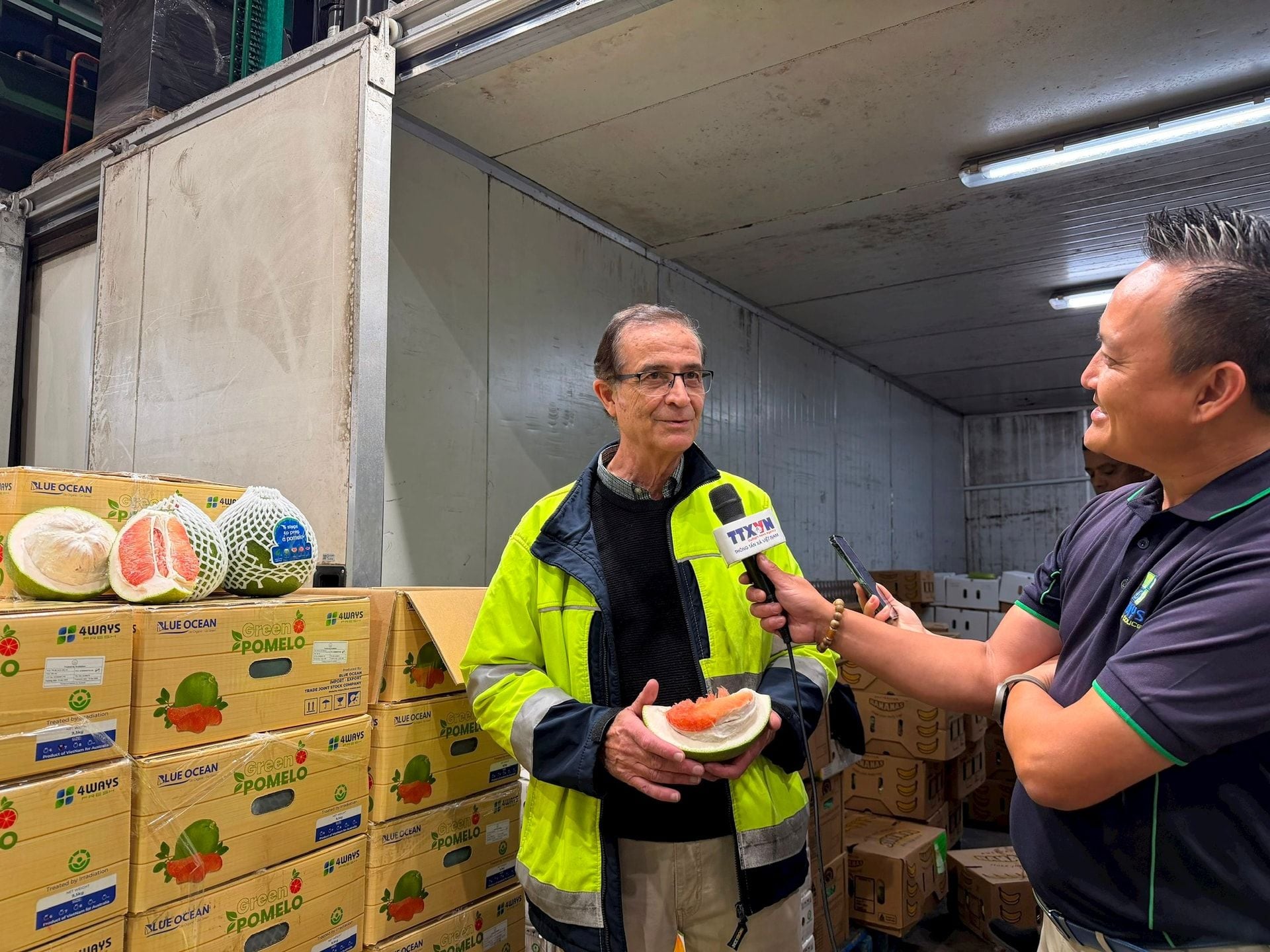
The shipment of fresh Vietnamese pomelo to Australia is the outcome of market-opening negotiations between Vietnam and Australia, highlighting the Vietnamese fruit sector’s capacity to meet technical, quality, and supply-chain requirements for access to a high-standard market.
On October 9, 2025, Vietnam and Australia formally completed an agreement that allows imports of fresh Vietnamese pomelo. After the milestone, technical requirements continued to be refined to align with Australia’s regulations, including growing-area conditions, packing facilities, pest-risk management, traceability, irradiation treatment, and import procedures.
On April 10, 2026, Australia’s BICON system officially published the import procedures and conditions for Vietnamese pomelo, completing the legal and technical framework for commercial export. Under the published requirements, the product must meet conditions related to growing-area codes, approved packing facilities, pest-control, traceability, and irradiation treatment of at least 400 Gy as specified by Australia.
Blue Ocean Import-Export Trading Joint Stock Company is the first enterprise licensed to export pomelo to Australia and is the entity directly organizing the pioneer shipment.
The first shipment consisted of 940.5 kg of fresh pomelo, air-freighted. All procedures were completed and cleared on April 22, 2026. After import, the shipment was showcased and marketed at Sydney Market (Australia) to promote the product and engage distribution partners, retailers, and consumers.
A subsequent commercial shipment with an estimated volume of 5 tons, sourced from Dong Thap Province, is being prepared for export in the coming period.
Under Australian regulations, imported pomelo consignments must undergo stringent phytosanitary and biosecurity checks at the port of entry. Competent authorities review documents, including Plant Quarantine Certificates and related papers, and inspect packaging, labeling, and storage conditions.
Samples are also taken for phytosanitary checks. The sampling scale depends on shipment size and may reach up to 600 fruits for large consignments. If phytosanitary or food-safety violations are found, the consignment may face measures such as treatment, re-export, or disposal under Australian rules.
Australian authorities and Vietnamese plant-quarantine bodies will cooperate to ensure full compliance with the import requirements.







Premium gym chains are entering a “golden era” that is ending or already in decline, as rising operating costs collide with shifting consumer preferences toward more flexible, community-based ways to exercise. Long-term memberships are shrinking, margins are pressured by higher rents and facility expenses, and competition from smaller, more personalized…


