•
•
•
•
•
•
•
•
•
•
•
•
•
•
•
•
•
•
•
•
•
•
•
•
•
•
•
•
•
•
•
•
•


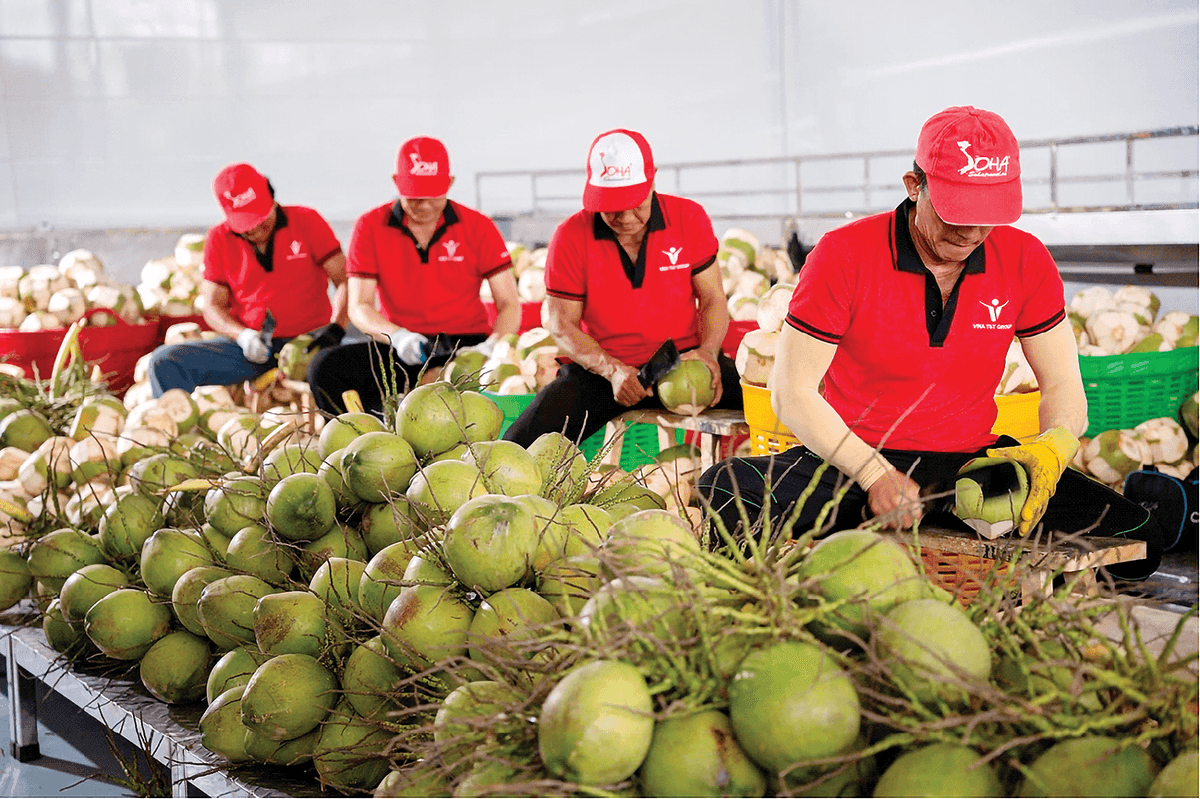
Vietnam's fruit and vegetable sector is on track to reach export value of US$10 billion in 2026. With a green production strategy and accelerated deep processing, the sector is strengthening its position on the global agricultural trade map. According to a report from the Ministry of Agriculture and Environment, Vietnam's fruit and vegetable export value in Q1 2026 reached US$1.54 billion, up 32.1% year-on-year. China remains the largest partner, accounting for 54% of total turnover and recording growth of 76.2%. The United States and Korea are also important markets with growth of 21.4% and 4.1% respectively. Notably, Cambodia stands out with growth 3.7 times higher than last year. Over the past 15 years, Vietnam's fruit and vegetable sector has made remarkable progress. From a turnover of US$500 million in 2010, by 2025 this figure had reached US$8.5 billion. This success comes not only from natural growth but also from adapting to increasingly stringent international standards. However, the sector still faces sustainability challenges due to heavy reliance on a few key products and markets. Durian, although bringing in US$4 billion in 2025, more than 90% of this value comes from China. Meanwhile, many promising fruits such as oranges, longans, and lychees have not yet achieved commensurate export value. Bananas and pineapples are expected to join the US$1 billion export group due to stable raw material supply and rising market demand. Vietnam is emerging as an important substitute supply amid many regions of the world being affected by Panama disease. Deep processing is becoming a driver to lift the value of Vietnamese fruits. In 2025, processed fruit exports reached over US$2 billion, accounting for 24% of total export turnover. Pineapple, passion fruit, pistachios, almonds, and mango are among the processed items with impressive growth. Green production is the inevitable path to achieving the US$10 billion target. The farming sector is promoting green production vigorously, considering it a foundation for long-term growth. To date, nearly 60 low-emission cultivation models have been deployed, aiming to reduce emissions by 15% by 2035. From the market perspective, 2026 still holds room for growth, especially when leveraging free trade agreements and expanding into Halal markets. However, for sustainable development, fruit and vegetable sectors must meet the green-clean-beautiful-transparent criteria. Vietnam's fruit and vegetable exports are entering a new development phase, with value increasingly derived from long-term strategies rather than short-term growth. With a green production platform and standardized value chain, the US$10 billion target can become a reality in 2026.






Premium gym chains are entering a “golden era” that is ending or already in decline, as rising operating costs collide with shifting consumer preferences toward more flexible, community-based ways to exercise. Long-term memberships are shrinking, margins are pressured by higher rents and facility expenses, and competition from smaller, more personalized…




