•
•
•
•
•
•
•
•
•
•
•
•
•
•
•
•
•
•
•
•
•
•
•
•
•
•
•
•
•
•
•
•
•


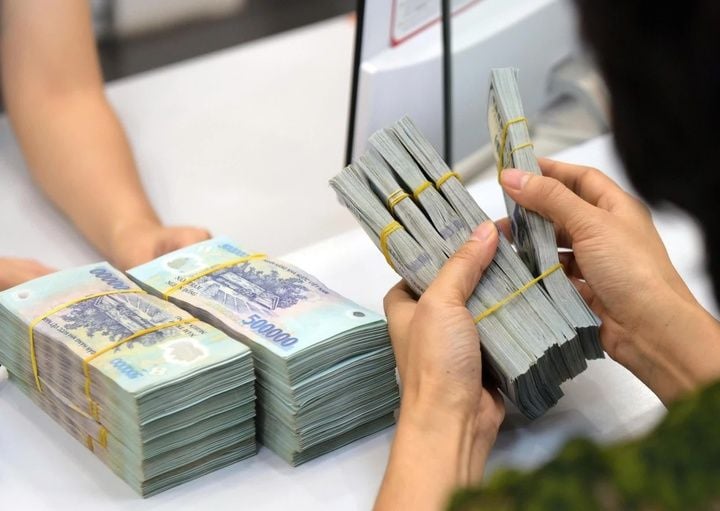
Interest rates in Vietnam have been trending downward, but experts say the direction of the next move—whether rates rise or fall—will depend on a range of domestic and external factors.
After a meeting with the State Bank of Vietnam (SBV) on April 9, more than 30 banks simultaneously cut deposit rates. The reductions generally ranged from 0.1% to 0.5% per year, and some banks cut twice, including Agribank and SeABank.
VPBank CEO Nguyen Duc Vinh said rates may remain high in the short term before gradually easing from Q2 and early Q3. He added that the SBV’s steering role will be decisive in guiding the market.
KB Vietnam Securities (KBSV) expects a clearer cooling trend in interest rates in the last two quarters of 2026, with an average reduction of about 0.5% to 1% per year. KBSV links this outlook to abundant capital from public investment disbursement flowing into the banking system, and to easing tensions in Iran that could reduce inflationary pressure and exchange-rate pressure—thereby giving the State Bank room to support liquidity for the banking system.
KBSV also noted that the government and SBV are expected to introduce new policies in the second half of the year aimed at achieving two-digit GDP growth, including measures to cool the rate level. It said that in the second half of 2026, the lending rate level is expected to cool more clearly in line with deposit-rate reductions to support economic growth, with the downward trend likely to remain selective and focus on sectors such as exports and industrial production.
VIB’s head of the Capital and Foreign Exchange Division, Le Quang Trung, forecast that domestic rates will face pressure in Q2 and Q3 but gradually stabilize from Q4/2026. He said the pressure currently mainly comes from the gap between credit growth and mobilization. Over the next 3–6 months, as deposit rates have risen versus the same period, household funds are expected to return and help balance liquidity in the system.
On the exchange rate, Trung said the biggest pressure would be in the first nine months, with potential improvement in Q4 if external factors stabilize. He added that in 2026 there is no factor expected to push lending rates beyond the current controlled range.
Nguyen Quang Huy, CEO of the Finance - Banking Department at Nguyen Trai University, said the ongoing decline in deposit rates is reasonable given that deposit pressures are no longer as high as before, reflecting the liquidity situation in the banking system. He also described the move as aligned with the direction to create more favorable conditions for production and business.
However, he said further reductions may be limited due to factors that could keep rates down, including exchange-rate pressure, inflation control requirements, and reference to international monetary policy—especially the Federal Reserve’s direction. Huy forecast that deposit rates are likely to continue easing mildly in the near term, then stabilize to form a new lower plateau, but are unlikely to return to the “very low” region seen in previous periods.
VietinBank Board member Le Thanh Tung said the rate trend will depend heavily on domestic and international factors. In the base scenario, funding costs may remain high in the short term, though the pace of increases could slow and stabilize as market conditions improve. If external shocks persist, he said rate pressure could continue throughout 2026.
He added that banks’ net interest margins (NIM), especially among state-owned commercial banks, may face pressure as they balance business efficiency with directives from the government and SBV to support enterprises.
VietinBank’s leadership said this is not expected to be a long-term structural trend, but noted that system liquidity remains under pressure when credit growth outpaces mobilization. It said the SBV needs to manage flexibly to balance growth support with macro stability using tools such as interest rates, exchange rates, open market operations, refinancing, and adjustments to safety regulations.
In that context, VietinBank said loosening some rules such as the loan-to-deposit ratio for state-owned banks is expected to help reduce liquidity pressure and create more room to support the economy.
Experts also highlighted external risks. Geopolitical tensions, particularly in the Middle East, could raise inflationary pressures through energy prices and logistics costs. If inflation rises again, the room to cut rates would shrink.
Vietcombank Securities said that in Q2, system liquidity is expected to remain under pressure as disbursement demand increases. It added that the deposit-rate path could slow the improvement of input funds for some banks, especially mid- and small-sized banks or those with high credit growth. It also pointed to the large volume of open market operations (OMO) maturing in April.
As a result, Vietcombank Securities expects deposit rates to stay relatively high in the near term, particularly for medium- and long-term tenors.
Premium gym chains are entering a “golden era” that is ending or already in decline, as rising operating costs collide with shifting consumer preferences toward more flexible, community-based ways to exercise. Long-term memberships are shrinking, margins are pressured by higher rents and facility expenses, and competition from smaller, more personalized…