•
•
•
•
•
•
•
•
•
•
•
•
•
•
•
•
•
•
•
•
•
•
•
•
•
•
•
•
•
•
•
•
•


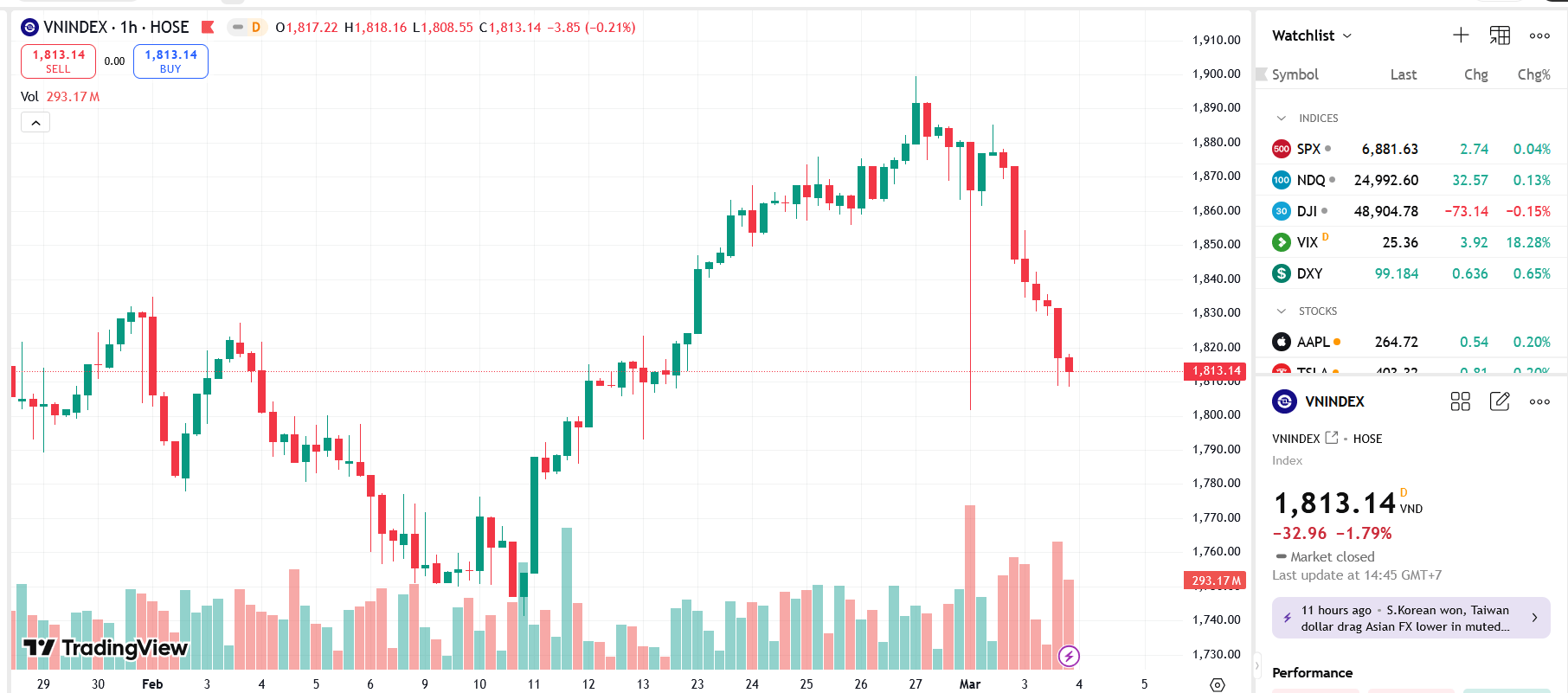
VN-Index fell sharply for two sessions, with downward momentum showing no signs of stopping. VnEconomy presents market views and investment recommendations from several brokerage houses for March 4, 2026.
According to SSI, the VN-Index continued to undergo a strong correction with liquidity remaining high, indicating that selling pressure remains clearly dominant. At the close on March 3, the VN-Index declined 32.96 points, or 1.79%, to 1,813.14. By contrast, the HNX-Index rose 1.01 points, or 0.39%, to 260.01.
BVSC said the market continues to fall as large-cap groups pull prices lower. Market breadth is tilted toward decliners, and the index is likely to remain under pressure as downside momentum persists across many stock groups. BVSC added that the index could retreat to test the 1,800 support area and advised investors to increase cash holdings to manage risk if portfolio exposure is high or if using margin.
BSC noted that VN-Index price movements were loose and sentiment generally remained negative.
SHS said the short-term trend of the VN-Index forms a near-term peak around 1,900, continuing to pressure a test of psychological support around 1,800 and the trend line connecting the December 2025 and February 2026 lows. SHS added that a modest rebound could occur after two consecutive declines, and investors should avoid panicking and selling sharp declines in stocks that have already come under pressure. The brokerage also highlighted geopolitical risks, saying US and Israel tensions with Iran could widen regional conflict, prompting risk-off flows into safe-haven assets and defensively positioned sectors. It advised portfolio risk management and continued reallocation, with preference for quality names in growth-oriented sectors.
TVS warned that the VN-Index could fall deeper toward 1,750–1,760 in the near term. It cited the index’s close on March 3 at 1,813.1 (down 33 points, or -1.8%) and said selling pressure was concentrated in VIC and VHM. TVS also reported that Oil & Gas, Chemicals, and Transport sectors continued to show strength on short-term dynamics from Middle East tensions. It added that if the index closes below 1,800, a deeper move toward 1,750–1,760 is possible. TVS advised investors to refrain from new purchases in that zone and to monitor 1,800–1,810 in the next session.
YSVN suggested the market could see a bounce in the next session, with sector rotation likely. It advised investors to focus on trends within individual groups to identify opportunities while managing risk. YSVN said the VN-Index may continue to trade around the 20-day moving average with light volume in upcoming sessions. For short-term strategy, it recommended portfolio restructuring and maintaining stock exposure at 40–50% of the portfolio, emphasizing group trends and avoiding chasing oil & gas near term.
VCBS stated that the 1,800 support area could be revisited in the next session. On daily charts, it said MACD and RSI continue to trend downward, underscoring downside pressure. VCBS added that the 1,800 area may hold; if not, the next support is the previous low near 1,750. On intraday (hourly) charts, it said the index moved lower and closed below the Bollinger Band, while RSI touched oversold territory but there was no clear reversal signal, implying continued selling pressure. VCBS concluded that 1,800 could be revisited in the next session ahead of new signals.
SSI observed that supply pressure remains clearly dominant. It said the VN-Index continues to trend lower with liquidity staying high, indicating selling pressure. SSI added that the current weakness is pushing the index toward the 1,780–1,800 support zone, described as an important support in the short-term uptrend.
The article also notes that at 12:00, VN-Index continued to slide, with stock-picking dynamics remaining in flux as the market moved and choppy sector leadership persisted.
(Note: Market commentary from brokerage houses cited by VnEconomy is for informational purposes and may reflect conflicts of interest.)







Premium gym chains are entering a “golden era” that is ending or already in decline, as rising operating costs collide with shifting consumer preferences toward more flexible, community-based ways to exercise. Long-term memberships are shrinking, margins are pressured by higher rents and facility expenses, and competition from smaller, more personalized…




