•
•
•
•
•
•
•
•
•
•
•
•
•
•
•
•
•
•
•
•
•
•
•
•
•
•
•
•
•
•
•
•
•



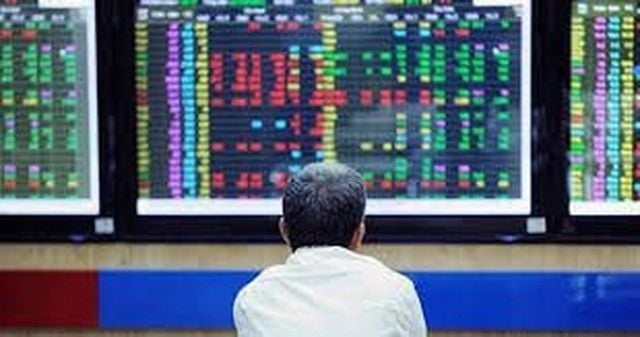
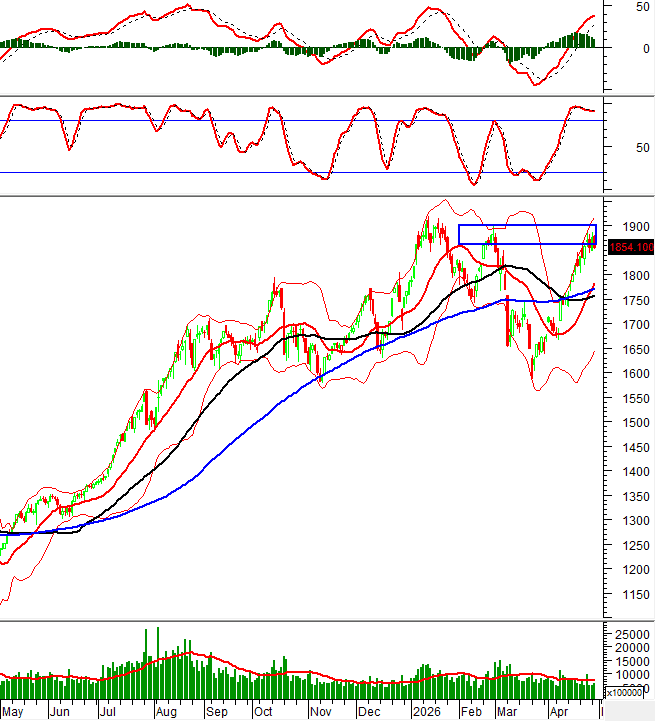
After the end of April, the VN-Index closed the session at 1,854 points, up 180 points from the previous month, marking a relatively bright month of trading. However, sentiment among many retail investors remained cautious as the index rose but many accounts did not improve in parallel.
Retail investors reported a “green on the outside, red on the inside” situation: while the VN-Index increased, capital flowed into a limited group of large-cap stocks, leaving a broad portion of portfolios deeply negative. This pattern reflects strong market polarization, where the rally is concentrated in a handful of blue-chip names while many investors do not benefit from the index gains.
According to Mr. Nguyen Duc Khang, Head of the Equity Analysis Department at Pinetree, this is a paradox showing that the market can rise while investors’ accounts continue to erode, particularly after periods of buying when the market appeared buoyant but portfolios did not recover.
Mr. Khang said investor caution can create a “vicious cycle” that affects liquidity and the market’s short-term direction. Even if the VN-Index may move higher, liquidity is weakening, suggesting a break in confidence.
The expert attributed the liquidity issue to money concentrating in a small number of large-cap stocks rather than spreading evenly across the market. As a result, investors holding other sectors may see little benefit from the index’s rise, with some stocks moving sideways or declining—keeping accounts under pressure despite a broadly positive headline market.
Mr. Khang noted that after repeated trials and errors—buying when the market is green but ending up with losses due to harsh polarization—many investors develop fear and prefer to stay on the sidelines rather than be eroded further.
He argued that in a market where opportunities are concentrated in only about 10–20% of stocks, excessive trading can become a fast route to losses. Investors who try to trade short rallies face higher risk if they select the wrong stock group or buy into technical rebounds that do not sustain.
Beyond price volatility, investors also face trading fees and taxes. While these costs may appear small, they can quickly wipe out gains when the market lacks a clear trend and capital rotates too quickly between stock groups.
According to Pinetree, if retail money—one of the key drivers of liquidity in Vietnam’s stock market—continues to be cautious, the short-term market could drift and become more vulnerable to negative information. In the absence of counter-demand from retail investors, corrections in blue-chip stocks or negative movements from international markets could push the index down faster.
In this view, low liquidity does more than reduce profit opportunities; it also removes a cushion when selling pressure appears.
Mr. Khang’s guiding principle is “trade selectively.” He said the short-term market may no longer be an easy environment for the masses, even though opportunities still exist for patient investors who can select companies rather than chase hot short-term rallies.
For individual investors, he emphasized that the priority is not to trade continuously to “recover losses,” but to reassess the portfolio, limit chasing the index, and focus on risk management. Stocks without clear fundamentals, lacking cash flow, or that have breached stop-loss thresholds should be reconsidered rather than held solely on the expectation that the market will lift them.
For stocks with solid business fundamentals and clear profit prospects that are currently under pressure from overall sentiment, investors can remain patient and monitor for “liquidity exhaustion” episodes to identify opportunities. However, deployments should be gradual, avoiding all-in bets immediately after signs of recovery.
Overall, in a market where the VN-Index is rising but accounts are not, the appropriate approach is to trade less and more selectively, recognizing that not every VN-Index rally translates into easy money when polarization remains a defining feature.
Duong Ngoc
Market Pulse
Source: Market Times

Premium gym chains are entering a “golden era” that is ending or already in decline, as rising operating costs collide with shifting consumer preferences toward more flexible, community-based ways to exercise. Long-term memberships are shrinking, margins are pressured by higher rents and facility expenses, and competition from smaller, more personalized…