•
•
•
•
•
•
•
•
•
•
•
•
•
•
•
•
•
•
•
•
•
•
•
•
•
•
•
•
•
•
•
•
•


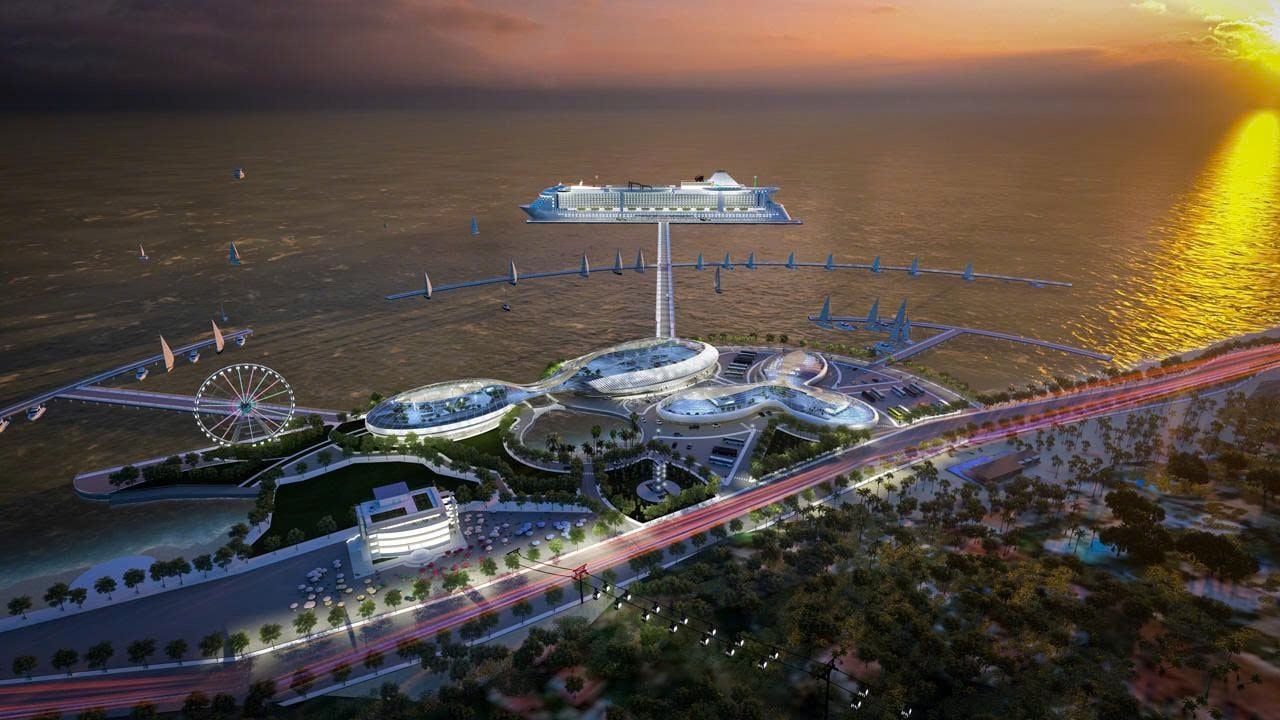
The Ho Chi Minh City People’s Committee has added the Vung Tau International Passenger Port project to the city’s list of investment-attracting projects for 2026–2030. The move is intended to help unlock the economic potential of the maritime economy, tourism and services in Ho Chi Minh City and the wider region.
Under the master plan, the project will be implemented in Vung Tau ward on an area of more than 73 hectares, with total investment expected to be about VND 3,147 billion.
The project’s objective is to build a modern passenger port capable of accommodating large international cruise ships, positioning Vung Tau as an attractive stop on the regional cruise tourism map.
The port area will include a 420-meter-long wharf, designed to receive cruise ships up to 225,000 GT.
In addition, the project will develop a marina with capacity for about 280 vessels, targeting the upscale tourism segment and providing mooring for private boats at sea.
Planned accompanying infrastructure includes a passenger terminal, parking, internal transport systems, landscaping, and other technical facilities. The project also covers berthing facilities, water areas for berthing, maritime safety corridors, and a turning basin connected to the Vung Tau–Thi Vai sea route.
A highlighted component is the transitional water area around the jetty and the terminal, where on-water entertainment activities are planned to enhance the visitor experience. The breakwater area will also be invested to support safe port operations under all weather conditions.
Upon completion, the Vung Tau International Passenger Port is expected to become a new growth driver for the cruise tourism sector, attract high-quality international visitors, and promote trade, services and the maritime economy of Ho Chi Minh City in the coming period.

Premium gym chains are entering a “golden era” that is ending or already in decline, as rising operating costs collide with shifting consumer preferences toward more flexible, community-based ways to exercise. Long-term memberships are shrinking, margins are pressured by higher rents and facility expenses, and competition from smaller, more personalized…