•
•
•
•
•
•
•
•
•
•
•
•
•
•
•
•
•
•
•
•
•
•
•
•
•
•
•
•
•
•
•
•
•


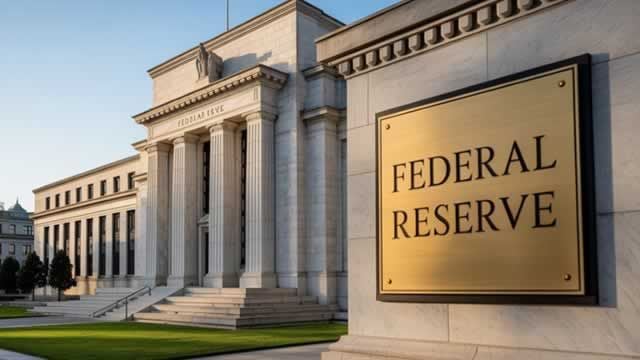
Kevin Warsh, President Trump’s pick to lead the Federal Reserve, is expected to face intense questioning at Tuesday’s Senate Banking Committee confirmation hearing over whether he would protect the Fed’s independence and whether he plans to cut interest rates.
Warsh, a former Fed governor and a longtime “inflation hawk” who has since aligned with the Trump administration’s push for lower rates, is in limbo after Sen. Thom Tillis (R-NC) vowed to block his nomination. That has left the committee poised for a deadlock in a 12-12 vote.
Warsh’s main line of questioning is expected to center on whether the 56-year-old financier—described as potentially the richest Fed chair in history—would remain committed to the central bank’s independence.
In remarks scheduled for Tuesday, Warsh emphasized the need for independence while arguing the Fed “must stay in its lane” and not move “into fiscal and social policies where it has neither authority nor expertise,” a reference to issues such as climate change and social inequality. His speech, posted online Monday, does not appear aimed at discouraging elected officials, including Trump, from weighing in on interest-rate policy.
Ethan Harris, former head of global economic research at Bank of America, said Warsh is likely to receive a “very friendly reception from Republicans and a very unfriendly reception from the Democrats.” Harris added that Warsh has been a “huge critic of the Fed” and a supporter of the Trump administration, setting up “a lot of political positioning around his confirmation.”
Warsh has criticized current Fed officials, including by comparing them to “pampered princes” and accusing them of “groupthink.” Harris also raised a concern that Warsh could be “beholden to the president,” pointing to Trump’s repeated calls for interest rates as low as 1% and his criticism of Fed Chair Jerome Powell for not easing monetary policy faster, including describing Powell as “stupid” and “hardheaded.”
It remains unclear whether Warsh would adopt a similarly dovish approach if confirmed. Former Fed Chair Janet Yellen said at a conference last week that she does not believe Warsh “walks in with that level of credibility” and that she does not see the Federal Open Market Committee (FOMC) accepting such a stance “in the short run.”
Harris said even if Warsh pushes for rapid rate cuts immediately, “the rest of the committee will simply vote against him.”
Warsh has argued that artificial intelligence could drive a productivity boom while keeping prices low, potentially enabling the Fed to lower rates. The argument is that higher productivity would allow companies to produce the same output with fewer workers, reducing inflation pressures over time.
However, David Kelly, chief global strategist at JPMorgan, said in a note Monday that the near-term impact could be inflationary. Kelly wrote that “the tsunami of spending dedicated to AI development is likely inflationary rather than deflationary,” citing increased demand from power-hungry data centers for electricity and construction.
Kelly also compared the current debate to the Fed environment in 1996 and 1997 under Alan Greenspan, when rates were held steady despite internal pressure to raise them, based on the belief that the internet would produce a productivity-driven, low-inflation outcome.
Tillis has promised to block any Trump nominees until the federal government drops its criminal probe into Powell. While that could delay Warsh’s confirmation, his testimony this week could clarify his approach to policymaking, Kelly said.
Powell’s term as Fed chair ends May 15, though he has said he will remain as “chairman pro tem” if a successor is not confirmed in time. He also said he plans to stay on the board at least until the DOJ’s investigation is fully resolved, with the possibility of remaining through 2028.
Trump has threatened to fire Powell if he does not step down, while Treasury Secretary Scott Bessent said he is confident Warsh will be confirmed in time.
Sen. Elizabeth Warren, the top Democrat on the Senate Banking Committee, has criticized Warsh’s nomination, citing his time at the Fed from 2006 to 2011 during the U.S. housing crisis. In an April 15 letter to Powell, Warren wrote that Warsh failed to “meaningfully identify or address the risks associated with subprime mortgages and derivatives.”
Warren added that since 2008, it has been well documented that Warsh, in his role as a Fed governor, did not take seriously the risks posed by the subprime mortgage market and played a central role in helping arrange “numerous multibillion-dollar, taxpayer-funded capital infusions” to financial institutions involved in the crisis. Warren requested documents detailing Warsh’s previous role at the Fed.
Banking Committee Chairman Sen. Tim Scott (R-SC) praised Trump’s choice of Warsh, saying the American people deserve a Fed “free from political influence.” Scott wrote that under Warsh’s leadership, “the @federalreserve will remain independent and will be focused solely on strengthening the American economy.”





Premium gym chains are entering a “golden era” that is ending or already in decline, as rising operating costs collide with shifting consumer preferences toward more flexible, community-based ways to exercise. Long-term memberships are shrinking, margins are pressured by higher rents and facility expenses, and competition from smaller, more personalized…




