•
•
•
•
•
•
•
•
•
•
•
•
•
•
•
•
•
•
•
•
•
•
•
•
•
•
•
•
•
•
•
•
•


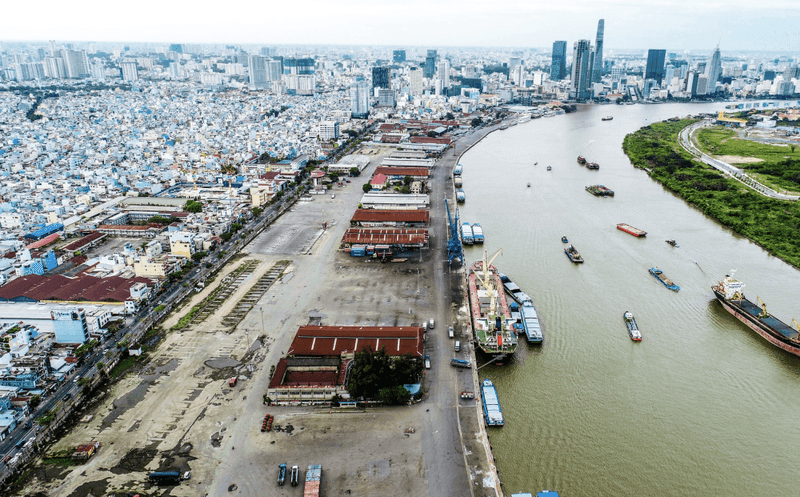
The Western Coastal Expressway CT.33 is proposed to be extended from about 150 km to nearly 260 km, connecting Ho Chi Minh City to Dat Mui in Ca Mau. The project is planned for development under a public-private partnership (PPP) model, aiming to open a new approach to transportation infrastructure in the Mekong Delta.
According to research proposals and the Vietnam Road Administration, CT.33 would be extended from the initial plan of roughly 150 km to around 260 km. The route would connect Ho Chi Minh City through the coastal provinces of Tien Giang, Ben Tre, Tra Vinh, Soc Trang, and continue to Dat Mui (Ca Mau).
In the initial phase, the expressway is designed as a four-lane highway with a design speed of 100 km/h. It is intended to link with the Ben Luc – Long Thanh expressway to the east and connect with the Chau Doc – Can Tho – Soc Trang axis to the southwest. Extending the full route to Dat Mui would significantly change the project’s role, transforming it from a connector into a complete coastal corridor.
The corridor is aligned with the Mekong Delta’s development characteristics, where maritime sectors such as fisheries, energy, logistics, and port activities are increasingly dominant. An expressway running along the coast is expected to reduce load on National Highway 60 and shorten transport times from coastal provinces to Ho Chi Minh City. It could also help form new growth poles along the coastal corridor.
CT.33’s biggest challenge is financing. Depending on the full set of options, total investment could exceed VND 90,000 billion. To maintain feasibility, the preferred option is around VND 65,000 billion.
At a meeting of the Executive Committee of the Vinh Long Provincial Party Committee, the Standing Board agreed to invest in the coastal corridor via PPP, with 70% from the budget and 30% from other sources. The total investment is expected to be about VND 65,000 billion, classified as a Class I, Group A project.
The plan is designed to reduce capital pressure and shorten implementation time by combining new construction and expansion: roughly 62 km of new expressway construction and the use and expansion of about 39 km of the existing National Highway 60.
Under the proposed schedule, the project could complete procedures by the end of 2026, begin construction in the same year, and come into operation in 2030. If implemented on schedule, CT.33 is expected to become one of the region’s most important transport corridors.
When CT.33 connects with other north–south and intra-regional routes, it would contribute to a multi-dimensional transport network. In particular, with comprehensive investment in ports in Tra Vinh, Soc Trang, and Ca Mau, CT.33 is expected to function as a main logistics corridor, directly linking Ho Chi Minh City and the southern economic region.
In the long term, extending the route to Ca Mau would complete the national coastal corridor, expand marine economy exploitation, and enhance resilience to climate change.
The project also faces challenges, including weak geological conditions and large-scale earthworks, as well as land clearance requirements. Extending the corridor to 260 km would require a comprehensive master plan to ensure coordination across provinces.
Overall, CT.33 is presented as a different development path for the Mekong Delta—shifting the region toward the coast by creating a new development structure, not only by building roads.







Premium gym chains are entering a “golden era” that is ending or already in decline, as rising operating costs collide with shifting consumer preferences toward more flexible, community-based ways to exercise. Long-term memberships are shrinking, margins are pressured by higher rents and facility expenses, and competition from smaller, more personalized…