•
•
•
•
•
•
•
•
•
•
•
•
•
•
•
•
•
•
•
•
•
•
•
•
•
•
•
•
•
•
•
•
•


On the last trading session before the holiday, foreign selling pressure was strong, with the standout being PC1 (PC1 Joint Stock Group) after a deep decline. On 29/04, foreign capital continued to net out for the sixth consecutive session, totaling about 1.3 trillion dong. Selling pressure mainly targeted VIC (Vincom Investment Corporation), which was liquidated for over 400 billion dong, while PC1 was net sold by more than 232 billion dong, ranking second in the market. VHM (Vinhomes) followed with a net selling of 146 billion dong.
PC1 recently posted a near-full-down move in the session, continuing a streak of three previous sessions with near-limit declines. Liquidity also surged to nearly 42 million shares, much higher than before. This suggests ample supply from sellers, alongside the appearance of bottom-fishing money absorbing shares at low prices after the sharp decline.
On the other hand, foreign buying pressure concentrated on VRE (Vincom Retail), with a net purchase of 139 billion dong, far ahead of other names. PVS and DCM were also net bought by 53 billion dong and 48 billion dong, respectively.
For April as a whole, foreign net outflows totaled more than 13.4 trillion dong, narrowing from 17.4 trillion dong in March. VHM recorded the largest outflow at nearly 5.9 trillion dong, more than double FPT’s outflow.
On the buying side, HPG led with net purchases of over 1.5 trillion dong, followed by MSN with 861 billion dong.
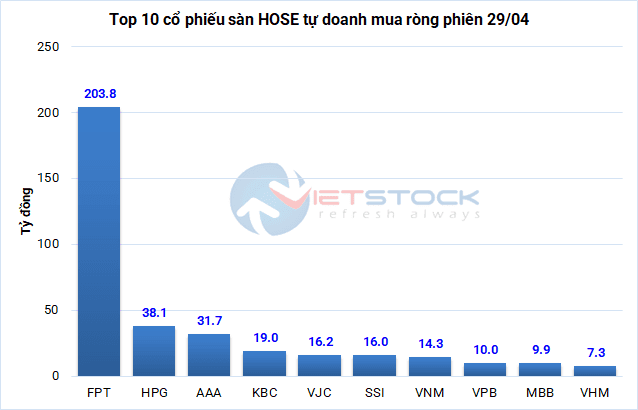
At the securities desk, the proprietary desk continued to buy a net 319 billion dong on HOSE. Domestic liquidity focused strongly on FPT (FPT Corporation) with 204 billion dong, far ahead of HPG (38 billion) and AAA (32 billion).
In contrast, MWG (Mobile World Investment) was the top stock sold by proprietary traders, with 55 billion dong, followed by VIC (20 billion) and TCB (almost 12 billion).
Source: VietstockFinance







Premium gym chains are entering a “golden era” that is ending or already in decline, as rising operating costs collide with shifting consumer preferences toward more flexible, community-based ways to exercise. Long-term memberships are shrinking, margins are pressured by higher rents and facility expenses, and competition from smaller, more personalized…




