•
•
•
•
•
•
•
•
•
•
•
•
•
•
•
•
•
•
•
•
•
•
•
•
•
•
•
•
•
•
•
•
•


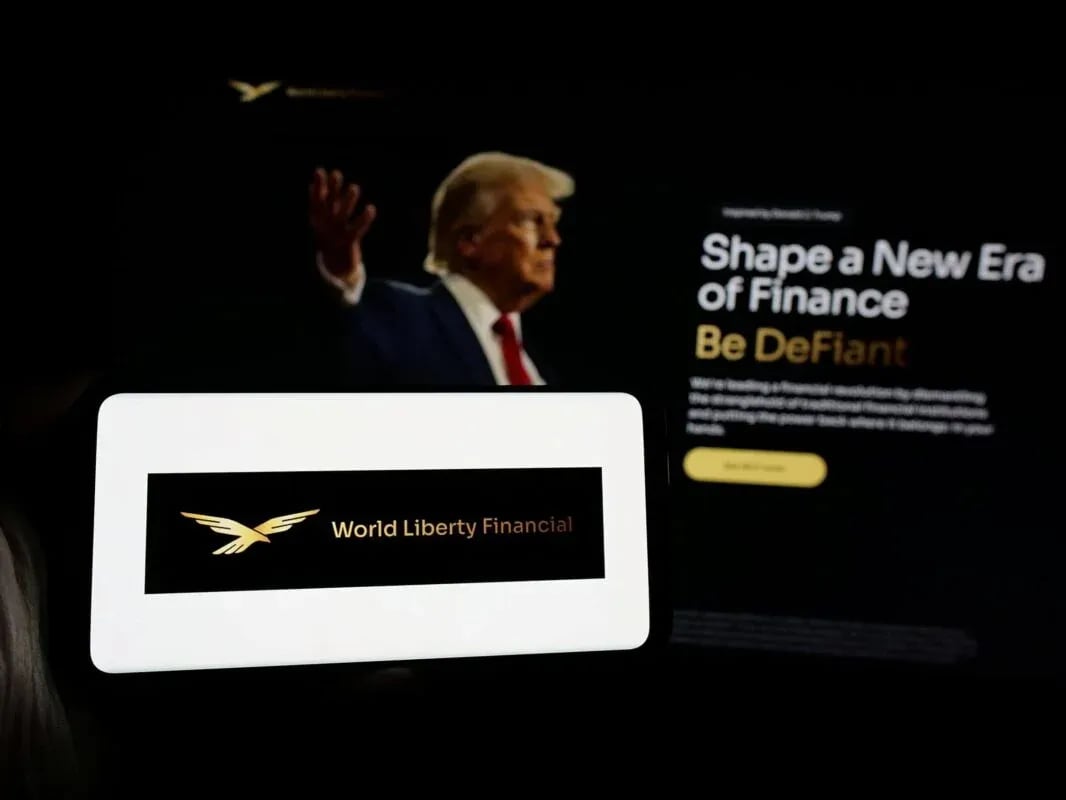
World Liberty Financial (WLFI) is back at the center of crypto controversy after a series of financial moves that have raised questions about governance, transparency, and potential conflicts of interest.
The WLFI token is currently trading at $0.07. Despite a sharp rise in social activity, the token is down 18% over the past week and down 67% from September highs.
With 600,000 wallets holding the token, reported losses now total $3.87 billion. Related entities have collected $350 million in fees over the same period.
WLFI deposited $5 billion worth of its own token as collateral on Dolomite, a decentralized finance (DeFi) lending protocol. Against that collateral, WLFI borrowed $75 million in stablecoins. Shortly after, $40 million of those funds moved directly to Coinbase Prime.
The transaction drew scrutiny because of the relationships involved. Dolomite was co-founded by Corey Caplan, who also holds an advisory role at World Liberty Financial. Critics argue the borrower had direct ties to the lender, the collateral, and the protocol itself.
After WLFI deposited the $5 billion in tokens, Dolomite’s utilization rate reportedly hit 100% almost immediately. The spike allegedly prevented ordinary depositors from withdrawing their stablecoins, even though balances appeared intact on paper.
Supporters of the criticism say the structure may not have served the broader user base, given the impact on withdrawals during the utilization spike.
LunarCrush reported that social mentions, engagements, and crypto market share for WLFI are all rising sharply, driven largely by these controversies.
WLFI is also facing a separate allegation involving Justin Sun, founder of TRON. Sun claimed that WLFI blacklisted his wallet using a backdoor function embedded in the project’s smart contract.
Sun said the action froze approximately $107 million of his holdings without notice or recourse, raising concerns about centralized control in a project marketed as decentralized.
A backdoor function capable of freezing wallets is described as inconsistent with core DeFi principles, implying that specific parties may have override authority over the protocol—an ability not typically associated with genuinely decentralized systems.
WLFI’s circulating supply has reached 31.7 billion tokens. Combined with the token’s 67% decline from its September peak, the supply growth is cited as reflecting ongoing pressure on token value.
Across the period described, the Trump family and associated business entities have reportedly collected $350 million in fees, while investor losses total $3.87 billion across 600,000 wallets.
Premium gym chains are entering a “golden era” that is ending or already in decline, as rising operating costs collide with shifting consumer preferences toward more flexible, community-based ways to exercise. Long-term memberships are shrinking, margins are pressured by higher rents and facility expenses, and competition from smaller, more personalized…