•
•
•
•
•
•
•
•
•
•
•
•
•
•
•
•
•
•
•
•
•
•
•
•
•
•
•
•
•
•
•
•
•


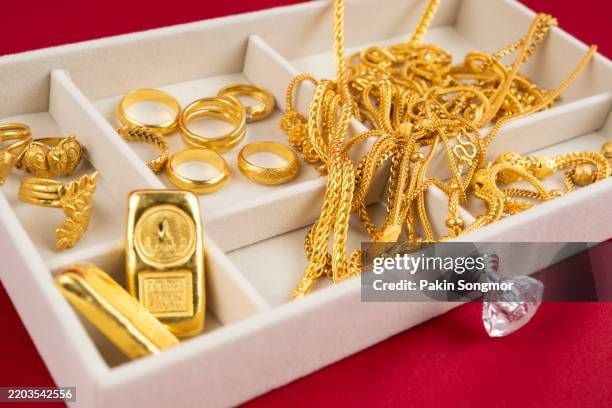
Q1 2026 stood out for investment demand in gold bars and coins across the ASEAN region, though Vietnam recorded the largest decline. The World Gold Council (WGC) said global gold demand in the quarter—including over-the-counter (OTC) trading—reached 1,231 tonnes, up 2% year-on-year. While trading volume rose only modestly, the value of demand climbed to a record $193 billion, up 74% year-on-year.
WGC data showed demand for gold bars and coins increased 42% year-on-year to 474 tonnes. In China, demand rose 67% year-on-year to 207 tonnes, the highest level on record and well above the 2013 peak of 155 tonnes. Other Asian markets—including India, South Korea, and Japan—also recorded higher buying of bars and coins.
WGC noted that demand was supported by price rallies and gold’s safe-haven appeal for individual investors. It also cited stronger regional momentum in the US (up 14%) and Europe (up 50%) for bars and coins.
In the ASEAN region, Q1 was a standout period for gold-bar and coin demand. Indonesia’s Q1 demand nearly doubled quarter-on-quarter to 23.6 tonnes, while Thailand reached 10 tonnes, the highest in Q1 since 2019.
Vietnam, however, recorded the largest decline in the region, with demand down 24% year-on-year to 9 tonnes. Despite the drop versus a year earlier, Vietnam’s demand was up 31% from Q4 2025.
WGC said total demand in the region remained relatively low, reflecting the impact of record-high gold prices. It also pointed to domestic supply constraints that widened the domestic gold price gap, which boosted demand for investment in gold through plain gold rings.
Demand for gold exchange-traded funds (ETFs) remained positive in Q1, with holdings rising by 62 tonnes. WGC attributed most of the increase to strong buying from Asia-listed funds, which purchased a net 84 tonnes in Q1.
However, outflows in March—primarily from US-listed funds—restrained the strength of the early-year rally.
Jewelry demand declined 23% year-on-year to 300 tonnes in Q1, which WGC linked to gold prices staying high throughout the quarter. The decline was broad-based across key markets, including China (down 32%), India (down 19%), and the Middle East (down 23%).
Despite lower volumes, jewelry demand rose in value terms, indicating consumers continued to buy gold even at elevated prices. WGC analysis also suggested some jewelry demand shifted toward bars and coins, particularly in China and India, where jewelry can be viewed as an alternative investment.
In ASEAN countries, high gold prices have driven a shift toward jewelry with lower gold content and investment characteristics, leaving demand volumes subdued across the four markets. Vietnam stood out: jewelry demand value reached a record $472 million, up 28% quarter-on-quarter.
WGC said this may partly reflect domestic supply constraints on gold bars, pushing demand toward plain gold rings as an alternative investment channel.
Central banks continued to support overall demand in Q1 with net purchases of 244 tonnes. WGC said this exceeded Q4 2025 and the five-year average, though some public-sector institutions increased selling, including the Central Bank of Turkey, the Central Bank of Russia, and the Azerbaijan State Oil Fund.
On the supply side, total gold supply in Q1 rose 2% year-on-year to 1,231 tonnes. Mine production reached a new quarterly record, while recycled gold increased only 5% despite high gold prices—suggesting supply responses remain constrained and contributing to tighter supply-demand dynamics.
Shaokai Fan, Asia-Pacific (excluding China) regional director and Global Central Bank liaison at the World Gold Council, said: “Geopolitics is expected to continue to be a major driver of gold demand in 2026 and in the years ahead. This supports the ongoing net-buy trend by central banks, strong capital inflows into global gold ETFs, and hoarding demand for physical gold bars and coins. High gold prices could continue to affect jewelry demand, though demand in this segment is expected to remain stable.”
Louise Street, Senior Market Analyst at WGC, added: “Gold prices fluctuated dramatically in 2026. After hitting a peak above $5,400 per ounce in January, the market underwent a sharp correction but remained under control. The combination of price strength and rising geopolitical risk has driven investment demand, especially in Asia, as investors seek safety in physical gold. At the same time, central banks' ongoing purchases have helped balance the pressures from strategic selling in the market.”
Street said geopolitical risk offset is expected to continue supporting investment demand, but a prolonged high-interest-rate environment could pose barriers, particularly in Western markets. She also noted that jewelry demand is expected to remain stable even as volumes decline, while mine production is expected to increase modestly, though energy-supply risks could constrain the outlook.







Premium gym chains are entering a “golden era” that is ending or already in decline, as rising operating costs collide with shifting consumer preferences toward more flexible, community-based ways to exercise. Long-term memberships are shrinking, margins are pressured by higher rents and facility expenses, and competition from smaller, more personalized…