•
•
•
•
•
•
•
•
•
•
•
•
•
•
•
•
•
•
•
•
•
•
•
•
•
•
•
•
•
•
•
•
•


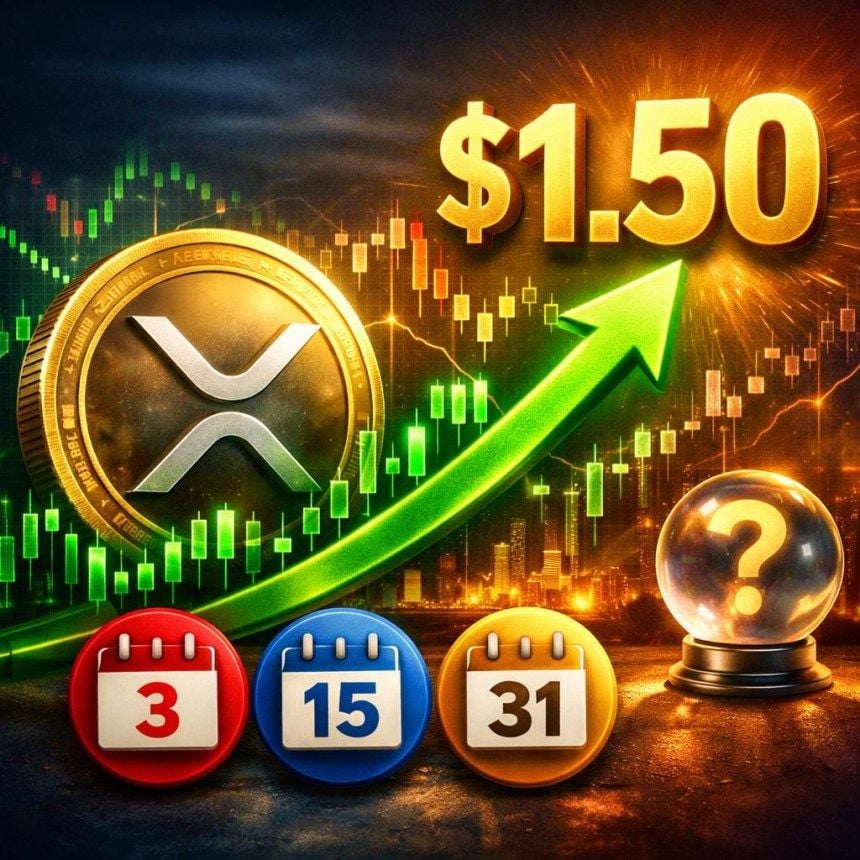
XRP has tracked the broader rebound in crypto markets as geopolitical conditions appear to be easing. With the reopening of the Strait of Hormuz and the possibility—though uncertain—of progress toward an end to the Iran–US conflict, risk appetite has improved. In that environment, XRP surged and briefly pushed toward $1.51 on Friday for the first time in almost a month, supported by catalysts that could determine whether the rally gains momentum or unwinds quickly.
Market expert Sam Daodu said XRP’s near-term outlook looks promising, but it depends on three key dates over the next two weeks.
The first factor is linked to the macro backdrop: a possible extension of the Iran–US ceasefire. The closest deadline is April 22, when the Iran ceasefire is set to expire. Daodu argued that if tensions return and the conflict resumes, the broader crypto market would likely fall again, dragging XRP lower.
The second date is tied to US regulation, and is described as the bigger driver for XRP’s longer-term recovery: the CLARITY Act markup targeted for late April by the Senate Banking Committee. Daodu suggested that if the bill is delayed beyond May, it would likely be shelved until 2027, removing what he called XRP’s biggest remaining catalyst for 2026.
The third key date is the Federal Open Market Committee (FOMC) meeting on April 28–29. The Federal Reserve is widely expected to hold interest rates at 3.50%–3.75%. Daodu said the meeting alone may not move XRP much, but the outcome could matter if geopolitical risk and regulatory momentum disappoint at the same time.
In particular, he noted that if the Iran ceasefire collapses and the CLARITY Act stalls, a hawkish surprise from the Fed would likely worsen conditions—highlighting that the interaction between events may shape the next phase of the market.
Based on those variables, Daodu outlined three price scenarios for XRP over roughly the next two weeks.
In the bullish scenario, XRP could trade in a range of $1.50 to $1.90. This would depend on the Senate Banking Committee scheduling the CLARITY Act markup before the end of April and on the Iran ceasefire being extended beyond April 22. Daodu said XRP could target the 200-day moving average near $1.90 by May, but reaching that level would require sustained ETF inflows and continued strength in Bitcoin (BTC).
In the base-case outlook, Daodu forecast XRP trading between $1.35 and $1.50. This scenario assumes the ceasefire extends past April 22, but the CLARITY Act markup is pushed to May.
In the bearish scenario, Daodu said XRP could fall into a range of $1.15 to $1.30. The trigger would be a resumption of the war after April 22 alongside oil prices spiking above $100, which would likely pressure the broader crypto market. He added that a move back below $1.30 would become more likely, and if Bitcoin breaks down below $70,000 at the same time, XRP could retest the $1.15 support area.
At the time of writing, XRP is trading around $1.49, still recording major gains of 10% over the seven-day period and 13% over the fourteen-day period.






Premium gym chains are entering a “golden era” that is ending or already in decline, as rising operating costs collide with shifting consumer preferences toward more flexible, community-based ways to exercise. Long-term memberships are shrinking, margins are pressured by higher rents and facility expenses, and competition from smaller, more personalized…