•
•
•
•
•
•
•
•
•
•
•
•
•
•
•
•
•
•
•
•
•
•
•
•
•
•
•
•
•
•
•
•
•


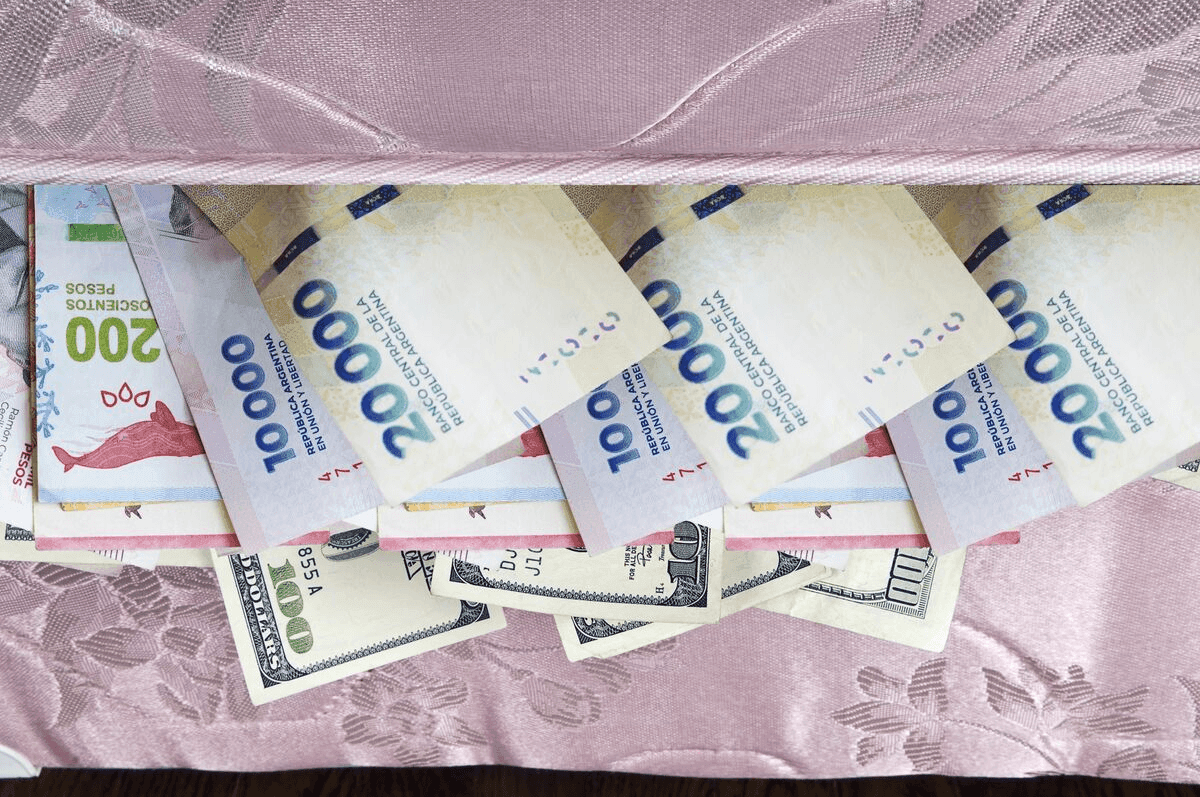
Argentine President Javier Milei’s push to encourage people to deposit cash into USD accounts has not yet produced a meaningful shift in behavior, underscoring how deeply distrust in the government and the banking system remains embedded after decades of financial shocks.
Nearly 25 years after the 2001 financial crisis, memories of the government’s order to convert USD deposits into pesos continue to shape public decisions. The peso later fell 75% in value, leaving many Argentines reluctant to move savings into the formal system.
Argentine officials estimate that about $170 billion sits outside the banking system. Milei has said that, after a period of tightening spending to address the effects of years of debt and overspending, this cash could become a resource to support economic growth.
In financial markets, Milei’s fiscal-tightening stance has been met with positive investor reaction, with bonds and other Argentine assets bought more heavily. However, the new incentive program, Fiscal Innocence, has not yet been enough to change habits of holding cash.
Launched in February, the program has coincided with USD deposits rising by less than $1 billion, according to the article. Fiscal Innocence aims to encourage Argentines to bring USD holdings back into the financial system by relaxing reporting requirements and reducing the risk of tax audits. Earlier this year, Argentina’s tax authority said USD savings “will not be required to provide explanations.”
Despite the program, demand for USD cash remains high. The article states that residents purchase about $2 billion in foreign currency each month, and that the figure could rise to more than $6 billion during periods of political tension, such as elections.
Officials estimate that about 10% of the USD purchased is kept in cash—stored at home, in a bank safe, or moved overseas.
The article describes how the practice of holding and trading USD cash has become routine, including a local vocabulary for different note series. Older $100 notes are referred to as “cara chica” (“small face”) because the Benjamin Franklin portrait is smaller; this series stopped being issued about 30 years ago. Newer $100 notes are called “cara grande” (“large face”) due to the larger portrait.
These notes are bought and sold at currency desks in shopping centers and small stores in areas such as Buenos Aires’ Calle Florida. For merchants, handling USD cash has become a familiar skill, particularly in shops selling high-value items where customers often pay in USD.
In a Bloomberg interview, Alejandro Lamas said shopkeepers in Argentina learn to spot counterfeit USD quickly, including older and worn notes, relying on tactile checks such as the feel of the paper and sliding a finger over the surface.
Trust in the banking system was severely damaged after the 2001 crisis, when the government introduced the corralito, restricting cash withdrawals and moving USD deposits to pesos. Subsequent currency crises, soaring inflation, and political upheaval reinforced the habit of keeping money outside the financial system and buying USD as a hedge against devaluation risk.
The article also notes that the Central Bank of Argentina (BCRA) allowed the peso to depreciate gradually, and that over the past decade the currency has lost 99% of its value.
Economy Minister Luis Caputo has argued that the situation is different and urged people to deposit savings into the official system, saying it benefits the economy by providing resources for activity and allows savers to earn returns rather than letting money depreciate at home.
According to the article, confidence in Milei’s administration is at its highest level in decades, and USD deposits in the banking system have risen to nearly $40 billion. Still, Caputo said many people remain hesitant, fearing a renewed expansionary spending policy—particularly with the 2027 presidential election approaching.
State-owned Banco Nación has also joined the effort, but with a softer approach. Adrian Yarde Buller, chief economist at broker Facimex Valores, said the amount of USD entering the banking system through Fiscal Innocence remains modest relative to the estimated size of assets held outside the financial system, adding that restoring trust in institutions will take time.
Lamas said he still deposits profits from his business into a bank, agreeing with the government’s message that placing money in banks today is safe. But he emphasized that many Argentines have not forgotten past financial shocks, arguing that decades of instability have shaped the cash-hoarding habit and that it may take a long time for people to gradually stop relying on it.

Premium gym chains are entering a “golden era” that is ending or already in decline, as rising operating costs collide with shifting consumer preferences toward more flexible, community-based ways to exercise. Long-term memberships are shrinking, margins are pressured by higher rents and facility expenses, and competition from smaller, more personalized…