•
•
•
•
•
•
•
•
•
•
•
•
•
•
•
•
•
•
•
•
•
•
•
•
•
•
•
•
•
•
•
•
•


Global stock markets have been setting records from Wall Street to Shanghai, with “smart money” and speculative capital increasingly targeting semiconductor leaders and artificial intelligence (AI) companies. The rally, however, is becoming more concentrated in a small group of mega-cap names, raising questions about whether investors are pricing a sustained technology shift—or a bubble that could unwind.
In April, global equities rose despite geopolitical tensions, energy price volatility, and uncertainty around interest rates. The main differentiator was the concentration of gains in leading technology firms.
In the United States, technology is projected to account for nearly 80% of the S&P 500’s 15.1% year-over-year profit growth in Q1. The market is increasingly split between the “Magnificent Seven” (Apple, Microsoft, Alphabet, Amazon, Meta, Nvidia, and Tesla) and the remaining 493 stocks.
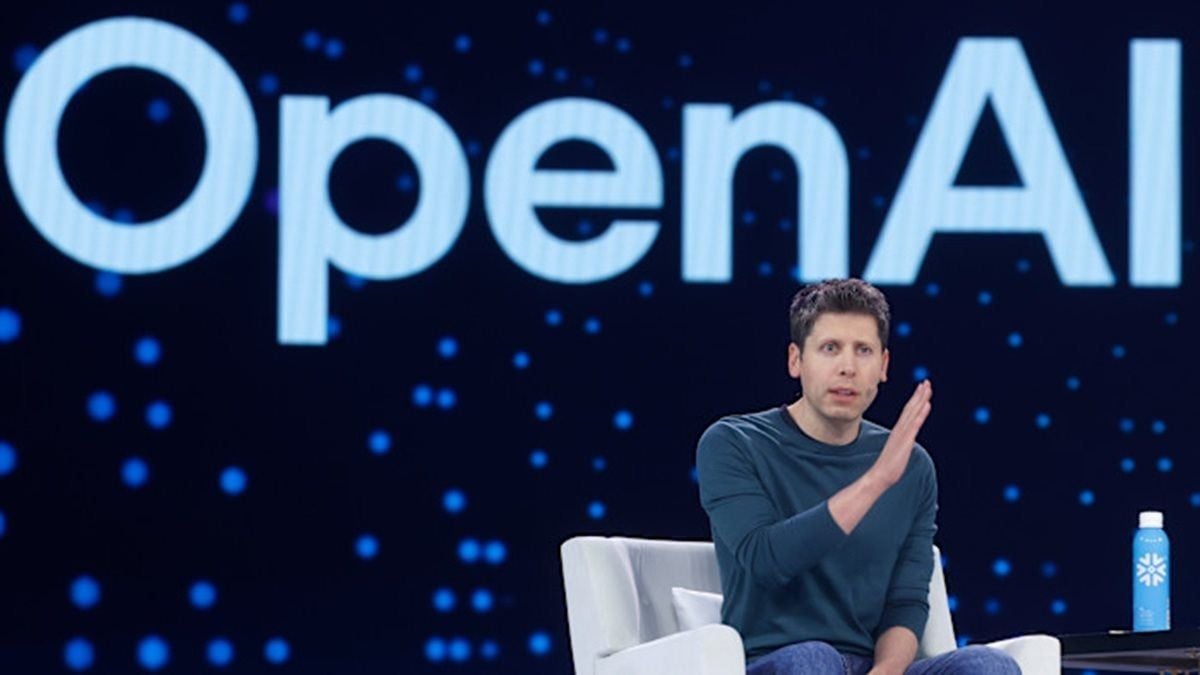
AI-related momentum is also extending beyond public markets. SpaceX is reportedly preparing what could be the largest IPO in history. Meanwhile, leaders in large language models (LLMs), including OpenAI and Anthropic, are rumored to be preparing for potential listings late this year or early 2027.
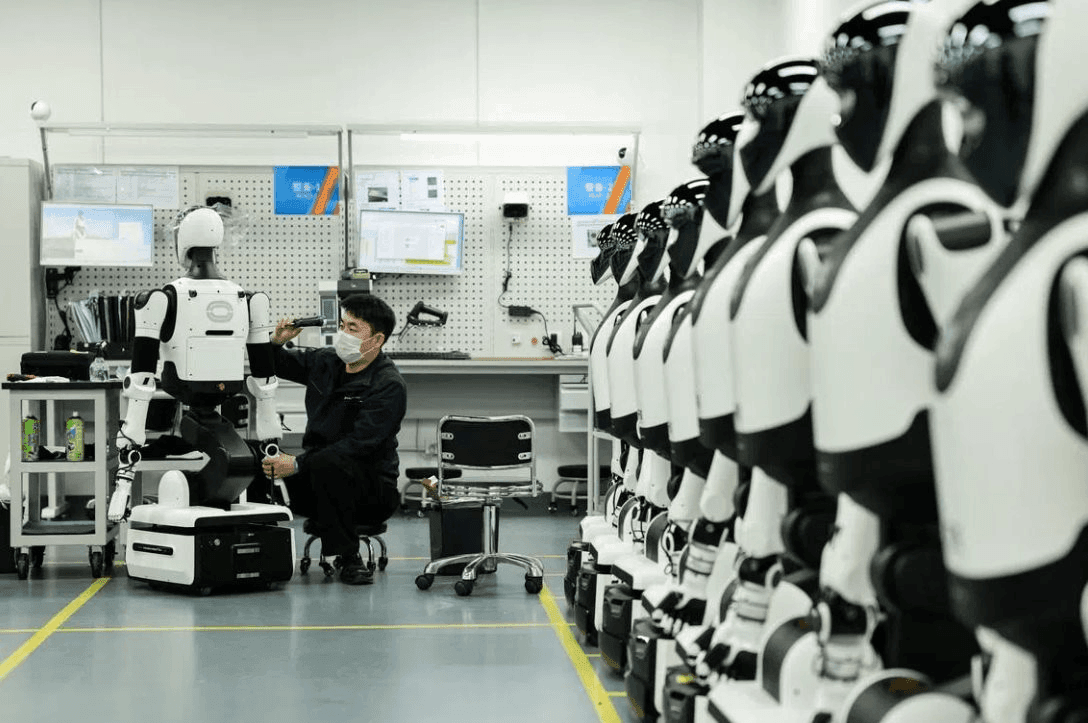
In mainland China, the AI build-out is described as moving at a different pace but with similar intensity. Capital has flowed through A-share markets covering AI hardware, computing power, optical modules, domestic chips, and humanoid robots. To support innovation, regulators reformed listing standards for the ChiNext board in April, allowing hard-tech firms to list even if they are not yet profitable.
In Hong Kong, the market has become a platform for AI startups, with total fundraising reaching the highest level in five years in the first quarter. Venture capital and private equity in China also surpassed 400 billion yuan in Q1 2026.
On April 27, the S&P 500 closed at a record 7,173.91, up about 30% from a year earlier. On the same day, Japan’s Nikkei 225 reached 60,537.36, and Korea’s KOSPI peaked at 6,615.03.
Torsten Slok, chief economist at Apollo Global Management, argues that the benchmark for financial markets increasingly resembles an “AI index” due to a lack of diverse growth drivers.
The current enthusiasm has prompted comparisons to the late 1990s dot-com bubble. Shiller’s cyclically adjusted price-earnings ratio (CAPE) has climbed to around 39–40. Over 155 years of history, this level has been exceeded only once—just before the dot-com bubble burst in March 2000.
A Deutsche Bank survey found that 57% of institutional investors view an AI price collapse as the greatest market risk for 2026.
Sequoia Capital also highlighted a potential mismatch between infrastructure spending and monetization. It noted that for every $1 invested in GPU infrastructure, roughly $4 of revenue from applications is required for the investment cycle to be commercially viable. Based on Nvidia’s data-center revenue in 2025, the market would need around $775 billion of application revenue. Yet the article estimates that actual AI application revenue today is roughly $150 to $200 billion, implying a gap of about $600 billion.
Jeremy Grantham, co-founder of GMO, added that investors should not assume valuations are reasonable simply because there is no obvious “big seller.” He criticized the herd behavior of fund managers who follow the crowd rather than taking positions against a bubble.
As capital flows into AI-linked equities, the distinction between winners and losers is becoming clearer. The article says true winners tend to be hardware firms with tangible profits tied to AI demand, and software companies with competitive technology but valuations that are far ahead of current revenue.
It also describes a broader group of firms that “tag AI” without a real connection to their core business. In hardware, optical-module makers such as Zhongji Innolight and Eoptolink are cited as having won large overseas orders. In software, LLM developers such as Zhipu AI and MiniMax are described as reporting rapid revenue growth, though heavy spending on model development leaves many companies unprofitable—raising questions about the path to sustainable profits.
The article concludes that markets are advancing faster than underlying reality. If enthusiasm fades, investors may face a “cleansing,” with companies that talk about AI without commercial traction potentially among the most vulnerable to a reversal in sentiment.
Source: SCMP, BI
Premium gym chains are entering a “golden era” that is ending or already in decline, as rising operating costs collide with shifting consumer preferences toward more flexible, community-based ways to exercise. Long-term memberships are shrinking, margins are pressured by higher rents and facility expenses, and competition from smaller, more personalized…