•
•
•
•
•
•
•
•
•
•
•
•
•
•
•
•
•
•
•
•
•
•
•
•
•
•
•
•
•
•
•
•
•


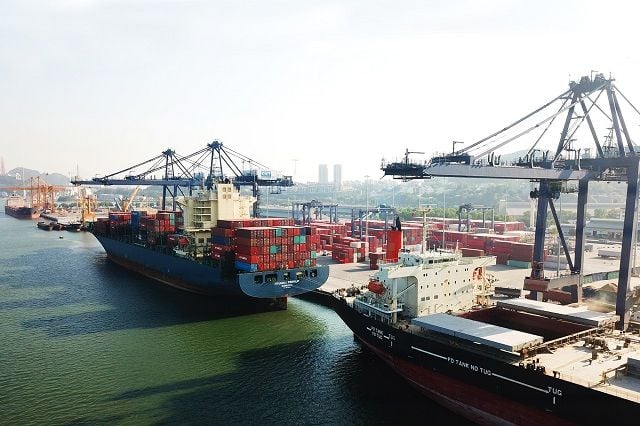
After real estate and energy, T&T Group, led by Bau Hien, is accelerating its push in the logistics sector through a series of port and dry port projects, expressways, airports, and multimodal cargo transportation initiatives. The company’s stated ambition is to participate more deeply in addressing Vietnam’s supply-chain organization and logistics infrastructure challenges.
A Vietnam logistics industry report by the SHS Center under Hanoi–Saigon Securities Joint Stock Company says Vietnam’s logistics costs are currently around 16% of GDP, well above the 10–12% range seen in many ASEAN economies. The report also highlights an imbalanced transport mix: road transport accounts for nearly 80% of total cargo, while inland waterways and rail have not been developed to their full potential.
SHS argues that the logistics challenge is less about mid-term growth and more about the system’s structural design. With the state unable to shoulder all infrastructure investment, private sector participation becomes decisive. In this context, T&T Group is described as one of the early firms entering logistics through long-term investment projects linked to national strategic infrastructure.
In its 2025 logistics outlook, SHS highlights a paradox: demand is rising quickly, but systemic capacity is not keeping pace. From 2025–2029, logistics are forecast to grow at 6–7% per year, supported by exports, e-commerce, and foreign direct investment. E-commerce is estimated at around $31 billion in 2025 and is expected to grow at double-digit rates, increasing the need for logistics that can move goods quickly, reliably, cost-effectively, and at scalable capacity.
However, SHS notes that growth is occurring on an under-structured system. Road transport’s dominance makes it harder to reduce logistics costs sustainably, even as operating efficiency improves in individual segments. Lower-cost bulk modes such as inland waterways and rail have not played their expected role due to insufficient integrated logistics centers and coherent connections—creating what SHS describes as a “growth-constrained” logistics sector.
SHS identifies 2025–2035 as a new cycle for logistics infrastructure investment, citing projects including Long Thanh International Airport, the Lao Cai–Hanoi–Hai Phong railway, and networks of expressways and regional logistics centers. As the state shifts toward building institutional frameworks for infrastructure development, many logistics projects are being implemented with increased private-sector participation, where enterprises take the lead in investment and execution and manage projects more autonomously.
Within this framework, logistics is positioned as more than a collection of separate projects—becoming a system-wide test of deployment capability, with long-term private investors increasingly playing a direct role in improving Vietnam’s logistics structure.
As a private, multi-industry conglomerate, T&T Group’s logistics approach is presented as a strategic effort to integrate infrastructure with supply-chain organization.
In 2015, T&T Group became a strategic shareholder of Quang Ninh Port. Rather than treating the port as an isolated asset, the company is described as reframing Quang Ninh Port’s role within the northern logistics network. Within a year of T&T’s involvement, port throughput rose about 30%, handling increased by 33%, revenue rose 31%, and profits increased by as much as 280%. The port also began sharing pressure with the Hai Phong port system, contributing to improved throughput capacity in the northern economic hub.
After more than a decade of restructuring, the report says Quang Ninh Port’s role has grown further. In 2025, throughput exceeded 11 million tonnes, revenue was around VND 702 billion, and profit nearly VND 165 billion—its highest since the port’s establishment in 1977. The port holds over 90% market share for port and logistics services for bulk agricultural products in Cai Lan and the northern region, gradually expanding from a transshipment hub into an integrated logistics center.
In 2018, T&T Group partnered with Singapore-based logistics firm YCH. The collaboration produced the Vietnam SuperPortTM, described as Vietnam’s largest multimodal logistics hub and the first component of the ASEAN Smart Logistics Network.
Vietnam SuperPortTM is presented as an integrated multimodal logistics model rather than a traditional warehouse hub, organizing road, rail, inland waterways, and high-tech logistics within a connected framework intended to reduce transport costs and improve cargo movement efficiency at scale.
The report cites the use of robotics for sorting, artificial intelligence, autonomous vehicles, and a “long-haul warehouse” model as foundational to optimizing operations and strengthening cross-regional supply-chain connectivity. Over the long term, it is expected to improve national logistics capacity and help bring Vietnam’s logistics costs closer to leading regional logistics centers.
Beyond warehouses and ICDs, T&T is described as seeking logistics centers with regional importance. Along the Hanoi–Lao Cai–Hai Phong axis, the report says ICD Vinh Phuc could become a regional and even national-level cargo reorganization point near major production hubs and export corridors.
In the north, Cai Ninh Port and Nam Phuc Tho Industrial Zone (Hanoi) are described as helping distribute flows more evenly rather than concentrating them in one area. In the south, the report notes the nearly 200-hectare Vam Cang Industrial Park in An Giang is under construction, framed as a logistics, processing, and higher-value supply chain hub intended to strengthen transshipment, processing, and agricultural–aquaculture export capacity.
In the Central Highlands, T&T’s involvement in the Bao Loc–Lien Khuong expressway is described as a key element in reorganizing cross-regional logistics. Once completed, the route is expected to expand connectivity between the Central Highlands and seaports, logistics hubs, and export chains in the south, supporting more efficient logistics for highland agricultural supply chains.
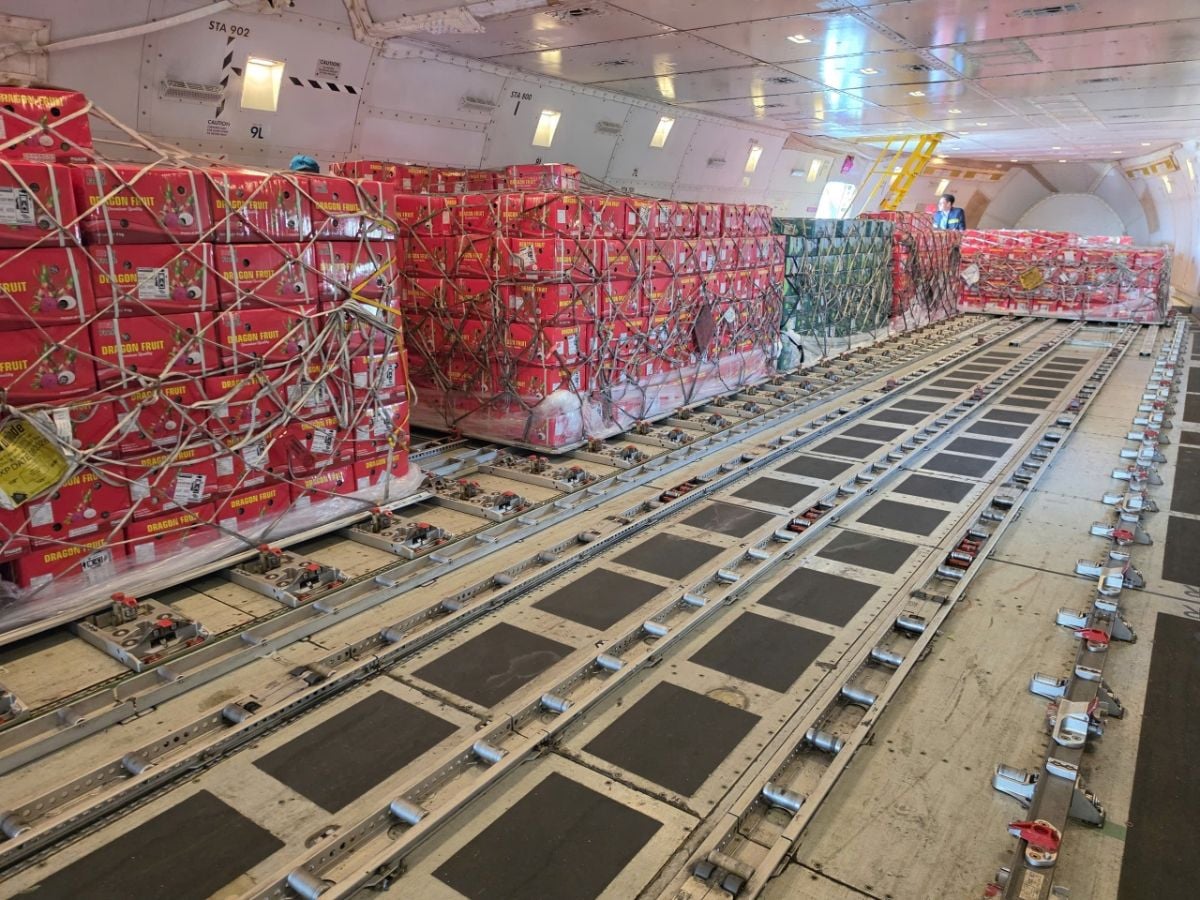
T&T is also expanding into air logistics, described as increasingly important amid rising value-added exports and cross-border e-commerce. In the central region, Quang Tri Airport is nearing completion and is positioned as a major multimodal logistics hub for the region, with air cargo expected to connect directly to the port system and, in the future, to road and rail networks.
The report also describes T&T’s approach as evolving from building individual infrastructure projects to creating an aviation–logistics–services–commerce and airport-city industrial complex. Quang Tri Airport is expected to become one of the region’s largest logistics hubs.
On the operational side, T&T’s stake as a strategic shareholder in Vietravel Airlines is described as helping the group complete a multimodal logistics framework spanning sea–land–air amid growing demand for high-value goods transport and cross-border commerce.
Data cited in the report shows air-cargo activity at Vietravel Airlines increased substantially. In Q3 2025, freight tonnage reached about 1,025 tonnes; by Q4 2025, it more than doubled to 2,332 tonnes. In Q1 2026, despite Tet holidays and maintenance, output remained above 2,100 tonnes. The fleet is planned to grow to 12 aircraft by the end of 2026 to further boost passenger and cargo capacity.
The report notes that many of the components T&T participates in are long-cycle infrastructure projects requiring large capital—an area few private firms pursue for extended periods. It also points to experience from top Asian logistics hubs such as Singapore and Dubai, where national logistics capacity is said to emerge from the ability to organize large-scale multimodal networks rather than from single projects.
From T&T’s trajectory, the report says Vietnam is beginning to see private firms participate more deeply in engineering integrated logistics infrastructure rather than funding discrete parts. This is presented as a key condition for Vietnam to progressively lower logistics costs, enhance supply-chain competitiveness, and move closer to becoming a regional transshipment hub.
T&T Group founder and CEO Do Quang Hien is quoted as saying: “Logistics is the lifeblood of the economy, and if Vietnam wants to break through, it must become the region’s distribution hub.”
Source: Fili.vn and Vietstock analysis, 13 May 2026.

Premium gym chains are entering a “golden era” that is ending or already in decline, as rising operating costs collide with shifting consumer preferences toward more flexible, community-based ways to exercise. Long-term memberships are shrinking, margins are pressured by higher rents and facility expenses, and competition from smaller, more personalized…