•
•
•
•
•
•
•
•
•
•
•
•
•
•
•
•
•
•
•
•
•
•
•
•
•
•
•
•
•
•
•
•
•


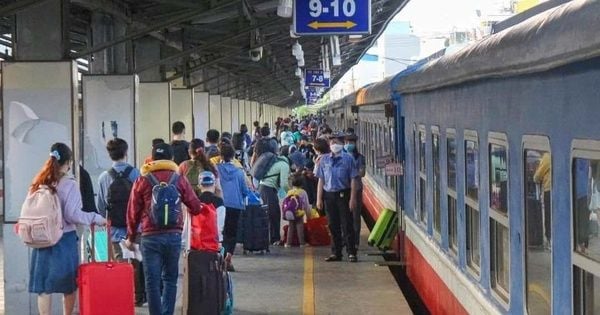
Vietnam Railways Corporation (VNR) has launched a “flexible ticket pricing” feature on its online ticketing system, aiming to improve operating efficiency and expand access to rail services. The mechanism is powered by an artificial intelligence (AI) platform that analyzes real-time ticket sales data for each seat on every train.
Under the system, when a seat or sleeper has been sold for a long journey—defined as occupying more than 70% of the distance—the price for the remaining short segments of that seat is automatically adjusted downward.
Unlike traditional promotions that apply broadly, VNR’s flexible pricing is applied at the level of individual seats. This approach is designed to maximize capacity utilization on each train while offering passengers more affordable options for shorter trips.
VNR states that the discount can reach up to 35% for short journeys.
On the SE7 Hanoi–Thanh Hóa service, carriage 2 (soft seat), seat number 4 was priced at 248,000 VND, representing a saving of 82,000 VND for the passenger.
On the SE8 Saigon–Long Khánh route, a second-floor sleeper position 23 was reduced to 191,000 VND, down 47,000 VND from the original price.
VNR said the policy is being piloted on SE5, SE6, SE7, and SE8 passenger trains from now until May 15, 2026. Discounted seats are indicated on the carriage diagram with a light blue symbol and discount information, intended to help passengers select options more easily.
VNR said the flexible pricing feature has been synchronized across the entire online ticketing system, allowing passengers to access preferential fares anytime and anywhere via electronic devices.
The introduction of flexible pricing is positioned as part of the rail sector’s digital transformation, with VNR citing potential benefits including improved operational efficiency, revenue optimization, and stronger competitiveness as travel demand continues to grow and diversify.






Premium gym chains are entering a “golden era” that is ending or already in decline, as rising operating costs collide with shifting consumer preferences toward more flexible, community-based ways to exercise. Long-term memberships are shrinking, margins are pressured by higher rents and facility expenses, and competition from smaller, more personalized…