•
•
•
•
•
•
•
•
•
•
•
•
•
•
•
•
•
•
•
•
•
•
•
•
•
•
•
•
•
•
•
•
•


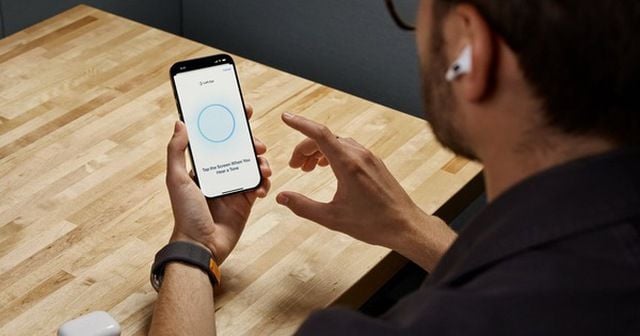
Apple has released new findings from the Apple Hearing Study, a research project launched in 2019 in collaboration with the University of Michigan and the World Health Organization (WHO). The study includes more than 160,000 participants registered in the United States and is described by Apple as one of the largest hearing-health studies conducted using consumer devices.
The study’s data connect hearing ability with the rate of motor decline as people age. Apple reports that hearing loss can make the body “slow down” by up to 13%.
Using passive motion sensor data collected through iPhone from more than 57,000 participants, researchers found that walking speed tends to decline as the degree of hearing loss increases. The pattern is most pronounced among people over 60: those with poorer hearing were recorded walking 13% slower than those with good hearing.
Apple notes that walking speed is widely used in medicine as an indicator of overall physical health, reflecting coordination across systems including the brain, muscles, vision, balance, and hearing.
According to the Apple Hearing Study, when hearing ability declines, the brain may need to allocate more resources to processing ambient sounds and spatial orientation. Apple says this shift can affect balance, reflexes, and mobility.
The study also emphasizes that “normal” hearing does not always mean good hearing in everyday life.
The findings highlight potential gaps between clinical measures and daily experience. Apple points to the 4PTA index, which represents the quietest sound level a person can hear at key communication frequencies.
Under WHO standards, a 4PTA of 25 dB or less is considered normal. However, Apple reports that real-world outcomes can differ from these thresholds. Among nearly 85,000 people whose results fell within the “normal” range, more than 16% still reported difficulties hearing or rated their hearing as average. About 7% said they had trouble focusing on conversations or faced significant barriers to communication in noisy environments.
Researchers interpret this as evidence that hearing tests conducted in quiet clinical settings may not fully capture everyday listening challenges.
Apple says the study’s approach differs from traditional models because it uses iPhone as a passive, long-term health-tracking platform rather than requiring frequent clinic visits. Apple reports that the resulting dataset has been integrated into consumer products.
On AirPods Pro 2 and newer AirPods Pro models, users can check hearing health and use direct listening features through iPhone or iPad. On iPhone or iPad, users can access the feature via Settings > AirPods, where a Hearing Health section appears.
Apple frames this as part of a broader shift in which AirPods are increasingly used as health-tracking tools, similar to how Apple Watch expanded from basic smartwatch functions into tracking for metrics such as heart rate and mobility.
Apple concludes that earlier detection of hearing problems may support day-to-day communication and could also help maintain mobility and quality of life as people age.

Premium gym chains are entering a “golden era” that is ending or already in decline, as rising operating costs collide with shifting consumer preferences toward more flexible, community-based ways to exercise. Long-term memberships are shrinking, margins are pressured by higher rents and facility expenses, and competition from smaller, more personalized…