•
•
•
•
•
•
•
•
•
•
•
•
•
•
•
•
•
•
•
•
•
•
•
•
•
•
•
•
•
•
•
•
•


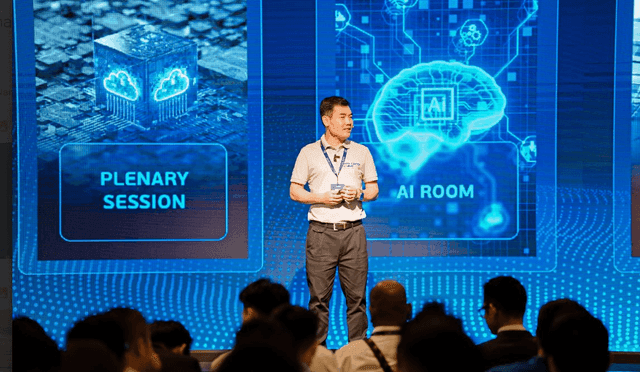
Autonomous AI agents mark a shift from systems that answer questions to tools that can proactively perform tasks on a user’s behalf. This change is expected to drive productivity gains, but it also introduces new security risks because AI agents can plan and execute actions autonomously. The Data Center & Cloud Infrastructure Summit highlighted this dual picture: AI agents can boost efficiency, yet they can also be weaponized to carry out rapid, fully autonomous cyberattacks. Mr. Le Ba Tan, CEO of Viettel IDC, said the AI Agent is now officially participating in cyberspace competition.
Projections cited at the summit suggest that by 2028 there will be about 1.3 billion AI agents acting as human assistants to automate operations such as report synthesis and other complex tasks. The key difference from earlier AI is that traditional systems typically respond passively, while AI agents can take proactive actions based on user intent.
The summit described six core human-like capabilities that underpin this generation: perception, planning, reasoning, action, interaction, and context understanding. It also pointed to three pivotal breakthroughs: (1) chain-of-thought problem solving that breaks large problems into smaller parts; (2) tool use that enables communication with databases, APIs, sensors, and other AI models; and (3) self-adjustment, allowing agents to evaluate the quality of prior work and improve subsequent steps.
With autonomy and planning, AI agents can function like a “super employee” for enterprises. However, the same capabilities can be misused if they fall into the hands of criminals.
Global information-security spending is expected to reach $240 billion. Experts at the summit warned that by 2027 a large portion of cyberattacks will involve artificial intelligence.
According to the summit, the rise of large language models (LLMs) and AI agents has enabled new attack methods targeting four vulnerability surfaces:
The cybercrime ecosystem is also commercializing these capabilities through “Fraud-as-a-Service” and “Malware-as-a-Service.” The summit identified the greatest risk as “Autonomous Service,” in which AI agents can plan and execute cyberattacks without human intervention.
It also noted that non-human attacks are accelerating: the mean time to compromise has fallen from 84 minutes to about 29 minutes, and some attacks can occur in as little as 27 seconds, narrowing defenders’ response windows.
In response to threats from AI agents, the summit argued that enterprises cannot rely only on traditional security measures. The proposed approach is to use AI to defeat AI. It cited that applying AI to security can reduce incident-response times by up to 96% and improve security-decision accuracy by about 7%.
In Vietnam, awareness is increasing, with roughly 86% of enterprises already applying AI to automate, orchestrate, and respond to cyber incidents.
To address the challenge, the security ecosystem needs to be designed comprehensively. Viettel IDC described a three-layer defense model—Protection, Detection, and Response—along with tools including DDoS protection, website security, and anomaly detection to maintain operational stability.
The summit also projected that by 2028 more than 75% of enterprise platform applications are expected to adopt new-generation information-security standards. It emphasized that technology is not only about isolated components, but is systemically shaping the digital-infrastructure value chain.
As Mr. Le Ba Tan stressed, information security is decisive: without AI, competitiveness and profitability will be limited; without security and user trust in cloud infrastructure, those value chains will not realize their potential and will become meaningless.

Premium gym chains are entering a “golden era” that is ending or already in decline, as rising operating costs collide with shifting consumer preferences toward more flexible, community-based ways to exercise. Long-term memberships are shrinking, margins are pressured by higher rents and facility expenses, and competition from smaller, more personalized…