•
•
•
•
•
•
•
•
•
•
•
•
•
•
•
•
•
•
•
•
•
•
•
•
•
•
•
•
•
•
•
•
•



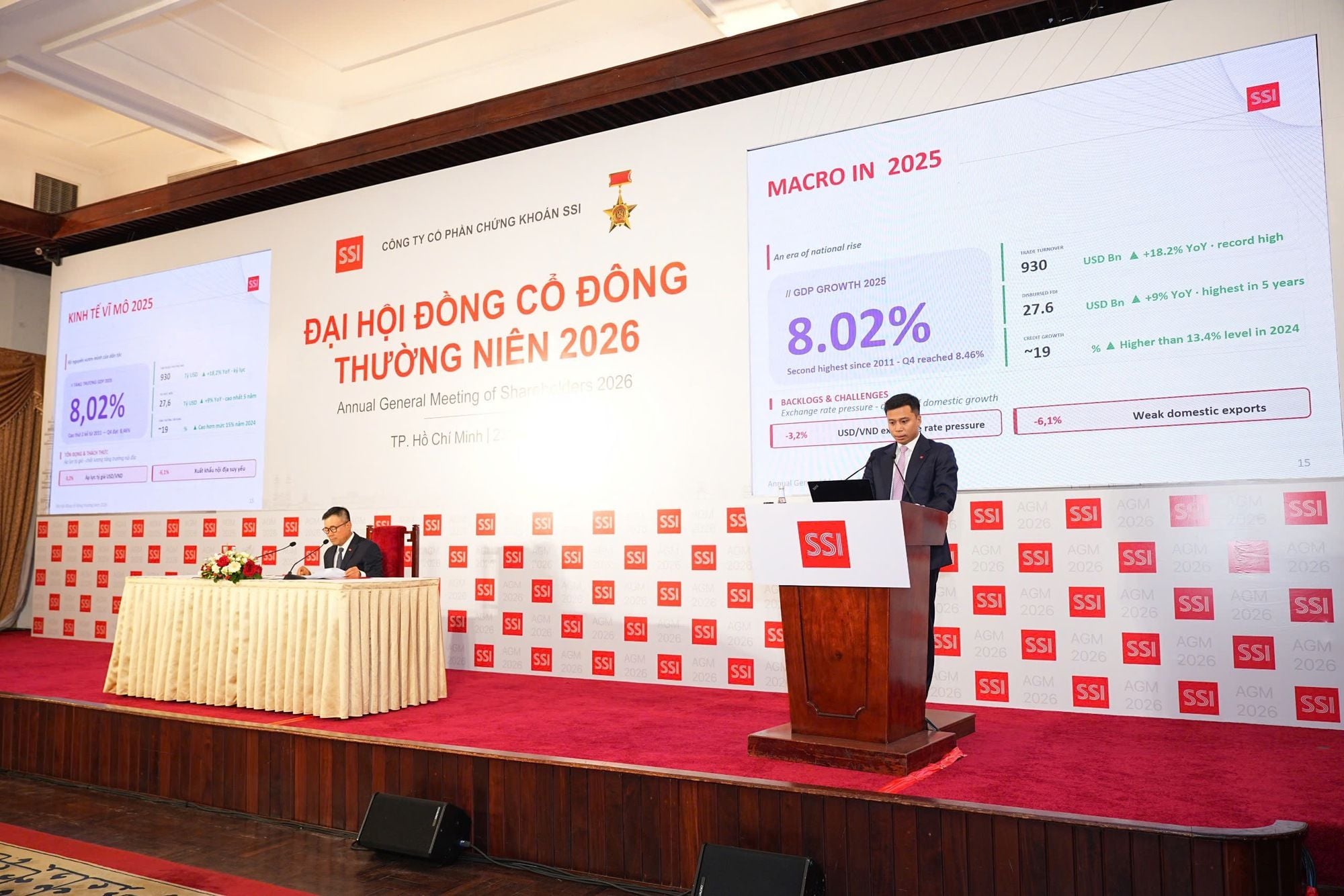
On the afternoon of April 23, 2026, ELCOM Technology and Telecommunications Joint Stock Company (ticker: ELC) held its 2026 annual general meeting. exchange rates today
Looking into 2026, management said ongoing geopolitical tensions in many regions have disrupted supply chains, pushing up input material prices and logistics costs. Bank interest rates have continued to rise, while customers have tightened their investment budgets. Against this backdrop, Elcom plans to focus resources where they matter, control costs, reduce financial leverage, and diversify markets, aiming for real growth while prioritizing profit preservation amid challenges and risks.
The Board proposed revenue of VND 1,745 billion and net profit after tax of nearly VND 143 billion for 2026, representing increases of 15% and 11%, respectively, compared with the same period last year—both setting record highs.
For the 2025 profit distribution plan, Elcom will issue 5.5 million shares to pay dividends, corresponding to a 5% rate (for every 100 shares, shareholders receive 5 new shares). The 2026 dividend is expected to be up to 10%.
Elcom also plans to issue 2.2 million bonus shares at a 2% rate (for every 100 shares, shareholders receive 2 new shares). The funds will come from undistributed profits on the audited 2025 financial statements.
In addition, the company proposed issuing up to 3.6 million ESOP shares at VND 10,000 per share, to be implemented in 2026. ESOP shares will be non-transferable initially, with 50% transferable after 1 year and the remaining 50% after 2 years from the end of the issue.
At the meeting, management proposed expanding several business lines, including computer consulting and IT infrastructure management; IT infrastructure and data processing; shipbuilding and floating structures (including details related to aircraft and spacecraft production); and aircraft and spacecraft and related machinery production, excluding products for defense and security.
In 2025, Elcom reported revenue of VND 1,518 billion, exceeding the plan by 31%, up 90% year over year, and the highest growth in many years. Net profit after tax reached VND 129 billion, completing 102% of the plan and up 29.5% from the previous year.
All proposals were approved by the General Meeting.
Mr. Phan Chiến Thắng – Chairman of the Board: The long-term profit margin of the technology segment is expected to improve gradually. However, the current revenue mix is mainly from solution and equipment projects, which have relatively lower margins. Large projects such as the Long Thanh airport can bring branding but with lower margins. In contrast, smart transportation solutions (ITS) and defense-security projects offer better margins.
In 2025, ITS delivered positive results in the first half, but the second half was significantly impacted by exchange rate fluctuations and component costs, especially RAM and chips, which at times rose by 2–2.5 times versus the previous year. This affected margins. Although many contracts were signed, the company moderated deployment progress compared with prior years to ensure efficiency as input costs stabilize. Margin improvement is expected when costs settle.
Chairman: In security and defense, Elcom focuses on high-tech areas such as reconnaissance, data analysis, and strategy. For unmanned aerial vehicles (UAVs), the company studied and tested early in Vietnam but did not pursue mass production. Instead, Elcom concentrates on specialized solutions such as reconnaissance, surveillance, and especially “anti-drone” technology based on AI and image analysis.
In the coming period, the company will apply developed technologies to practical applications, particularly solutions involving image processing, satellite data, and UAV video. Management described this as a long-term orientation based on AI vision, aimed at a broader market rather than a single project.
Chairman: Elcom is not a real estate company, but has accumulated assets. The strategy is selective investment with risk control, avoiding growth at all costs. The company said it has advantages in land access at reasonable costs due to relationships and prior accumulation. It actively seeks investment opportunities and collaborates with partners to implement projects while ensuring strong capital flow control.
In the portfolio, Elcom owns or participates in assets such as office buildings, controlling stakes in some units, and land plots in the Tây Hồ Tây area. The company is pursuing a 39-hectare industrial cluster project in Phú Xuyên, subject to investment policy approval, which management said would be a major opportunity. A further 34-hectare project in Mê Linh is also under consideration with partners. Management said it will maintain tight financial control to keep debt and collateral at safe levels, aiming to increase asset value and support long-term development for the company and its employees.
Chairman: Elcom has applied AI early, particularly in smart cameras, reconnaissance systems, and big data processing. Management said the AI boom—especially after OpenAI platforms—has driven major changes across the market. For Elcom, AI is both an opportunity and a challenge.
On the positive side, applying AI in operations and R&D increases efficiency by about 70–80% compared with before, especially for platform products such as AI cameras. For services, management noted AI may reduce demand as customers gain self-implementation capabilities. However, the company said AI’s share in the revenue structure is not yet large. At the same time, AI development is expected to open up new business directions in the future.
Chairman: As of end-Q1 2026, the value of signed contracts was around VND 1,100–1,200 billion, with about VND 200 billion added recently from a project in Hanoi. In the remaining quarters, management said it still sees opportunities to sign new contracts and expects total signed contracts for the year to reach around VND 4,000 billion.
Ngọc Ly
Nhịp sống thị trường
Source: Nhịp sống thị trường
Premium gym chains are entering a “golden era” that is ending or already in decline, as rising operating costs collide with shifting consumer preferences toward more flexible, community-based ways to exercise. Long-term memberships are shrinking, margins are pressured by higher rents and facility expenses, and competition from smaller, more personalized…