•
•
•
•
•
•
•
•
•
•
•
•
•
•
•
•
•
•
•
•
•
•
•
•
•
•
•
•
•
•
•
•
•


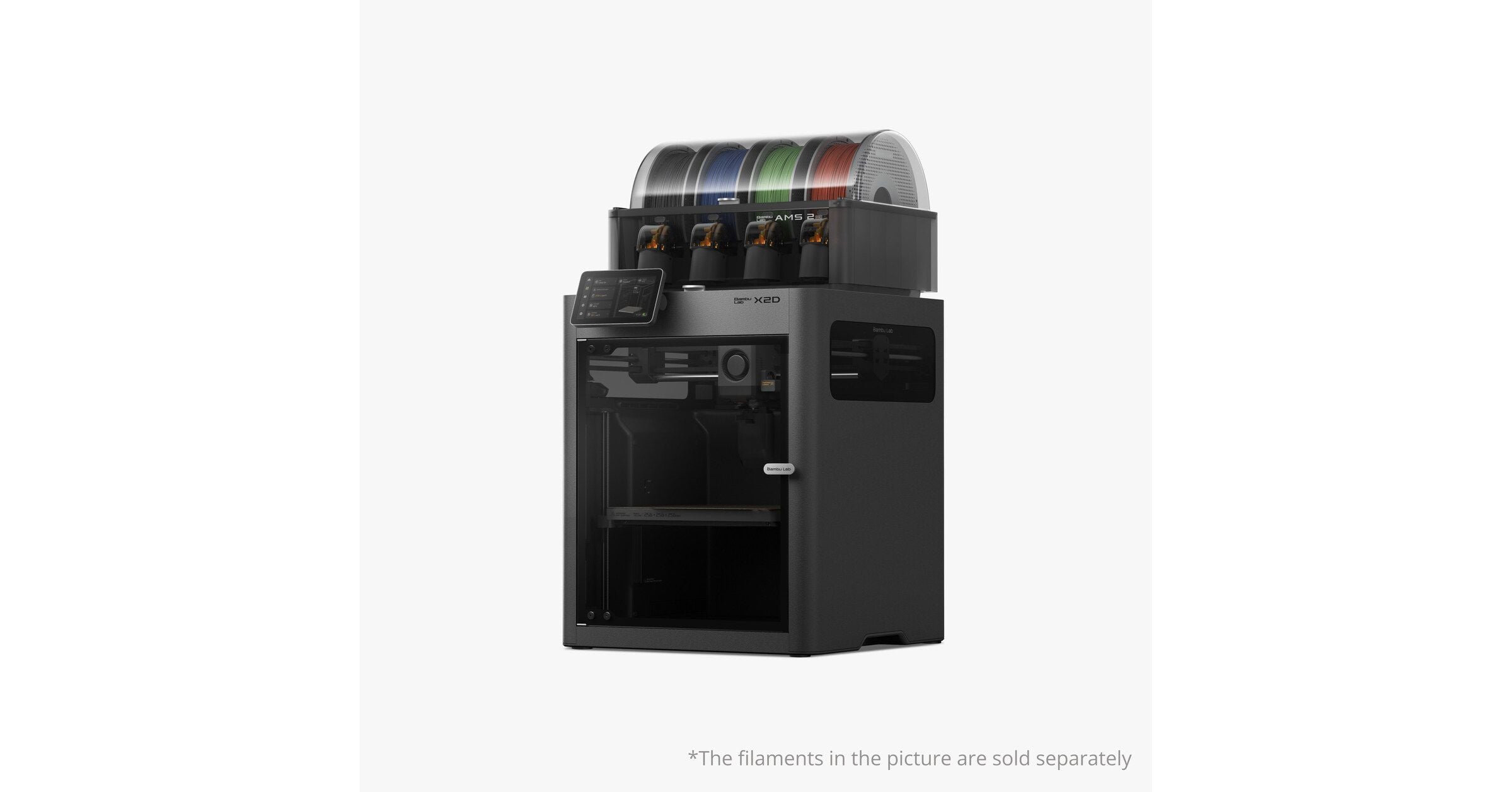
For years, 3D printing has been the domain of enthusiasts who were willing to spend hours calibrating and experimenting with settings. Bambu Lab changed this in 2022 with the introduction of the X1 series, which demonstrated that a 3D printer can work out of the box without expert knowledge, trial and error. The X2D takes that approach further.
The X2D’s key innovation is how it manages itself. It auto-calibrates before each print, monitors the process across dozens of sensors, and adjusts deviations from expected parameters in real time. If something goes wrong, the machine stops before something goes wrong, rather than continuing with a likely failed result.
All of this runs in the background. The user selects a model, clicks “Print,” and receives a finished object.
The X2D prints with two nozzles. In practice, this means support structures—temporary constructs required for complex geometries—can be removed with ease. The article says that instead of sanding and scraping after printing, the finished object is ready to use.
It is positioned for users creating home accessories, decorative elements, jewelry, toys, and fashion accessories, with the difference described as immediate and tangible.
The print chamber is enclosed and actively temperature-controlled. A three-stage air filtration system captures particles and absorbs odors, enabling placement in a living room, studio, or office.
The X2D is part of the broader Bambu Lab ecosystem, the Bambu Experience. The purchase is described as providing not only a printer, but an environment in which hardware, software, materials, and community are designed as a single system rather than assembled from separate parts.
The article lists Bambu Studio, Bambu Handy, MakerWorld, Maker’s Supply, Maker’s Lab, and a designer crowdfunding program as part of that ecosystem. It also says filaments are matched to specific hardware, models are shipped with validated print settings, and components are standardized to correspond to printed designs.
The article frames the goal as shrinking the distance between an idea and a finished object by removing friction points between the user and the result. It emphasizes that the X2D is intended to be ready to use out of the box, supported by an ecosystem that becomes more useful over time.
The X2D is available from $649 / €629. The Combo version, including a multi-material feeding system, is available from $899 / €849. Sales begin on launch day at bambulab.com.
Premium gym chains are entering a “golden era” that is ending or already in decline, as rising operating costs collide with shifting consumer preferences toward more flexible, community-based ways to exercise. Long-term memberships are shrinking, margins are pressured by higher rents and facility expenses, and competition from smaller, more personalized…