•
•
•
•
•
•
•
•
•
•
•
•
•
•
•
•
•
•
•
•
•
•
•
•
•
•
•
•
•
•
•
•
•


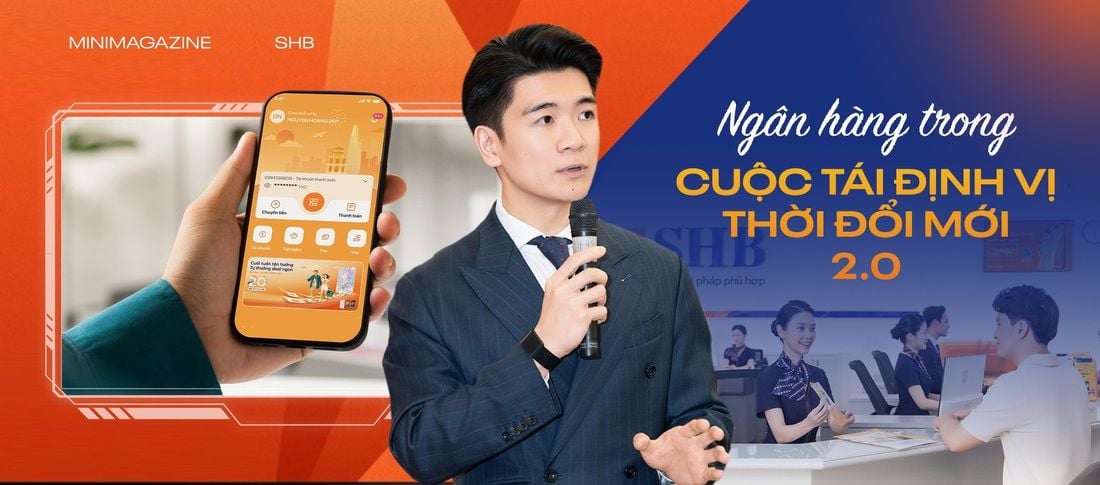
A few years ago, going to a bank was simple: people with savings deposited money, while those without money brought assets as collateral to borrow funds. In that model, banks mainly acted as intermediaries. In the Đổi Mới 2.0 phase, however, the banking sector’s role is changing.
According to TS. Le Duy Binh, banks are no longer only places to borrow money. The shift reflects a broader change in the sector’s development mindset, aligning with the Government’s message that the banking industry must “create, accompany, share, be flexible, for the people, efficient.”
In the past, banks were primarily seen as financial intermediaries between savers and borrowers. Now, the relationship between banks and the economy is described as symbiotic: banks cannot develop if enterprises and other sectors do not develop, and without a flexible financial system, the economy cannot break through.
In this context, a “bank that creates” is not only about providing capital, but also about proactively building the environment, conditions and opportunities for economic actors to grow.
A broader trend is emerging: funding is increasingly linked to the entire value chain of a business rather than standalone lending. Some banks have repositioned themselves toward “accompanying” and “creating.”
Saigon-Hanoi Bank (SHB) is cited as an example of a bank that not only provides capital but also aims to partner with companies in managing their overall financial needs. SHB is described as supplying funding, products and services to strategic partners, major ecosystem players, supply chains and individual customers, with a strategy focused on supporting large corporations and ecosystems while connecting resources, creating value and promoting sustainable development.
This approach is said to address cash-flow gaps faced by Vietnamese enterprises through integrated financial solutions tailored to different customer groups. By understanding a partner’s supply chain, banks can access more transparent data on business activities and future revenue potential.
SHB’s digital transformation is described as being underpinned by the “5 FIRST” framework: Data + AI First, People First, Cloud First, Security First, Mobile First. The framework is positioned as a foundation to improve customer experience—more modern, flexible, convenient, safer and more secure—while increasing the bank’s capacity to serve large corporate clients, supply chains, strategic partners and individual customers within a unified financial ecosystem.
By assessing partners’ financial health, the bank is described as extending credit lines based on cash flow and credibility rather than collateral, helping enterprises obtain funding when and where it is needed and supporting resource optimization and lower transaction costs.
The article links SHB’s strategy to performance. In 2025, SHB’s before-tax profit reached VND 15,028 billion, up 30% year-on-year and equal to 104% of the plan. Net interest income exceeded VND 20,200 billion, while service income rose 154% to VND 3,200 billion.
The results are presented as evidence of mutual benefit: enterprises receive financial backing, while the bank expands its customer base and diversifies service revenue.
The shift is also framed as a move from “growth in credit” to “growth with responsibility,” aligned with global sustainable development standards. The article notes that raising funds under ESG criteria is part of a broader strategy that requires banks to connect with global standards, improve market transparency, and adhere to capital adequacy frameworks such as Basel II and Basel III to manage risk and support access to international markets.
It also cites green finance as increasingly central. As an example, the article mentions large-scale, ESG-compliant syndicated financing: two USD-based facilities totaling USD 600 million that attracted 26 international financial institutions, described as a way to mobilize long-term capital and direct green finance into the economy.
Turning these goals into practice is described as requiring a strong financial base and strict risk governance. TS. Chau Dinh Linh from the Banking University of Ho Chi Minh City is cited for noting that crisis management experience is a valuable intangible asset.
In SHB’s case, resilience is illustrated through decisions during the system’s restructuring, including absorbing Habubank. The article characterizes this as a test of market confidence and systemic stability, prioritizing macro stability over short-term gains.
The article emphasizes that the difference between a value-creating bank and a traditional bank lies in proactive leadership. Instead of waiting for clients, a creating bank seeks solutions, shares risks and helps enterprises navigate difficult periods.
SHB’s “happy bank” philosophy is presented as a concrete realization of a sustainable, symbiotic relationship—placing people at the center, with transparency and mutually beneficial outcomes as guiding principles. The bank’s stated motto, “Banks of national stature for a new generation,” is described as a commitment to build growth ecosystems alongside the country and contribute to a fast, sustainable, self-reliant and prosperous Vietnam.
Industry observers cited in the article say SHB’s example reflects a wider movement among banks from pure lending toward roles as intermediaries and leaders in new capital flows, aligned with ESG and other modern standards. ESG-compliant fundraising, green financing and sustainable risk governance are described as mechanisms to mobilize long-term capital and guide it into productive, future-oriented sectors.





Premium gym chains are entering a “golden era” that is ending or already in decline, as rising operating costs collide with shifting consumer preferences toward more flexible, community-based ways to exercise. Long-term memberships are shrinking, margins are pressured by higher rents and facility expenses, and competition from smaller, more personalized…