•
•
•
•
•
•
•
•
•
•
•
•
•
•
•
•
•
•
•
•
•
•
•
•
•
•
•
•
•
•
•
•
•



Banks are shifting toward a multi-service model to broaden revenue as net interest margin (NIM) narrows. With the spread between deposit rates and lending rates tightening, banks are increasingly looking beyond interest income to find new growth drivers.
Rather than relying primarily on interest income, many banks are expanding their financial ecosystems to increase the share of non-interest income. The approach focuses on providing comprehensive financial solutions by integrating services such as insurance, securities, and asset management, aiming to capture more value from each customer.
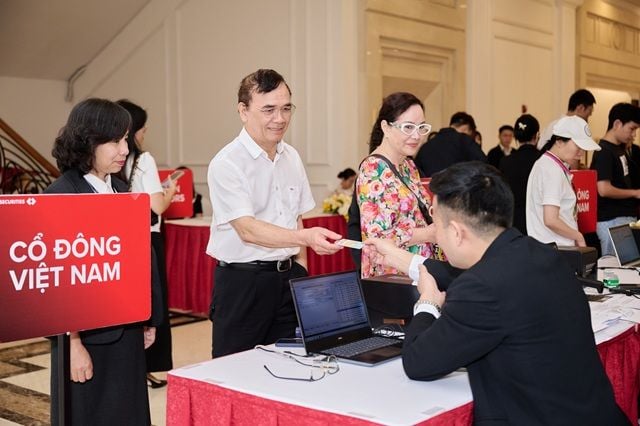
At its 2026 shareholders meeting, VPBank approved plans to establish a subsidiary operating in life insurance and is finalizing paperwork to obtain regulatory approval. The expected offering includes life insurance, health insurance, and linked-insurance products. VPBank vice chairman Bui Hai Quan said the move is intended to complete the financial ecosystem, with life insurance and fund management identified as remaining pieces.
Other banks have already moved in similar directions to complete their ecosystems. BIDV, Techcombank, and MB each have their own insurance companies. HDBank develops this area through partnerships with insurance and financial firms within the Sovico ecosystem.
In the securities segment, banks are also seeking to increase ownership or control of securities firms to optimize performance. Separately, commodity exchange and digital asset platforms are creating additional opportunities for banks to play a central role. For example, in plans to develop a gold bar exchange, MSB plans to provide safekeeping services and prepare facilities and storage infrastructure to meet market requirements.
In digital assets, the appearance of banks such as VPBank, Techcombank, and LPBank in license applications signals growing interest. A notable development is participation in the International Financial Centre (IFC), which is expected to become a platform for cross-border financial activity and more complex services.
Large banks including Vietcombank and VietinBank have sought shareholder input on establishing a legal entity there, and the list of interested organizations is expanding. Industry views suggest that a presence at the IFC can broaden geographic reach and help banks access modern financial products, ranging from investment banking to digital asset services, supporting long-term competitiveness.
SSI Research analysts view ecosystem expansion as a necessary step given the limits of traditional banking models. SSI said integrating insurance, securities, and asset management within a single ecosystem can strengthen cross-selling and improve profitability per customer. The analysts also noted that non-interest income is expected to play an increasingly important role in offsetting NIM declines, supporting sustainable profit growth over the medium to long term.
SSI added that shifting toward a multi-service model requires changes in business mindset and stronger financial capacity. VPBank approved plans to increase charter capital to over 106,200 billion dong.
In the state-owned banking sector, Vietcombank plans to issue more than 1 billion shares at the 2026 annual meeting, increasing capital by up to 10,687 billion dong, following last year’s plan to offer 6.5% of shares. VietinBank plans to raise more than 28,000 billion dong from retained earnings in 2023–2024, equivalent to about 36.3% of charter capital.
While diversification creates opportunities, expanding the ecosystem also requires stronger governance. As new business lines become interconnected, banks need to monitor linked risks closely and ensure balanced capital allocation. As a result, many banks indicate they prefer a cautious, phased approach to protect system safety and respond promptly to legal and market changes.
Overall, the expansion of the financial ecosystem by Vietnamese banks is presented as both a response to short-term pressures and a long-term strategy. Building a multi-service bank model that combines lending with higher-value financial products is expected to improve competitiveness, strengthen business performance, and help banks better adapt to market volatility.
Premium gym chains are entering a “golden era” that is ending or already in decline, as rising operating costs collide with shifting consumer preferences toward more flexible, community-based ways to exercise. Long-term memberships are shrinking, margins are pressured by higher rents and facility expenses, and competition from smaller, more personalized…