•
•
•
•
•
•
•
•
•
•
•
•
•
•
•
•
•
•
•
•
•
•
•
•
•
•
•
•
•
•
•
•
•


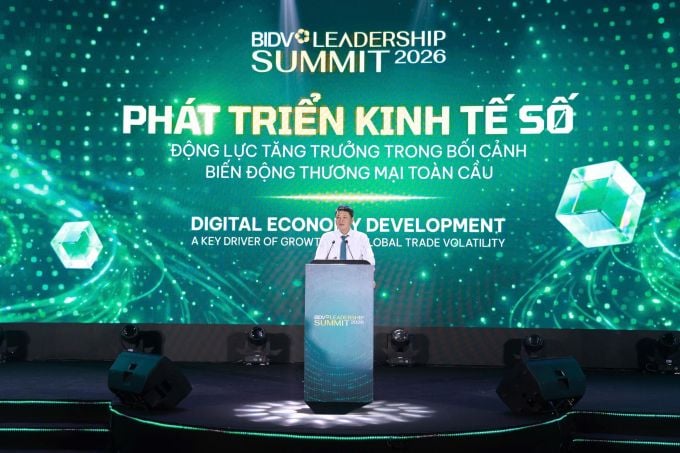
BIDV has introduced a digital ecosystem designed to connect multiple platforms and help enterprises conduct financial activities, trade, and supply-chain operations more seamlessly, replacing fragmented management approaches.
The ecosystem was unveiled at the “BIDV Leadership Summit 2026” on April 21, with participation from representatives of the State Bank of Vietnam, the Ministry of Industry and Trade, domestic and international economists, and more than 150 senior leaders from associations, enterprises, and multinational corporations.
BIDV said the digital ecosystem is built on three strategic pillars: platformization, an open ecosystem, and data personalization.
BIDV emphasized that the open-architecture approach is intended to improve connectivity among parties involved in day-to-day operations. The bank said the model can help enterprises shorten processing times, use data more effectively, and strengthen real-time cash-flow control.
At the summit, leaders and industry experts discussed a global economic outlook marked by multiple challenges. They cited energy price shocks and disruptions to strategic shipping routes, including the Strait of Hormuz, as factors pushing logistics costs and inflation higher worldwide.
Speakers also noted that global trade patterns are shifting quickly, forcing businesses to manage higher operating costs, cash management pressures, and supply-chain security concerns. In this context, the discussion centered on the need to enhance resilience while operating amid uncertainty rather than waiting for stability to return.
Nguyen Anh Son, Director of the Import-Export Department at the Ministry of Industry and Trade, said geopolitics has become an “endogenous variable” directly affecting economic structure. He urged Vietnamese enterprises to treat these shocks as more than temporary and to proactively restructure strategies to increase resilience and capture long-term opportunities through digital transformation.
Vu Tu Thanh, CEO in charge of the ASEAN region and the Vietnamese representative of the US-ASEAN Business Council, shared international experiences from digital ecosystems at corporations including JP Morgan Chase, Stripe, Amazon, and AWS. He said integrating finance, data, and operations on a single platform is important for optimizing costs, accelerating decision-making, and expanding markets in a volatile environment.
Many speakers said the move from traditional supply chains to digital supply chains is an inevitable trend. They argued that digital approaches can help enterprises control the flow of goods and cash in real time, while data and digitization become the foundation for a new management mindset.
Digital financial infrastructure—positioned with the banking system as a central connector among economic actors—was described as a pillar that can help enterprises optimize costs and expand into global markets.
Pham Tien Dung, Deputy Governor of the State Bank of Vietnam, praised initiatives promoting digital transformation in the banking sector and recognized the role of BIDV’s digital financial ecosystem in helping the business community adapt to the new context.
Le Ngoc Lam, BIDV’s CEO, said the bank’s objective is not limited to providing digital banking services, but to develop into the best digital financial platform to help Vietnamese enterprises improve competitiveness. He said BIDV will continue investing in core technology and expanding the Fintech and Bigtech ecosystem to strengthen the overall platform, support the development of the digital economy, and enable deeper participation in the global value chain.
“If we regard enterprises as a growth engine, we expect BIDV's digital ecosystem to become the operating system of that engine,” Lam said.







Premium gym chains are entering a “golden era” that is ending or already in decline, as rising operating costs collide with shifting consumer preferences toward more flexible, community-based ways to exercise. Long-term memberships are shrinking, margins are pressured by higher rents and facility expenses, and competition from smaller, more personalized…