•
•
•
•
•
•
•
•
•
•
•
•
•
•
•
•
•
•
•
•
•
•
•
•
•
•
•
•
•
•
•
•
•


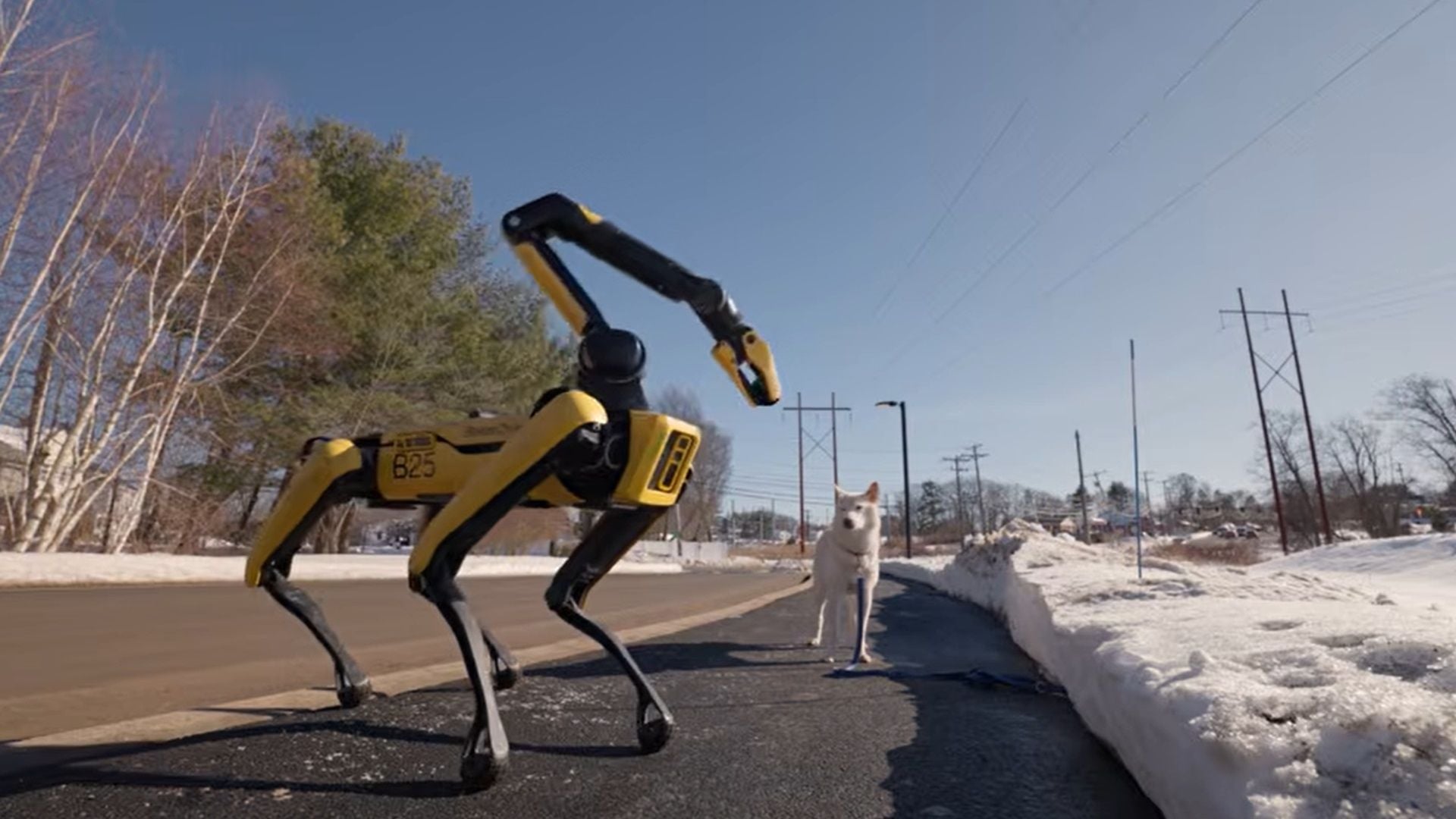
Boston Dynamics has upgraded its four-legged robot Spot by integrating Google DeepMind’s Gemini AI, positioning the system to move beyond pre-programmed behaviors toward task execution based on reasoning and environmental understanding. Early tests, however, indicate a meaningful gap between the AI’s reasoning performance and reliable operation in real-world conditions.
Boston Dynamics said it is integrating Gemini Robotics-ER 1.6, an AI platform developed by Google DeepMind, to help Spot overcome the limits of fixed action scripts. The company’s goal is to enable Spot to carry out tasks through interpretation of instructions and conditions rather than strict, pre-defined sequences.
In a publicly released demonstration, Spot receives information from a handwritten to-do list and converts it into physical actions. The robot is shown performing tasks such as organizing footwear, picking up a soda can, and placing clothes into a washing basket.
In another scenario, Spot is shown holding a leash and walking a dog, demonstrating the ability to translate natural language into physical actions.
Boston Dynamics said the upgrade combines computer vision, language understanding, and task planning. The intent is for Spot to perceive its surroundings and respond with minimal human intervention.
With Gemini Robotics-ER 1.6, Spot is also described as being able to detect issues such as puddles on the floor, read device parameters, and interpret environmental conditions on site. The company linked these capabilities to improved inspection and monitoring efficiency through vision-language-action modeling.
The upgrade is not primarily aimed at domestic tasks. Boston Dynamics said Spot is designed to operate in manufacturing facilities, plants, or hazardous areas where human access is limited or risk is high.
Carolina Parada, Vice President and Head of Spot at Google DeepMind, said the advances from Gemini Robotics-ER 1.6 represent an important step toward robots that can understand and operate more effectively in the physical world. She added that closer alignment between how robots interpret the world and human perception is needed for safe and reliable task execution, requiring not only improved algorithms but also standards governing robot behavior in real-world situations.
The company also said the work is currently centered on safety and reasoning, while full autonomy will depend on achieving robust reliability across varied environments, from industrial plants to public spaces.
Boston Dynamics framed the Spot upgrade as a shift away from traditional robots that rely on precise programming toward systems that can interpret and act autonomously. While challenges remain—particularly the early tests showing a gap between AI reasoning and real-world operation—the company described the integration as a foundational platform for future generations of robots that can both execute orders and adapt to their surroundings.
Premium gym chains are entering a “golden era” that is ending or already in decline, as rising operating costs collide with shifting consumer preferences toward more flexible, community-based ways to exercise. Long-term memberships are shrinking, margins are pressured by higher rents and facility expenses, and competition from smaller, more personalized…