•
•
•
•
•
•
•
•
•
•
•
•
•
•
•
•
•
•
•
•
•
•
•
•
•
•
•
•
•
•
•
•
•


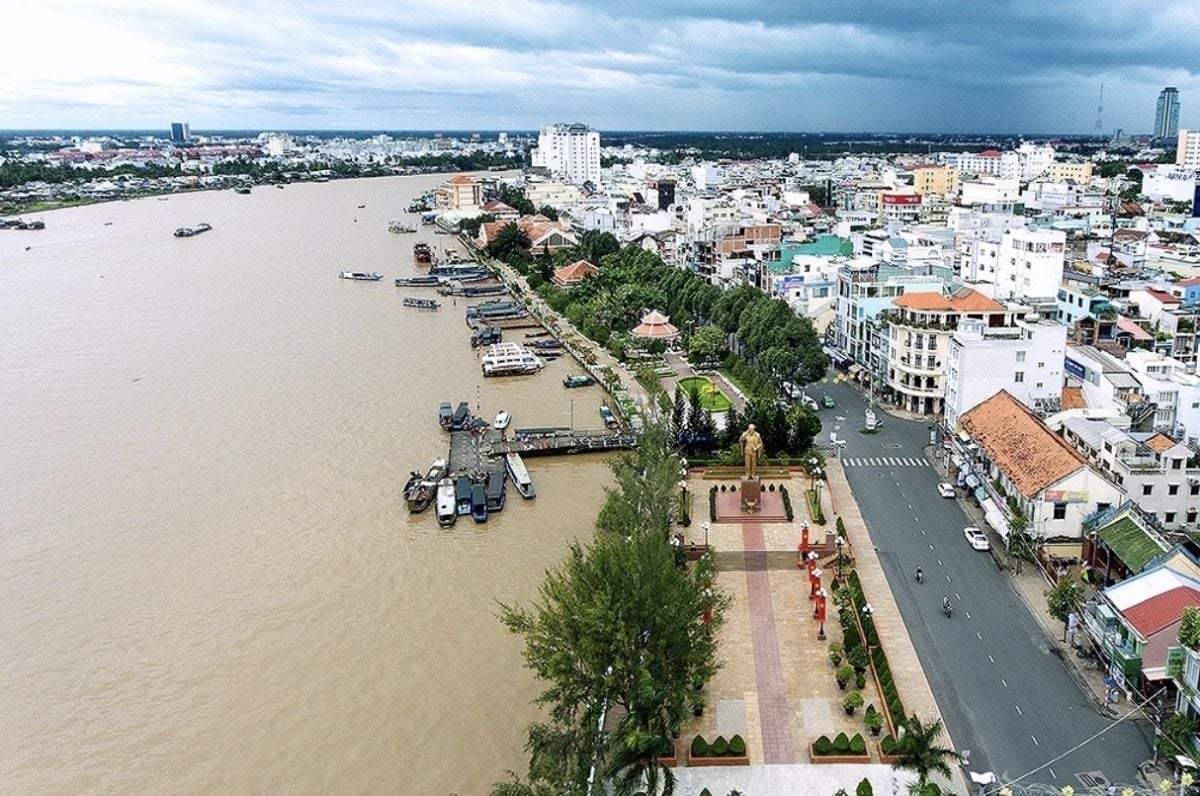
On April 23, 2026, the Ministry of Construction held a conference to appraise the master plan for Can Tho City to 2050, with a vision to 2075. The explanatory report, presented by Green Space Company, the consulting unit, said the drafting of the Can Tho master plan is an urgent requirement due to significant changes in the city’s space, scale, and development role after its merger with neighboring localities, while also addressing shortcomings and deficiencies in the implementation of previous plans.
The planning objectives are designed to concretize strategic development directions for Can Tho to become a national growth pole and to act as a driving, diffusion and leading force for development across the Mekong Delta. The plan also targets the building of a modern, ecological city that is climate-resilient, with synchronized infrastructure and effective connectivity within and between regions.
In addition, the master plan aims to organize a reasonable development space between urban and rural areas, while effectively tapping potential in the sea-based economy, logistics, processing industries, high-tech agriculture, science and technology, and innovation. It also sets out to develop Can Tho into an ecological, civilized, modern city with a strong river culture, and to position it as a regional center for economic and financial activities, logistics, services, processing industries, and high-tech agriculture. The plan further emphasizes raising living standards, ensuring water security, protecting the environment, and achieving long-term sustainable development.
Under the master plan task, Can Tho is identified as the central urban area of the Mekong Delta, with a core development role and a comprehensive hub for industry, commerce, services, logistics, education and training, science and technology, and specialized healthcare. The city is also described as an important transportation hub linking the region with the country and international connections.
The plan highlights Can Tho’s riverine urban character, linked to a distinctive wetland ecosystem, and its crucial role in environmental protection, climate change adaptation, and ensuring regional defense and security.
For planning content and requirements, the task calls for a comprehensive assessment of natural conditions, current socio-economic status, land use, and urban-rural development. It also requires analysis of the development context and inter-regional relationships, along with forecasting population, labor, land, and economic-technical indicators. Based on these inputs, the plan is to determine the development model and overall spatial structure, organize urban and rural systems, and orient functional zones and infrastructure systems, including social infrastructure and underground space. It also includes proposing environmental protection measures and climate change adaptation solutions, as well as a list of priority programs and projects.
At the conference, appraisal council members generally agreed on the necessity and broad orientation of the master plan task and contributed ideas to improve the explanatory report. The council proposed that the consulting unit and the planning authority clarify more about the impacts of new mechanisms and policies—especially the legal framework and higher-level plans—on spatial development directions and Can Tho’s urban structure.
The council also recommended conducting deep and comprehensive assessments of current land use and urban-rural space development to provide a basis for proposing development directions that are appropriate and feasible for Can Tho.
In concluding remarks, Deputy Minister of Construction Nguyen Tường Văn emphasized that the Can Tho City master plan to 2050, with a vision to 2075, must clearly identify new development directions for Can Tho in the new context—particularly after adjustments to administrative boundaries and in relation to national and regional master plans. He noted that the plan should clarify the city’s role in the national urban system and the region, strengthen connectivity among regional cities, and enhance Can Tho’s role as a dynamic growth hub.



Premium gym chains are entering a “golden era” that is ending or already in decline, as rising operating costs collide with shifting consumer preferences toward more flexible, community-based ways to exercise. Long-term memberships are shrinking, margins are pressured by higher rents and facility expenses, and competition from smaller, more personalized…




