•
•
•
•
•
•
•
•
•
•
•
•
•
•
•
•
•
•
•
•
•
•
•
•
•
•
•
•
•
•
•
•
•



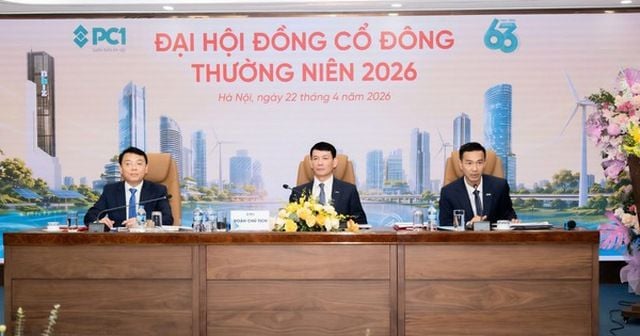
PVFCCo (PetroVietnam Fertilizer and Chemicals Corp) reported Q1 revenue of VND 5,706 billion, equivalent to 150% of the quarterly plan. Pre-tax profit reached VND 515 billion, or 61% of the annual plan, according to information shared by company leadership at the shareholders’ meeting on the morning of April 23.
At the meeting, shareholders approved key items including the 2025 business results, the 2026 plan, profit distribution, investment directions, governance matters, expansion of business lines, and personnel changes.
In 2025, DPM reported steady operations. Phú Mỹ Urea production exceeded 889 thousand tons, while Phú Mỹ NPK output reached 203.6 thousand tons, up 53% year over year. The chemicals and trading products segment continued to expand, supporting a broader product mix.
Despite volatility in fertilizer and chemical markets, the company delivered results above plan. Total consolidated revenue surpassed VND 17,074 billion, or 133% of the plan. Pre-tax profit reached VND 1,352.6 billion, about 330% of the plan, while net profit after tax stood at VND 1,095 billion.
2025 also included progress in finance and governance. DPM completed an increase in charter capital to nearly VND 6,800 billion, upgraded its risk management system, accelerated digital transformation to level 3.0, and developed a development strategy for 2026–2030 with a vision to 2050.
For 2026, the company targets consolidated revenue of VND 17,600 billion and pre-tax profit of VND 850 billion. DPM also plans to pay dividends at 12% of charter capital.
The company’s focus remains on fertilizer production and trading, with plans for more than 900 thousand tons of Phú Mỹ Urea and about 180 thousand tons of Phú Mỹ NPK. DPM said it will operate flexibly with market conditions, optimize distribution, and boost domestic and export sales.
DPM expects total capital expenditure of more than VND 1,164 billion in 2026, with emphasis on new chemical projects, particularly the H2O2 (hydrogen peroxide) project. The company also plans to boost research and development for new products, applying science and technology and innovation to raise the value of existing products.
In the new product segment, DPM continues to develop high value-added chemicals and products, while expanding high-quality fertilizers and green products such as organic and microbial solutions to align with sustainable agriculture trends. The company also prioritizes digital transformation, governance improvements, and sustainability initiatives to enhance efficiency and market resilience.
In Q1 this year, DPM delivered positive results. Through flexible management and an optimized distribution network, production and sales of fertilizers and chemicals exceeded plans. Revenue reached VND 5,706 billion, equal to 150% of the Q1 plan and 32% of the annual plan. Pre-tax profit was VND 515 billion, representing 61% of the annual plan.
Building on these results, management said it will continue efforts to fully meet 2026 production and business objectives.
Shareholders approved the appointment of two new board members (including one independent) and additions to the audit committee. Cao Chi Kien and Triệu Quốc Tuấn were elected to the board. Nguyễn Công Minh was elected to the audit committee, while Huỳnh Kim Nhân was relieved of the position of head of the audit committee.
Petrovietnam, as a large shareholder, acknowledged DPM’s results and urged the company to ensure safe operations, accelerate new projects, promote innovation and green products, and safeguard employees’ rights. Petrovietnam also pledged to continue supporting DPM, including ensuring stable gas supply, to help the company achieve its 2026 plan and sustain growth in subsequent years.





Premium gym chains are entering a “golden era” that is ending or already in decline, as rising operating costs collide with shifting consumer preferences toward more flexible, community-based ways to exercise. Long-term memberships are shrinking, margins are pressured by higher rents and facility expenses, and competition from smaller, more personalized…