•
•
•
•
•
•
•
•
•
•
•
•
•
•
•
•
•
•
•
•
•
•
•
•
•
•
•
•
•
•
•
•
•


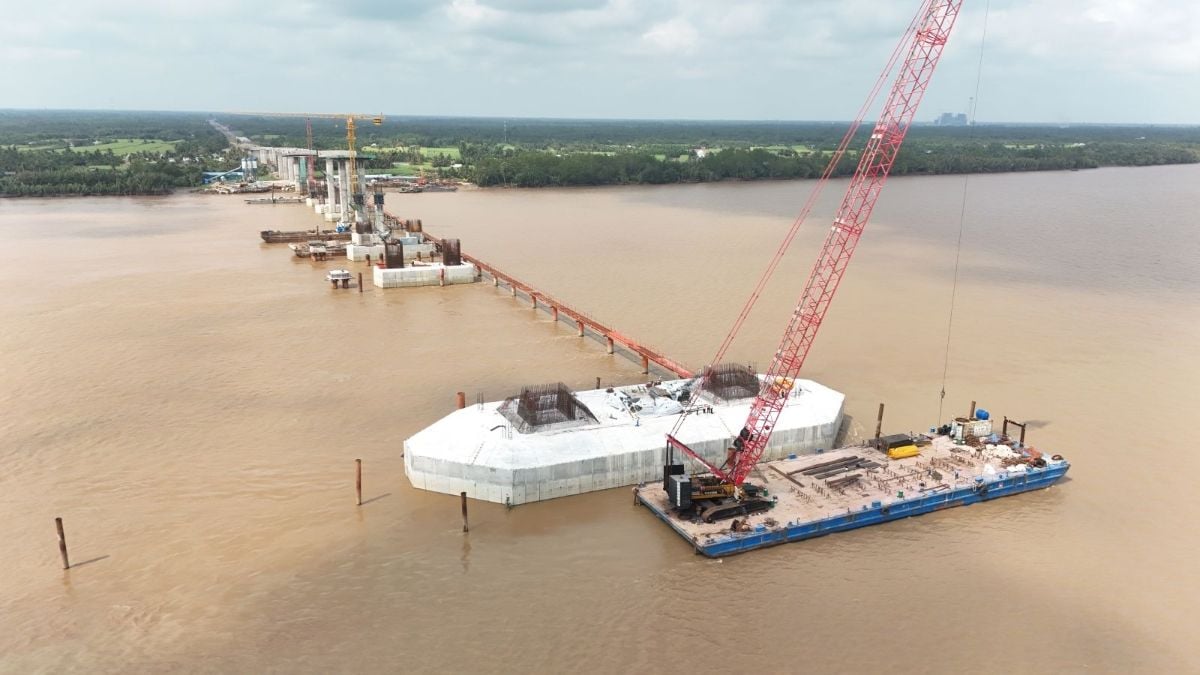
The Dai Ngai Bridge project on National Highway 60, crossing the Hau River, is a key transport initiative in Vietnam’s Mekong Delta, linking Tra Vinh and Soc Trang (now Vinh Long and Can Tho). Project Management Board 85 (PMB) says material supply pressures—especially for building stone and sand—are affecting progress on several major items, as current supply has not kept pace with the construction schedule.
PMB 85 notes that shortages of rubble stone are directly impacting work progress. Stone from mines in the Southeast region is currently very limited because it must be allocated to multiple projects, while demand at the Dai Ngai site continues to rise. The issue is not confined to Dai Ngai: material shortages are widespread across the Western Mekong Delta as many large transport projects are being implemented simultaneously, creating a short-term imbalance between supply and demand.
Can Tho City leaders consider securing material sources a key factor for accelerating infrastructure delivery. Vice-chairman of the Can Tho People’s Committee, Nguyen Van Hoa, said the city is coordinating with provinces that have material mines to prioritize supply for key projects. He also urged the central government to consider special mechanisms to address the difficulties.
Other views cited in the article argue that the challenge is not only supply availability but also the coordination mechanism. Without an effective regional linkage framework, some areas face surpluses while others experience shortages, raising costs and affecting project timelines.
Land clearance is another major bottleneck. To date, most land has been handed over, allowing contractors to deploy multiple fronts. Local observations indicate that basic land clearance results from intensified dialogue to protect the rights of affected residents, which is seen as crucial to prevent interruptions during peak construction.
However, some local obstacles remain, mainly involving relocation of electrical infrastructure and ancillary works. A representative from the construction unit said that although the number of cases is small, they are bottleneck positions; if not resolved promptly, they can affect progress in each section.
“Just a few land clearance points unfinished or infrastructure not yet relocated can disrupt the construction chain,” the PMB 85 representative said.
Local authorities are coordinating with relevant units to address residual issues and ensure clean, synchronized land across the entire route.
The Dai Ngai Bridge is intended to complete the coastal eastern transport axis and strengthen connectivity between Can Tho and other Mekong Delta provinces. Once completed, the project is expected to shorten travel times, reduce pressure on National Highway 1, and create new development space for the region.
The project is divided into two construction packages: 11-XL and 15-XL.






Premium gym chains are entering a “golden era” that is ending or already in decline, as rising operating costs collide with shifting consumer preferences toward more flexible, community-based ways to exercise. Long-term memberships are shrinking, margins are pressured by higher rents and facility expenses, and competition from smaller, more personalized…