•
•
•
•
•
•
•
•
•
•
•
•
•
•
•
•
•
•
•
•
•
•
•
•
•
•
•
•
•
•
•
•
•


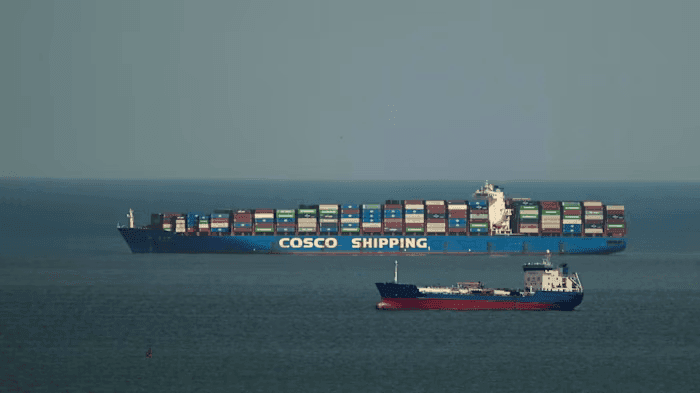
China announced on Friday that it will open two investigations linked to Section 301 of the 1974 Trade Act, responding to the United States’ latest trade probes targeting Chinese exports. The Ministry of Commerce said it would accelerate investigations into U.S. barriers and implement corresponding measures to “firmly defend China’s legitimate rights and interests.”
China’s move follows Washington’s use of Section 301 against China and other countries. The Ministry of Commerce said the investigations are intended to address U.S. actions that it argues harm Chinese firms and may conflict with World Trade Organization rules.
U.S. Trade Representative Jamieson Greer said Beijing’s investigations are largely symbolic. He argued that China has been the country most responsible for disrupting supply chains and trade in clean-energy products.
Greer also said the U.S. objective remains to preserve economic stability and pursue the trade balance agreed by President Donald Trump and Chinese President Xi Jinping.
He accused China of disrupting global supply chains over the past year by restricting supplies of rare earths, fertilizer, and refined fuels. Greer further argued that China’s overcapacity policies, implemented through non-market means, have pushed electric vehicles and solar panels into many economies, increasing pressure on workers and manufacturing in industrialized countries.
The announcement comes a day after the U.S. accused China of threatening U.S. shipping interests by detaining Panama-flag vessels at Chinese ports.
Tensions have also risen in the past year after China restricted access for American firms to certain key materials. Previously, the U.S. imposed tariffs of up to 145% on Chinese goods.
In October, Trump and Xi agreed to a one-year trade truce during a meeting in Korea. The White House initially planned another meeting during Trump’s visit to China from March 30 to April 1, but later postponed it to May 14–15, citing Trump’s need to focus on handling the Iran conflict.
On Thursday (Mar 26), Laura DiBella, chair of the U.S. Federal Maritime Commission (FMC), said the agency is closely monitoring Beijing’s actions, which she described as retaliation against Panama and said could affect global shipping.
DiBella said the measures appear intended to pressure Panama after it temporarily granted port-operation rights at two ports along the Panama Canal to units of CK Hutchison.
She noted that Panama-flagged ships account for a significant share of container shipping to the United States, adding that the impact could extend broadly to trade and the U.S. shipping industry.
In February, Panama’s government designated U.S. subsidiaries of Maersk and MSC to operate temporarily the two CK Hutchison ports on the canal.
This followed a Supreme Court ruling in January that voided concession contracts granting CK Hutchison the right to operate Balboa and Cristobal at the ends of the canal, removing CK Hutchison’s legal basis to run the ports. After the ruling, CK Hutchison filed suit in Panama.
Earlier this week, Panama Ports Company said the damages claimed in the suit were more than $2 billion.




Premium gym chains are entering a “golden era” that is ending or already in decline, as rising operating costs collide with shifting consumer preferences toward more flexible, community-based ways to exercise. Long-term memberships are shrinking, margins are pressured by higher rents and facility expenses, and competition from smaller, more personalized…


