•
•
•
•
•
•
•
•
•
•
•
•
•
•
•
•
•
•
•
•
•
•
•
•
•
•
•
•
•
•
•
•
•


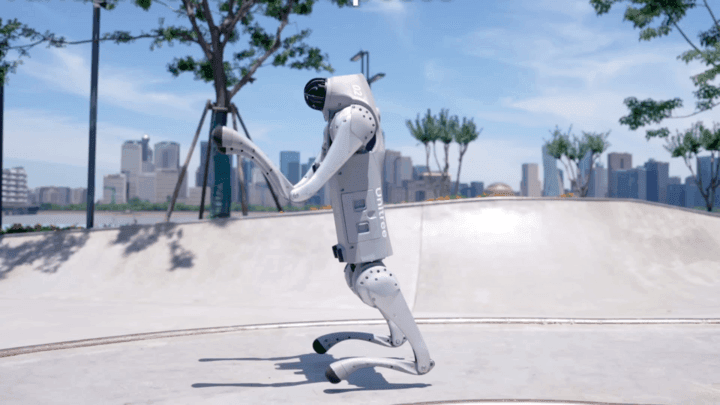
China has announced a plan to invest $1 billion to deploy 8,500 AI robots to replace part of the traditional power-grid maintenance workforce. The project, led by the State Grid Corporation of China, will cover 26 provinces and is positioned as a major step in energy infrastructure automation.
Under the plan, 5,000 Go2 robots from Unitree Robotics will patrol substations and lines in mountainous regions. A further 500 humanoid robots will be used for ultra-high-voltage maintenance, while 3,000 two-handed wheeled robots will carry out repair tasks.
The robots have been tested since last year. Reported capabilities include opening control panels, detecting electrical leaks, and moving equipment weighing up to 100 kg.
Beyond domestic deployment, China plans to export robot inspection units to Chile, indicating an intention to extend the technology internationally.
The initiative also aligns with a broader production target of 2.1 million robots by 2030, with the power grid described as a “testing ground” for large-scale automation. The stated goals are to reduce costs and increase energy reliability.
In a separate development, researchers at Rice University reported a room-temperature multiferroic material designed to increase magnetoelectric coupling by up to tenfold and enhance electro-magnetic coupling by up to 100 times compared with prior materials. The work is described as opening pathways for low-energy computing systems.
The team combined bismuth ferrite (BiFeO3) with barium titanate (BaTiO3) to create the new multiferroic material. By altering the crystal structure of BiFeO3 and breaking a balance that previously suppressed magnetism, the researchers said magnetism was boosted while strong electric properties were preserved.
The advance is intended to support control of magnetism via electric fields and vice versa, enabling low-energy memory and logic operations beyond silicon.
Microsoft also announced the release of the DOS 1.0 source code, described as the earliest operating system for the IBM PC released in 1981. The code is provided under the MIT license, allowing free use, modification, and distribution.
The release includes handwritten notes by Tim Paterson, the creator of 86-DOS, presented as a “commit history” from the period.





Premium gym chains are entering a “golden era” that is ending or already in decline, as rising operating costs collide with shifting consumer preferences toward more flexible, community-based ways to exercise. Long-term memberships are shrinking, margins are pressured by higher rents and facility expenses, and competition from smaller, more personalized…




