•
•
•
•
•
•
•
•
•
•
•
•
•
•
•
•
•
•
•
•
•
•
•
•
•
•
•
•
•
•
•
•
•


On March 24, 2026, OpenAI officially announced the termination of its AI video project Sora, ending operations and halting all technical upgrades for the consumer app, API, and integration features on ChatGPT.
On the same day, OpenAI also terminated its contract with Disney. In December 2025, the two sides had announced a $1 billion deal to exploit Disney’s copyright portfolio, but the funds were not disbursed and the agreement was canceled.
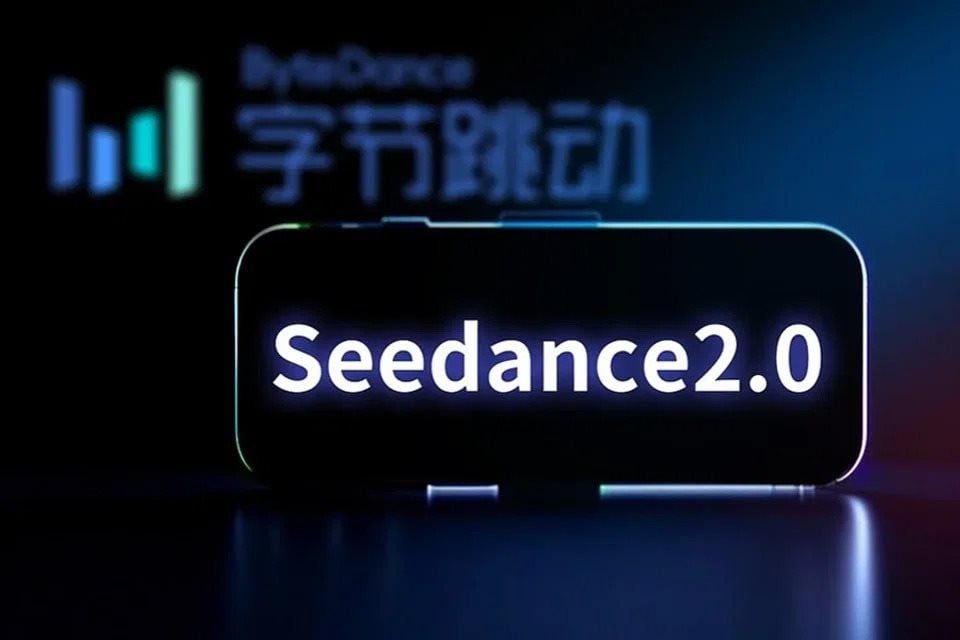
As Sora fades, the lead in AI video has shifted to Seedance, a product previously underestimated by ByteDance. In Q1 2026, Seedance topped the world across three metrics: technical score, usage volume, and revenue.
By contrast, Sora generated less than $10 million in revenue, far below the scale of its R&D and operating costs.
The end of Sora had been anticipated. While the model could produce cinema-quality video, it faced a combination of high costs and weak profitability.
Seedance 2.0 continued to expand rapidly. The multimodal model is integrated into the Doubao virtual assistant, the Jimeng app, and the Volcano Engine cloud platform.
During testing, daily users surpassed 10 million. The system was frequently overloaded, with queues reaching up to 8 hours, while producing 5 to 8 million clips per day.
Economically, Seedance earned more than $300 million in just three months after launch. The share of paying users and repeat usage is high, with short-form film and graphic animation accounting for more than 75% of revenue.
The rise of Seedance alongside Sora’s retreat is presented as reflecting two divergent approaches between China and the US. In China, AI video models are described as following closed-loop processes—deployment, script feedback, and continuous optimization—tightly linked to the short-film ecosystem that monetizes well.
China’s short-film platforms are said to account for up to 68% of the global market. In 2025, the Chinese short-film market reached 80 billion yuan (about $11.7 billion), with AI-created films holding a 40% share. The US market is described as much smaller at around 12 billion yuan, representing less than 15% of China’s scale, with US products characterized as more niche and lacking industrialization and distribution networks.
Seedance is described as focusing on core production problems, including automatic scene scripting and consistent character visuals. This is said to reduce the production cycle from 21 days to 3 days, positioning the technology as directly supporting industry workflows and generating measurable economic value.
In contrast, Sora is characterized as having leaned toward flashy demos and investor hype, ending without a stable commercial exit.
The article argues that China’s practical, application-oriented development model is spreading to other areas and could help China catch up with or surpass the US in key technology domains. It notes that over the past three years, China has overtaken the US in large language model popularity, and describes Seedance as an early signal that this advantage is extending to specialized applications.
It also suggests that AI programming and intelligent agent systems may be among the next areas where China could surpass the US, citing models such as GLM-5 and DeepSeek V3.2 for programming performance. The article contrasts this with a US emphasis on compliance, saying China’s AI agents focus on integration into production.
Source: ThinkChina
Premium gym chains are entering a “golden era” that is ending or already in decline, as rising operating costs collide with shifting consumer preferences toward more flexible, community-based ways to exercise. Long-term memberships are shrinking, margins are pressured by higher rents and facility expenses, and competition from smaller, more personalized…