•
•
•
•
•
•
•
•
•
•
•
•
•
•
•
•
•
•
•
•
•
•
•
•
•
•
•
•
•
•
•
•
•


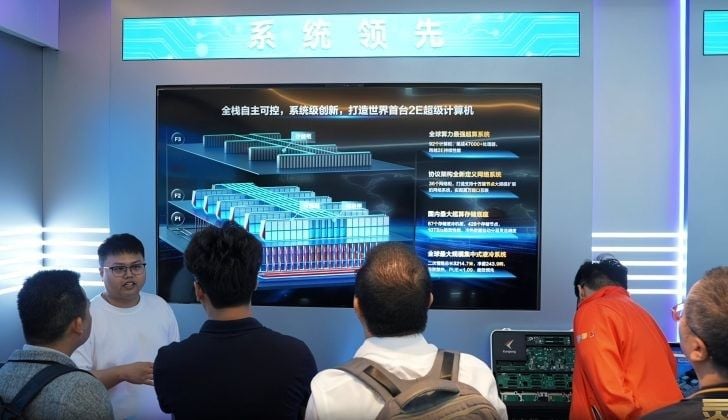
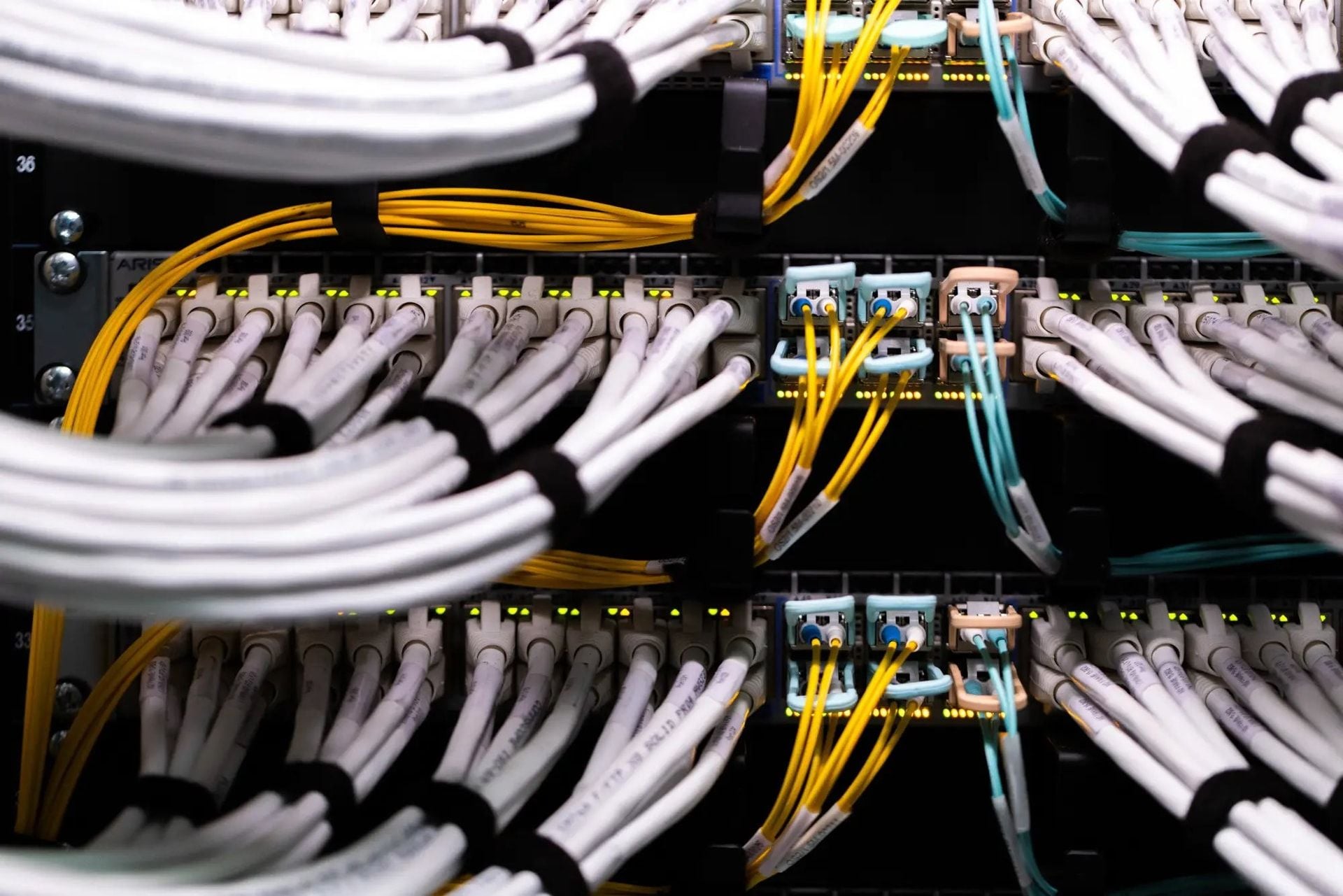
China unveiled LineShine, a new supercomputer at the National Center for High-Performance Computing in Shenzhen, with sustained performance exceeding 2 ExaFLOPS. The system is described as not yet surpassing El Capitan's 2.8 ExaFLOPS, but represents the most ambitious claim China has made in supercomputing. Notably, LineShine uses only standard CPUs without GPUs or accelerators, and all components—from processors and high-bandwidth memory to high-speed interconnects—are domestically produced, a key point amid tightening U.S. chip export controls. Two deployment phases: The pilot phase deploys 100 Huawei Kunpeng servers totaling 12,800 cores; the industrial-scale expansion will add 1,580 blade servers using x86 processors, bringing total cores to 101,120 and theoretical performance to over 10 Petaflops. Physically, the system comprises 92 compute cabinets with about 47,000 processors and 36 networking cabinets, with scalable potential to hundreds of thousands of nodes and a million ports, described as China's largest domestic supercomputing storage platform to date. Cooling and storage: To dissipate the hardware heat, LineShine employs a liquid-cooling system described as the world's largest, including 67 liquid-cooling storage cabinets and 428 nodes, with total coolant piping exceeding 3.2 kilometers and a net weight of about 244 tons. Storage capacity is planned at 650 Petabytes, with read/write speeds of 10 TB per second, enabling near-instantaneous processing of enormous data volumes. AI capability and practical applications: LineShine integrates a Fusion architecture combining high-performance matrix accelerators to significantly enhance the speed of mathematical computations underlying modern AI models. The system supports multiple precision levels to accommodate a range of models from scientific research to practical deployment. In a real-world test with the DeepSeek model, each processor achieved 578 tokens per second; at full load, aggregate throughput could be up to 100 times higher. Beyond AI, LineShine is designed for weather forecasting, materials science, bioinformatics, oil and gas exploration, life sciences, and electromagnetic simulations. Domestic language models such as Qwen and other domestic variants are fully supported. No official operation date has been announced yet, but given project progress and rising demand for computing power, LineShine is likely to enter service around 2029–2030. Source: Max.




Premium gym chains are entering a “golden era” that is ending or already in decline, as rising operating costs collide with shifting consumer preferences toward more flexible, community-based ways to exercise. Long-term memberships are shrinking, margins are pressured by higher rents and facility expenses, and competition from smaller, more personalized…