•
•
•
•
•
•
•
•
•
•
•
•
•
•
•
•
•
•
•
•
•
•
•
•
•
•
•
•
•
•
•
•
•


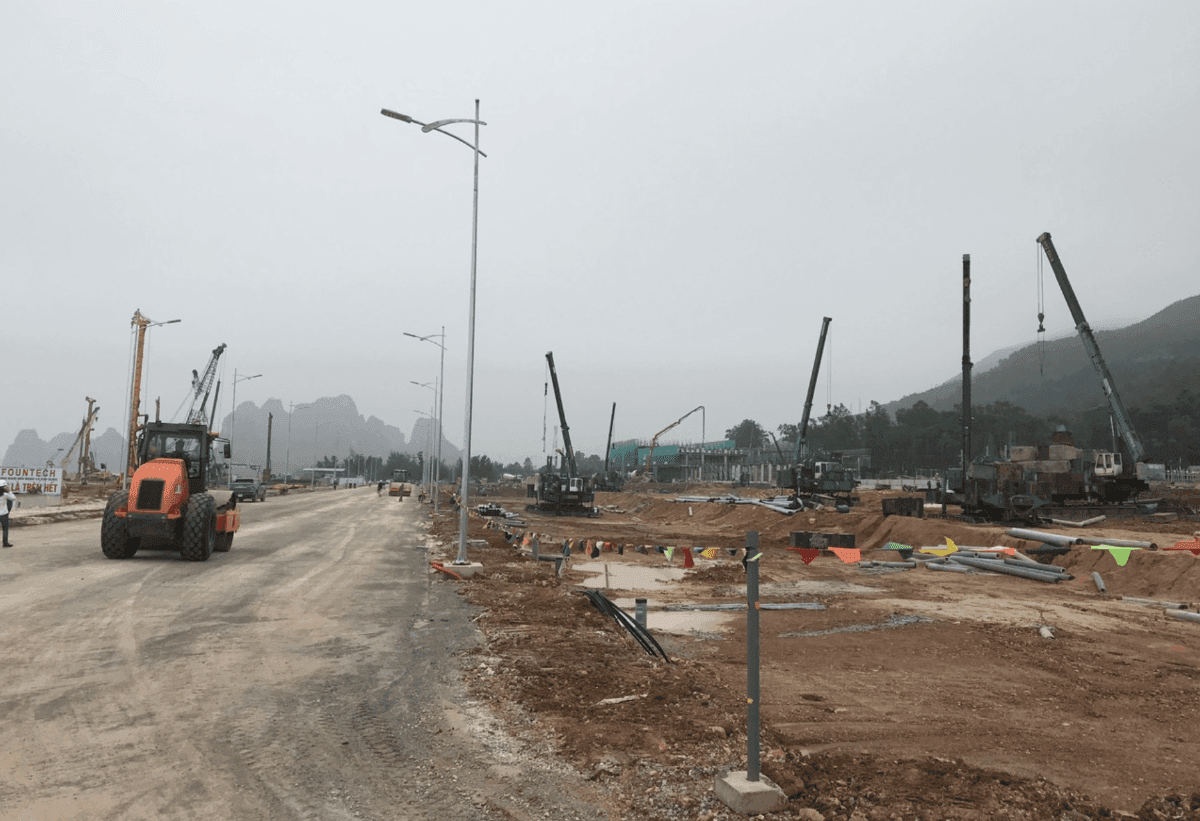
Rising input costs and a shortage of workers capable of meeting project requirements are putting construction contractors in a difficult position: continuing work would mean heavy losses, while stopping could trigger contract breaches. Speaking at the Q1/2026 Construction Contractors’ Café held last weekend, companies said that after years of Covid-19 disruptions and legal bottlenecks, 2025 only began to recover, and by 2026 pressures have intensified.
Nguyễn Quốc Hiệp, Chairman of the Vietnam Association of Construction Contractors (VACC), said that a few years ago many contractors lacked work and had to bid aggressively. From mid-2025, supported by public investment, FDI capital, and a broad restart of real estate projects, almost no company is short of projects. In 2026, the government allocated around 1 quadrillion dong for public investment across ministries and central agencies, and many large projects are under way.
However, the market faces a dual challenge. The simultaneous start of many projects has caused rapid swings in prices for sand fill and other materials as supply struggles to keep up with demand. External factors have also become more unpredictable: geopolitical developments in the Middle East from early 2026 disrupted supply chains, pushing energy prices higher and lifting construction input costs across the board, including fuel for machinery and transport.
Hiệp cited statistics showing that no material price has not risen, with oil-related inputs such as asphalt/bitumen up 35–37% since late 2020 and polymer pellets up about 30%. He also noted increases in non-oil-related items, including building stone up about 25% and sand rising from 300,000 dong to over 400,000 dong per cubic meter, contributing to what he called a “material-price crisis.”
For fixed-price lump-sum contracts already signed, price adjustments cannot be made, meaning contractors who continue work will incur heavy losses. For other contract types where adjustments are possible, changes depend on unit prices announced locally. But contractors said it can take a quarter before local departments publish prices for the previous quarter, and the locally announced prices often do not reflect real market costs.
Tuấn Anh highlighted additional drivers of cost pressure, including disposal fees and unreasonably high input costs. He said that in some projects in the Northern hill areas there are no disposal sites, forcing contractors to negotiate with local parties where each side demands a price, raising costs. He also pointed to constraints under the Mineral Law limiting extraction, while many projects still operate at full capacity, increasing demand and pushing prices higher. Some major projects require shortened timelines, further limiting the ability to pass through rising inputs.
Tuấn Anh said VACC is advocating policy adjustments to mineral-extraction capacity to address material shortages, and that for nonessential projects, work should be halted until a suitable time to resume.
Contractors also reported that labor shortages are worsening alongside the investment recovery. They said a wave of large-scale public investment and the rebound in industrial construction and infrastructure are driving a spike in labor demand. In 2026, contractor workload is expected to rise by at least 50% year-on-year, while the industry is already facing a severe shortage of labor.
VACC said labor supply has not kept pace with the expansion of major construction sites, intensifying competition for skilled workers among contractors. This has pushed labor costs up by 2–3 times, straining project timelines and increasing volatility across the sector.
To address the shortage, contractors called for coordinated measures including restructuring vocational training, considering importing foreign labor, and—most importantly—fully revising wage scales. Without these steps, they said the labor shortage will remain a major challenge for the construction industry.
Nguyễn Quốc Hiệp said that while the number of active projects is very large, the supply of materials is tight, labor is scarce, and competition is intense. He added that most contractors lack financial capacity and investment capital is limited.
VACC recommended reassessing investment scale and prioritizing projects, delaying non-essential projects, and adopting flexible credit policies to carry out projects effectively and achieve growth targets.

Premium gym chains are entering a “golden era” that is ending or already in decline, as rising operating costs collide with shifting consumer preferences toward more flexible, community-based ways to exercise. Long-term memberships are shrinking, margins are pressured by higher rents and facility expenses, and competition from smaller, more personalized…