•
•
•
•
•
•
•
•
•
•
•
•
•
•
•
•
•
•
•
•
•
•
•
•
•
•
•
•
•
•
•
•
•


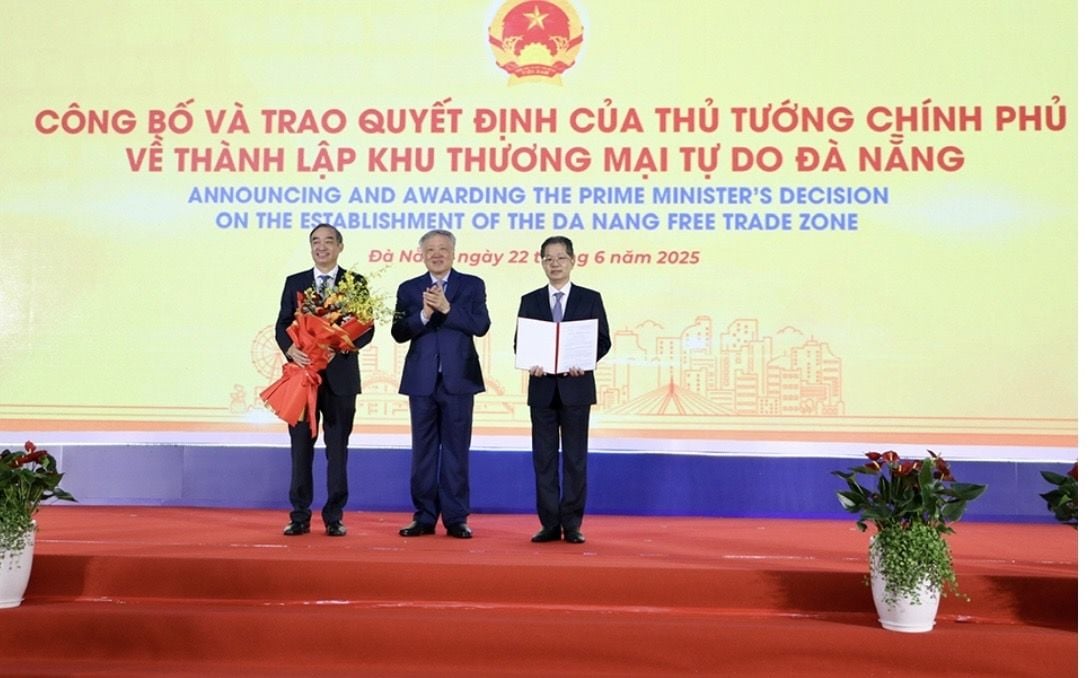
In 2026, Vietnam’s economy—and Da Nang in particular—faces the dual need to sustain strong, sustainable, and more efficient growth. This requires improvements to the investment and business environment so it becomes safer, more transparent, and more stable, helping reduce legal risks and strengthen confidence among enterprises and investors.
Mr. Phan Duy Anh, Deputy Director of the Da Nang Department of Finance, said the quality of the investment environment is determined not only by the ease of administrative procedures, but also by the stability, consistency, and predictability of the legal system.
Mr. Duy Anh noted that since the Provincial Competitiveness Index (PCI) was first published in Q1 2006 and earlier, Da Nang (the former Da Nang City) has consistently been among the leading localities nationwide in terms of investment and business environment. He also referenced efforts by the former Quang Nam province to improve over time.
Based on PCI data and the Provincial Green Index (PGI), Da Nang’s investment environment shows different development characteristics across regions. This, he said, creates room for the city to continue improving the quality of implementation and promote balanced, harmonious economic development within a new spatial framework.
From practical experience, a representative of the Da Nang Department of Finance said the biggest challenge for the city today is not issuing new policies, but ensuring consistency, alignment, and effectiveness in policy implementation.
Recently, Da Nang’s investment and business environment has continued to show positive developments.
First, the investment environment has become more stable and transparent. The implementation of special mechanisms and policies under National Assembly Resolutions 136/2024/QH15 and 259/2025/QH15 has helped improve the legal framework for investment and business activities in Da Nang. A notable step is the issuance of Decree 323/NĐ-CP on December 18, 2025, regarding the establishment of the International Financial Center in Da Nang. The city views this as an important move to raise governance standards, strengthen market connectivity, and build investor confidence.
Second, the business community continues to expand. In Q1 2026, Da Nang recorded 1,818 new enterprises, branches, and representative offices, with registered capital of over VND 6,809 billion. This was reported as a sharp increase compared with the same period. Cumulatively, the city has over 61,119 enterprises, branches, and representative offices operating locally.
Third, the scale of investment is expanding. By March 16, 2026, domestic investment attracted to the city reached VND 57,597.08 billion, up nearly five times from the same period last year, alongside USD 36.65 million in foreign direct investment (FDI). The city also said several driving projects are being accelerated, including Lang Van Village, Danang Downtown, and Liên Chiểu Port, creating additional space to support near-term growth and socio-economic development.
Mr. Phan Duy Anh said the results reflect that investor confidence depends not only on market potential, but increasingly on the city’s governance capacity, transparency, and timely handling of problems. In the context of reorganizing the organizational structure, he said digital transformation is becoming a key pillar in improving the investment environment.
Da Nang has focused on building digital infrastructure, digital data, and digital government. The city reported clear progress in administrative reform and investment attraction, including:
In the business sector, the city reported that more than 3,000 enterprises have been supported in digital transformation. It also cited 52 high-tech projects attracting investment into the city’s high-tech zone. The digital economy now accounts for over 22% of Da Nang’s GRDP, compared with a national average of just over 14%.
The city said digitization of land data, planning, and administrative procedures has improved transparency, reduced legal risks, and helped enterprises access information faster, more accurately, and more efficiently for investment and production.
“From these results, digital transformation is not only a tool to support administrative reform, but is becoming a platform to restructure the way government operates, thereby reducing compliance costs and boosting the competitiveness of the investment environment. Digital transformation is also becoming an important driver for attracting investment in high-tech sectors such as semiconductors and artificial intelligence, a key field that will drive Da Nang’s sustainable development,” Mr. Duy Anh affirmed.
He added that Da Nang aims to attract at least 15 investment projects in 2026 in information technology, mechatronics, robotics, and environmental technology.
Da Nang’s economic ecosystem is also being shaped by new institutional developments. The Da Nang Free Trade Zone, spanning nearly 1,900 hectares, began in late August 2025. The city described it as the country’s first pilot model, oriented toward logistics, manufacturing, trade-services, and high-tech development, linked to Liên Chiểu Port and Da Nang International Airport to become an international goods hub for the central region.
In addition, the International Financial Center in Da Nang officially began operating from the beginning of January 2026. The city said this institutional breakthrough aims to create a superior regulatory framework to attract high-quality capital from domestic and international investors, providing medium- and long-term resources for local development.
Mr. Ho Kỳ Minh said that, from a macro perspective, these moves reflect Vietnam’s strategic choice to actively participate in the global “big game,” anticipating a wave of capital restructuring and global value chain shifts.
“The combination of the Da Nang Free Trade Zone and the International Financial Center in Da Nang will gradually form a modern, smart economic ecosystem with high competitiveness. It is expected to make Da Nang a destination attractive to high-quality capital, contributing to taking Vietnam further on the global economic map,” emphasized Mr. Ho Kỳ Minh.





Premium gym chains are entering a “golden era” that is ending or already in decline, as rising operating costs collide with shifting consumer preferences toward more flexible, community-based ways to exercise. Long-term memberships are shrinking, margins are pressured by higher rents and facility expenses, and competition from smaller, more personalized…




