•
•
•
•
•
•
•
•
•
•
•
•
•
•
•
•
•
•
•
•
•
•
•
•
•
•
•
•
•
•
•
•
•


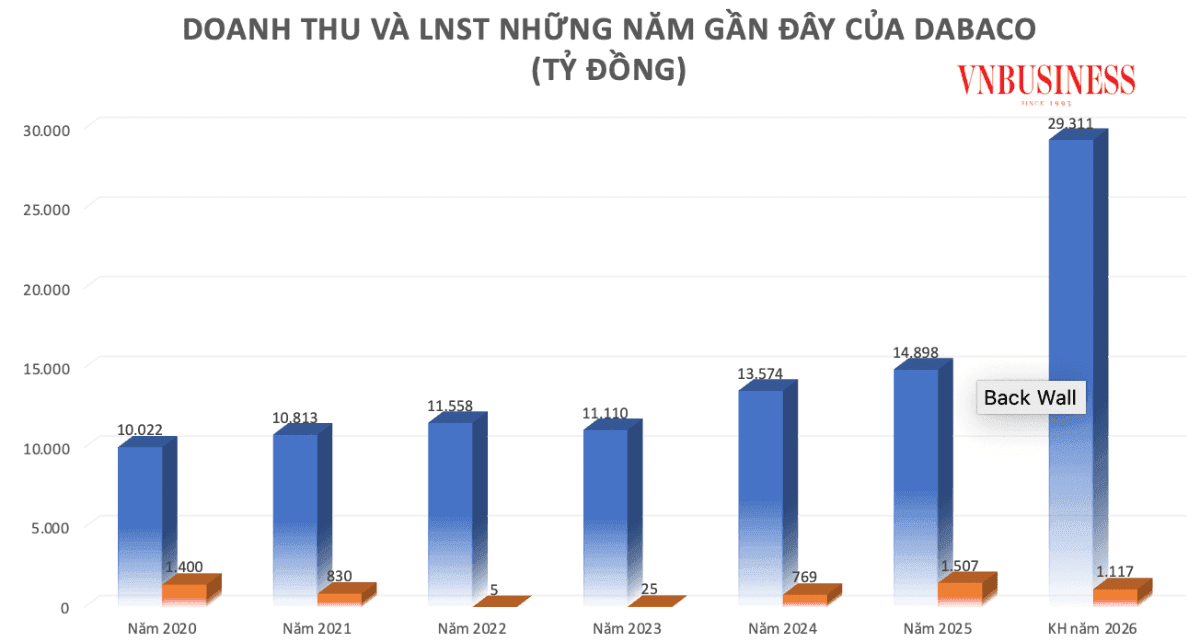
Dabaco Vietnam Joint Stock Company (DBC) reported Q1 2026 results with revenue of VND 4,124 billion, up 14.3% year over year. However, profitability weakened as costs and expenses rose faster than revenue.
Cost of goods sold increased from VND 2,792 billion to VND 3,433 billion. As a result, gross profit fell 15.4% to VND 690.98 billion. Financial income declined 15.2% to VND 15.9 billion, while financial costs were VND 61.7 billion. Selling, general and administrative expenses rose 6.2% to VND 250 billion.
After accounting for costs, cost of goods sold, and taxes, net profit after tax reached VND 374 billion, down 26% year over year.
The company said that while feed sales volume increased in the period, profitability of the feed segment was pressured by changes in the feed product mix, higher input costs, and increases in foreign exchange rates. In addition, lower live pig prices compared with a year earlier reduced profits at the hog-raising subsidiaries.
In Q4 2025, Dabaco posted after-tax profit of VND 148.58 billion, down 37.8% year over year. The company attributed the decline to lower live pig prices, noting that profits of hog-raising units fell by VND 76.4 billion versus the same period.
For 2026, Dabaco targets total revenue of VND 29,311 billion, up 22%, and expected after-tax profit of VND 1,117 billion, down 25.9% from 2025 actual results.
As of 31 March 2026, total assets decreased 1.7% from the start of the year to VND 15,699.4 billion. The asset base included fixed assets of VND 5,369 billion (34.2% of total assets), inventories of VND 3,379 billion (21.5%), cash and short-term investments of VND 2,263 billion, and short-term receivables of over VND 754 billion.
On the funding side, total borrowings (short- and long-term) declined 8.2% year to date to VND 5,393 billion, equivalent to 63.9% of shareholders’ equity. Short-term borrowings were VND 4,071 billion and long-term borrowings were VND 1,322 billion.



Premium gym chains are entering a “golden era” that is ending or already in decline, as rising operating costs collide with shifting consumer preferences toward more flexible, community-based ways to exercise. Long-term memberships are shrinking, margins are pressured by higher rents and facility expenses, and competition from smaller, more personalized…



