•
•
•
•
•
•
•
•
•
•
•
•
•
•
•
•
•
•
•
•
•
•
•
•
•
•
•
•
•
•
•
•
•
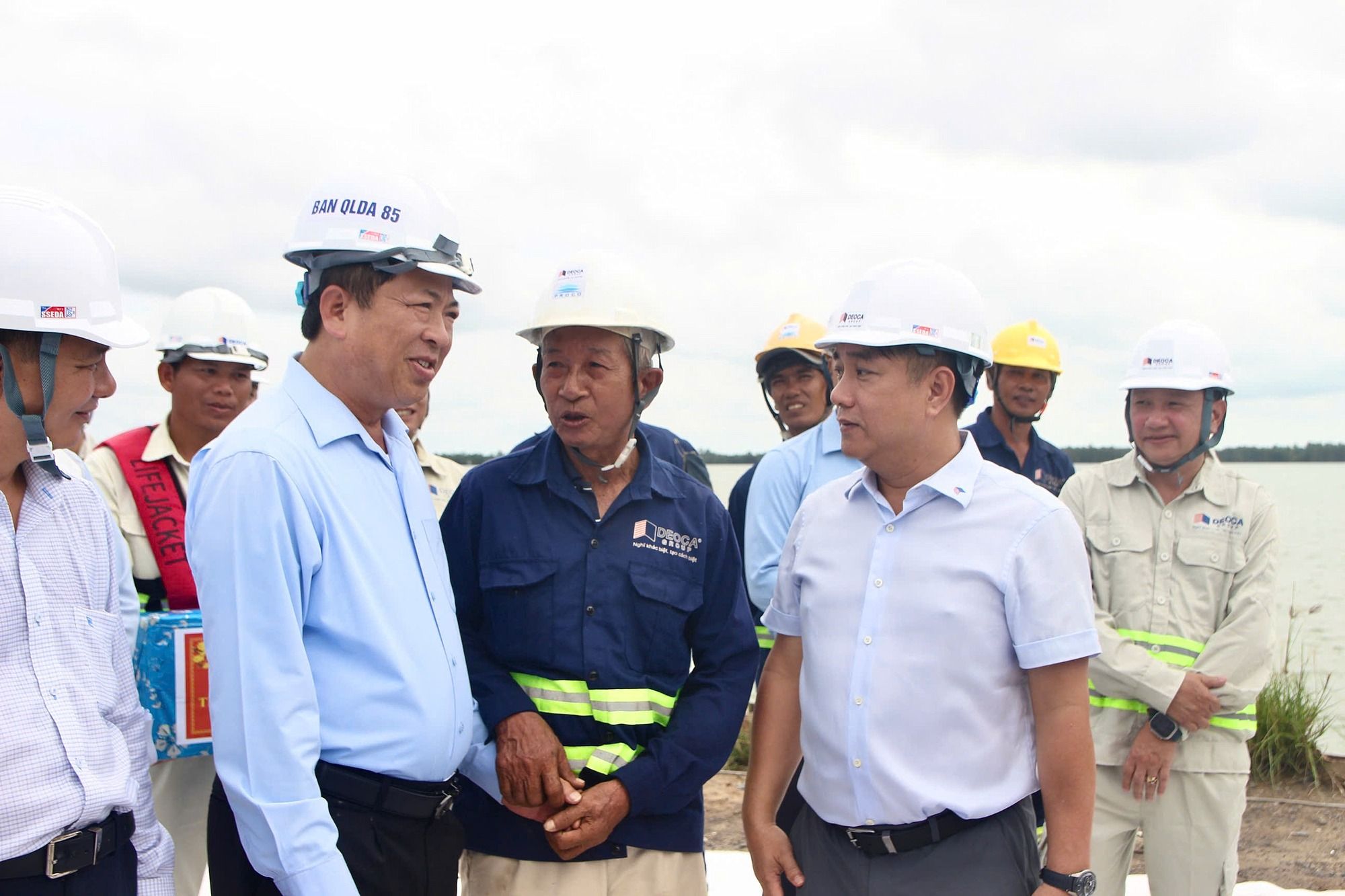
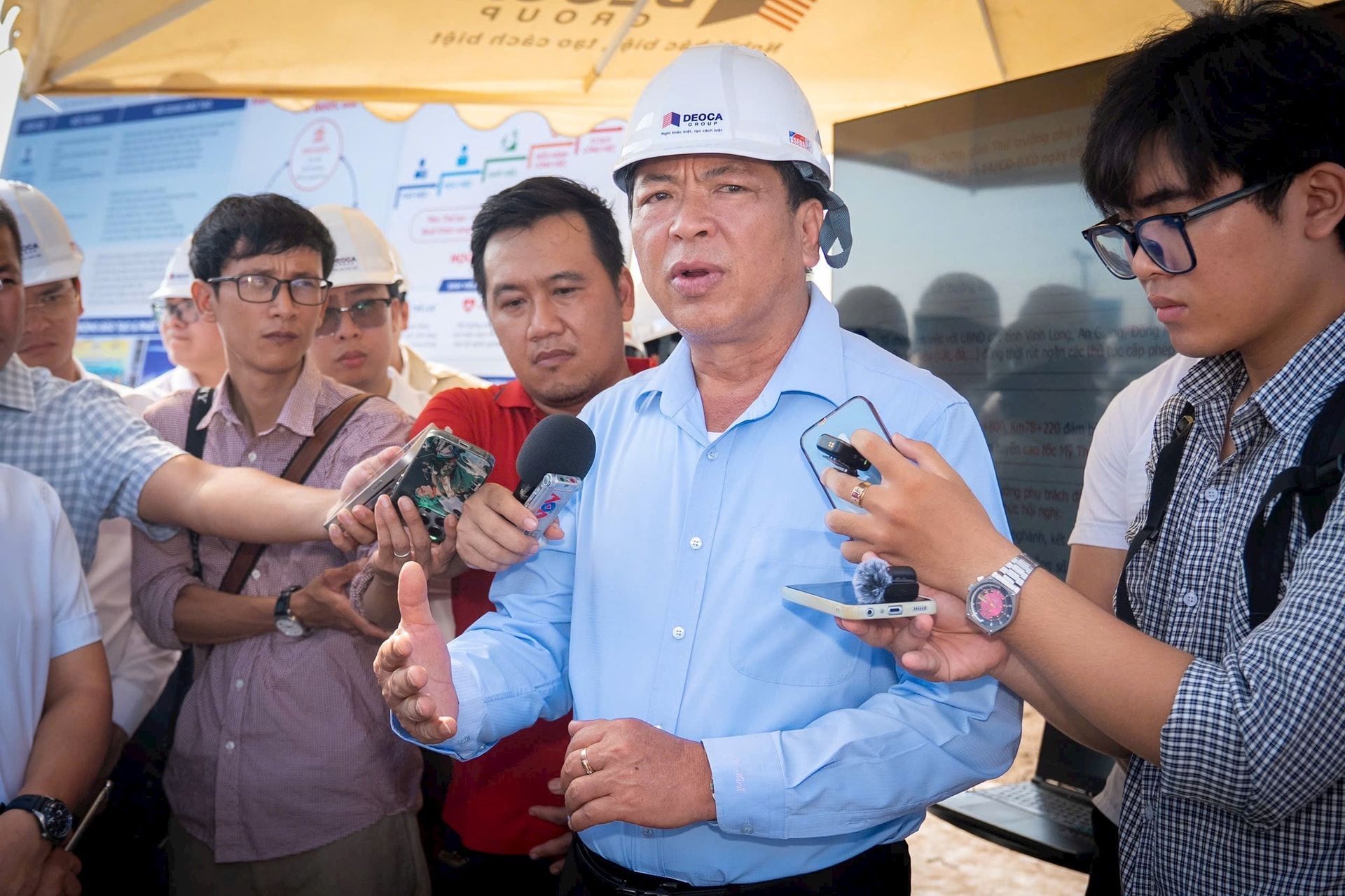
On June 14, Minister of Construction Tran Hong Minh, during a working trip to inspect key transport projects in Vietnam’s southern region, visited the progress of the Dai Ngai 1 Bridge under the Dai Ngai Bridge project on National Route 60. The minister said the project is of special significance for the economic and social development of the Mekong Delta and praised the investor and joint-venture contractors for overcoming challenges related to geology, hydrology, and material supply to maintain momentum.
The minister assessed that many key items have advanced positively. Approaches, piers, end piers, and the two-end spans were reported as basically complete or on schedule, creating a basis to accelerate overall progress. He requested that the project units continue mobilizing resources, studying technical solutions, and organizing construction to shorten the overall schedule by about six months, targeting opening the route in 2027.
He also noted that the immediate priority is constructing the exterior piers and the main cable-stayed bridge structure, which require high technical expertise due to complex hydrological conditions. The minister urged continued resource mobilization to speed up execution and to complete the two-end access roads to support construction and connect with Dai Ngai 2, which has already been completed.
Project management reported that the Dai Ngai 1 site is currently mobilizing about 350 engineers and workers with 90 machines and equipment, working across 26 fronts simultaneously. Output to date is approximately 2,289 billion VND, equivalent to more than 63% of the total project volume.
Approach road: The contractor has completed ground stabilization using wick drains, cement-stabilized soil, and fill. The work is currently awaiting settlement in accordance with the design.
Approach spans: For the approach spans from abutment A0 to pier P20 on the Vinh Long side and from pier P27 to abutment A47 on the Can Tho side, 100% of bored piles, pedestals, and Super-T beams have been completed. The deck, pylon bodies, and cap, as well as assembly, are reported as basically finished. The approach spans are expected to be completed in 2026.
Main cable-stayed span (piers P21 to P26): All foundations have been completed. Construction of the pylon bodies and towers is being accelerated, with the tower body expected to be completed by April 2027. Steel girders for the main span are being manufactured in factories, and installation of K0 deck segments is planned to begin in March 2027. Imported stay cables are being produced in parallel to support installation and tensioning on schedule.
The project also states that Vietnamese engineers are leading efforts to master cable-stayed bridge technology.
The Dai Ngai 1 project has total investment of nearly 8,000 billion VND and is managed by the 85 Project Management Board. The overall project covers more than 15 km, crossing Vinh Long and Can Tho, and includes two main components: Dai Ngai 1 and Dai Ngai 2.
Package 15-XL (Dai Ngai 1 and two-end approaches): Valued at about 3,868 billion VND, the package is executed by a contractor consortium led by Deo Ca Group. Construction began in December 2024 and is scheduled to be completed in June 2028 under the contract.
At the time of implementation, the Dai Ngai 1 Bridge featured the longest main span in Vietnam and was the first cable-stayed bridge designed by a domestic consultant. The bridge length exceeds 3.03 km, with a main span longer than 2.56 km and approaches of about 469 m. It is designed as a cable-stayed bridge with a special-grade configuration, with a main span of 210 + 450 + 210 m and two main towers at 110 m tall.
The bridge crosses the Hau River in the Mekong Delta, where conditions include wide floodplains, strong currents, and daily tidal variations. The foundation uses large-diameter bored piles. Each tower pedestal is about 2,000 m2, with concrete volumes of over 9,000 m3 per pedestal, requiring strict technical control.
The minister emphasized that domestic firms have now mastered technology and techniques for large-scale bridges, reducing dependence on foreign expertise. Upon completion, the corridor is expected to strengthen the eastern connection of the Mekong Delta, supporting transport, logistics, ports, and inland waterways, and improving regional linkages from Ho Chi Minh City through Vinh Long and Can Tho to Ca Mau.

Coinbase has launched a High Yield USDC vault within its in-app DeFi lending offering, adding a second lending option that provides exposure to a wider range of collateral assets. The product is powered by Morpho infrastructure and uses vault allocations curated by Steakhouse Financial.