•
•
•
•
•
•
•
•
•
•
•
•
•
•
•
•
•
•
•
•
•
•
•
•
•
•
•
•
•
•
•
•
•
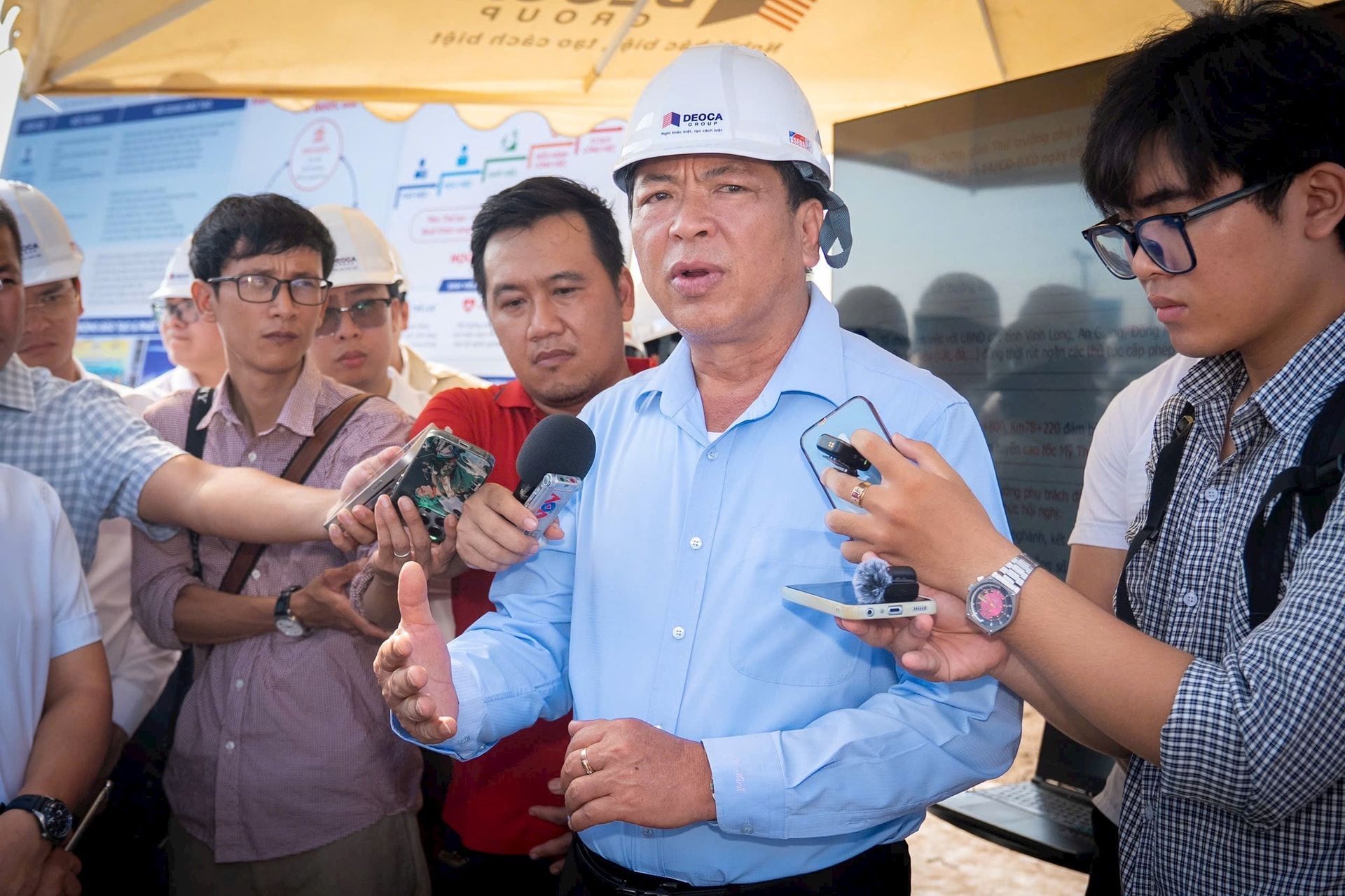
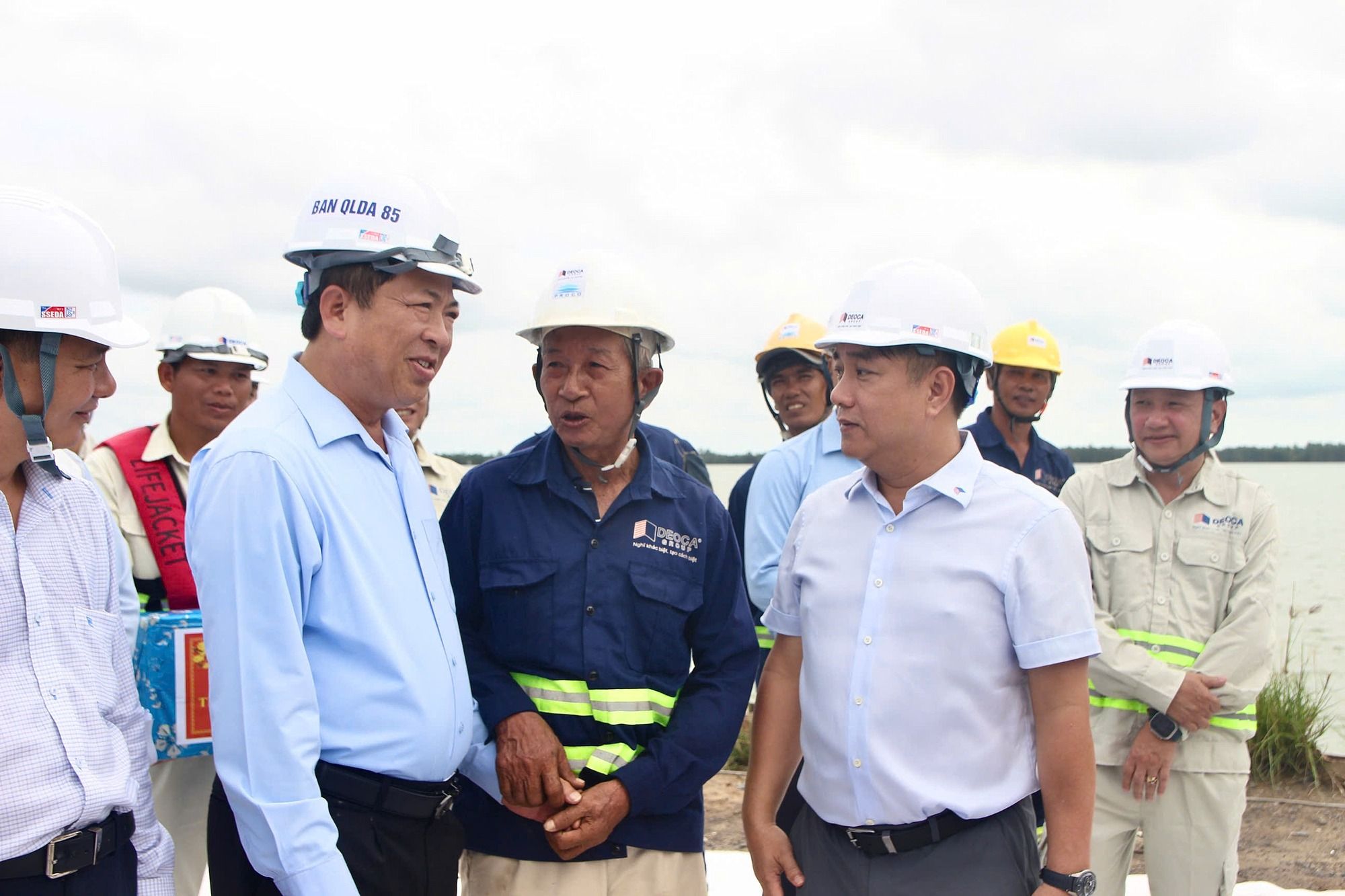
During a field visit on June 14 to the Ho Chi Minh City – Trung Luong – My Thuận Expressway expansion project, Minister of Construction Tran Hong Minh reviewed progress, materials and construction technology, while raising a broader question for the infrastructure sector: sustainable development of enterprises must begin with developing people.
The minister said the challenge is not simply a shortage of workers. More important is how workers choose a working environment that allows them to learn a trade, upgrade skills, develop professionally and build a stable, long-term career path rather than moving between jobs for short-term gains.
He cited cases of workers who left Đèo Cả and later found opportunities elsewhere, only to move again. The minister noted that if workers do not stay with a single employer long enough to accumulate capability, experience and professional credibility, it becomes difficult for any unit to entrust and retain them.
While short-term income can increase when workers “stand on one mountain while looking at another,” the minister warned that habitual job-hopping can erode more than employment. In infrastructure, he said, the greatest loss may be a worker’s professional reputation and the trust employers place in them.
Minister Tran Hong Minh emphasized that infrastructure skills are not built overnight. A machine operator, field engineer or technical staff member matures through continuous practice across multiple projects, taking on progressively more challenging tasks in a disciplined working environment.
He said career choices should not be guided only by a few months’ salary or a single project. Workers should assess whether a workplace offers long-term development, training, advancement and stable employment over many years. He also pointed out that high seasonal pay may bring short-term benefits, but does not guarantee a secure future when a project ends or demand declines.
In such cases, workers may need to seek new jobs, adapt to new environments and restart skill accumulation. By contrast, firms with long-term development strategies can provide specialization, experience accumulation and more stable career prospects.
A model the minister highlighted is the state–school–enterprise linkage being implemented by Đèo Cả Group. Under this approach, the state provides direction, schools supply foundational knowledge, and enterprises provide practical work opportunities—training learners in both skills and professional discipline.
The minister noted that labor in infrastructure is not limited to engineers or managers. It also includes technical workers, machinists, machine operators and on-site personnel who produce daily outputs. Even with advanced machines on modern projects, construction efficiency depends on workers’ skills, responsibility and discipline.
Many skills, he said, cannot be fully learned in a classroom—ranging from operating machinery to maintaining equipment and handling on-site contingencies. From this perspective, Đèo Cả’s “turn the construction site into a classroom” model has been deployed across projects, including the Dong Dang – Tra Linh highway and the Ho Chi Minh City – Trung Luong – Mỹ Thuận expressway expansion.
In this practical-training approach, learners do not only observe machinery and processes; they participate in a real production environment with real schedules, pressures, responsibilities and results.
At Đèo Cả, the practical-training model includes multiple levels, from on-site craftsmen to “real-world” engineers and professional management teams. The core principle is “learn by doing”: selecting personnel from the construction site, training them to perform, and using them to further training.
Workers are trained through probation, on-the-job training, internships and progressive responsibilities. The minister said this builds not only technical skills, but also construction-site resilience, discipline and long-term commitment to the trade.
From a government-management perspective, the minister’s praise of the state–school–enterprise linkage model reflects a new requirement for developing infrastructure human resources. He said the transportation sector cannot rely solely on the existing labor pool. It must proactively develop talent from schools, place learners on construction sites and train them through real practice.
He pointed to the Đèo Cả project widening of the Ho Chi Minh City – Trung Luong – Mỹ Thuận expressway, with total investment of over 36.1 trillion VND, as both a major transport undertaking and a practical environment to test the effectiveness of the training-and-employment model in infrastructure.
The minister said that in an era of large-scale infrastructure development, keeping workers requires broader thinking than wages alone. Income is important, but stability, growth opportunities, skill enhancement and confidence in a career path form the foundation for long-term commitment.
He added that changing jobs is not inherently wrong if done responsibly and with clear direction. However, constant movement for short-term benefits can undermine employment, professional credibility and employer trust—while also reducing opportunities for training, experience accumulation and skill development needed for long-term growth.
The article frames the labor market through the lens of long-term career development, highlighting public–private collaboration and practical education as key to sustaining a robust infrastructure sector.
Coinbase has launched a High Yield USDC vault within its in-app DeFi lending offering, adding a second lending option that provides exposure to a wider range of collateral assets. The product is powered by Morpho infrastructure and uses vault allocations curated by Steakhouse Financial.