•
•
•
•
•
•
•
•
•
•
•
•
•
•
•
•
•
•
•
•
•
•
•
•
•
•
•
•
•
•
•
•
•


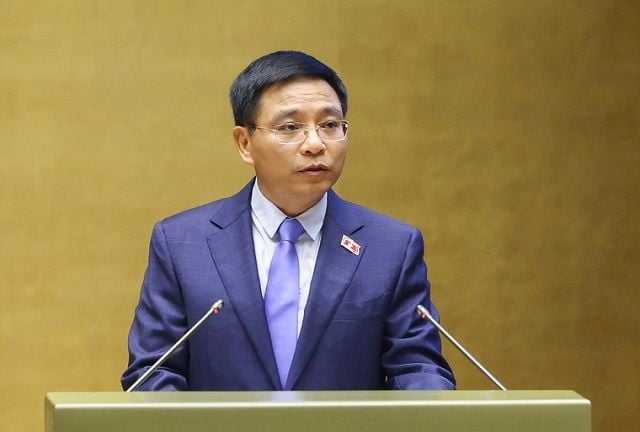
Business conditions and administrative procedures remain numerous, while business associations and the enterprise community continue to raise concerns. Deputy Prime Minister Nguyen Van Thang said the Government needs to clearly identify administrative procedures (TTHCs) and unreasonable business conditions, and ensure that any reductions deliver substantive progress. Where issues are specific, they should be separated, analyzed, and assessed individually.
On the morning of 20 April, at the Government Office, Deputy Prime Minister Nguyen Van Thang chaired a meeting with the Ministry of Finance and the State Bank of Vietnam (SBV) to discuss cutting down and simplifying administrative procedures and business conditions. He urged agencies to embrace the spirit of “no excuses of sectoral specificity to avoid reform” and to decentralize TTHCs.
The meeting was attended by leaders from the Ministry of Justice, the Ministry of Interior, the Ministry of Science and Technology, the Ministry of Public Security, the Government Office, and representatives from other ministries and agencies.
Deputy Finance Minister Nguyen Thi Bich Ngoc said that as of 15 April 2026, the Ministry of Finance still had 738 TTHCs in effect across 25 state-management sectors, making it one of the ministries with the largest number of procedures. She noted the scope is broad and transaction frequency is high, directly affecting the operation of people and businesses.
Reduction targets for business sectors
Reduction targets for TTHCs
Reduction targets for business conditions
The Ministry of Finance also said some specialized TTHCs do not have decentralization conditions for local authorities due to centralized management, high professional standards, or the lack of equivalent local organizations. It proposed excluding these specialized TTHCs without decentralization conditions from the total number used to calculate decentralization targets.
The SBV outlined its 2026 plan, including 93 procedures to be cut, 734 days of time savings, and 3.567 billion dong in cost reductions. Compared with 2024, the SBV reported that cost reductions increased by more than 52%.
For 2025, the SBV said it reviewed and cut all 260 nonessential investment conditions, achieving 100%.
At the meeting, MoF and SBV also cited implementation constraints, including that the rate of decentralization by ministry is up to 30%. The Ministry of Finance reported 33.29% decentralization, while the SBV reported 48.51%. Participants noted that the finance and banking sector’s specificity makes decentralization difficult.
Recommendations from participants emphasized the need for bold changes in management approach and higher professional ethics among civil servants. They also noted that even when procedures are simplified, delays can still occur if implementers do not perform well. Participants further urged accelerating the adoption of science and technology to reduce direct contact between officials and citizens when executing TTHCs.
In concluding the meeting, Deputy Prime Minister Nguyen Van Thang appreciated the efforts and determination of the ministries—especially the MoF and SBV—in cutting down TTHCs and business conditions, and in reducing sectors with investment conditions in recent years, particularly in 2025.
He said, however, that based on reports and feedback and in line with central directives, the results still have limitations. The main issue identified is the low level of decentralization and delegation of TTHCs, and that reductions in some procedures have not yet been substantive.
The Deputy Prime Minister requested the MoF and SBV to assume direct and comprehensive responsibility before the Government and Prime Minister. They were asked to promptly review options and embody the spirit of “no excuses for sectoral specificity” for reform and decentralization of TTHCs. Specifically, the MoF and SBV were tasked to:
The Ministers of Finance and the SBV Governor were also urged to aggressively digitize records and results of TTHC processing and maximize reuse of digitized data. By end-2026, the targets set were:
Deputy Prime Minister Nguyen Van Thang asked the Ministry of Justice to study and incorporate reasonable recommendations from SBV and MoF and report to the Prime Minister.
Authorities will continue engaging with associations and enterprises to collect feedback and hold further review meetings, with the stance to decisively cut unnecessary TTHCs and business conditions.
Source attribution: Nhật Quang; FILI; time stamp 14:10 20/04/2026.






Premium gym chains are entering a “golden era” that is ending or already in decline, as rising operating costs collide with shifting consumer preferences toward more flexible, community-based ways to exercise. Long-term memberships are shrinking, margins are pressured by higher rents and facility expenses, and competition from smaller, more personalized…