•
•
•
•
•
•
•
•
•
•
•
•
•
•
•
•
•
•
•
•
•
•
•
•
•
•
•
•
•
•
•
•
•


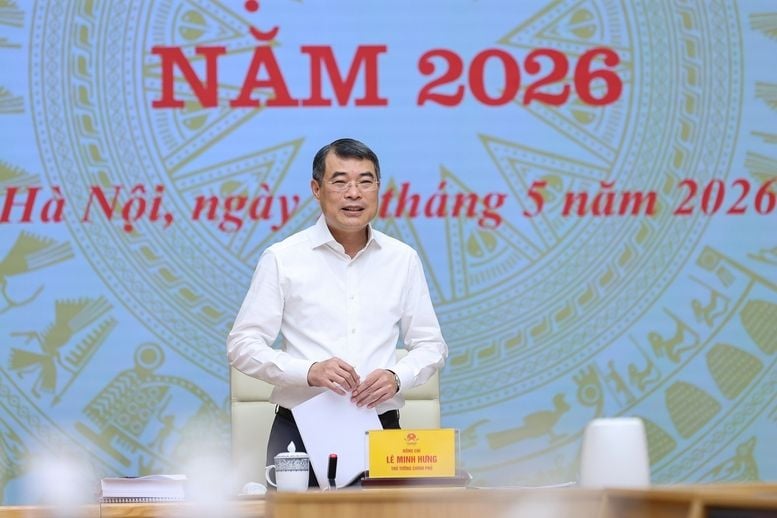
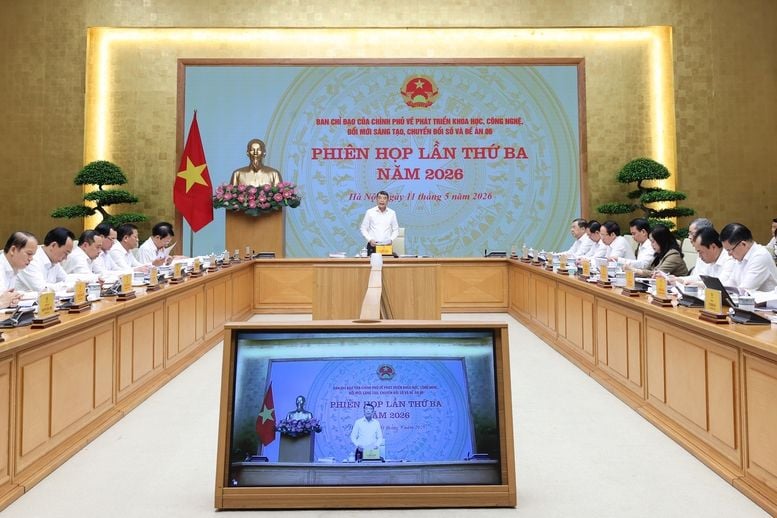
Prime Minister Le Minh Hung said developing strategic technology should be grounded in solving major national problems rather than chasing trends, and called for a shift from dispersed research to procurement tied to concrete products, defined markets, dedicated financing and tightly managed risk.
Speaking at the Government’s Steering Committee meeting on scientific and technological development, innovation, digital transformation and Project 06 on May 11, the Prime Minister said key mechanisms—particularly sandbox testing and procurement—are either missing or not yet clear.
At the meeting, the Government reviewed progress on policy and governance, including five laws passed by the National Assembly: the Data Security Law, the Post Law, amendments to the Radio Frequency Law, amendments to the Measurement Law, and the Telecommunications Law. The report also cited decrees and other legal documents, along with consolidation of data and digital transformation policies.
On implementation, the report stated that 27.7 million new model citizen identity cards have been issued, more than 70.2 million electronic identity accounts have been activated, and the VNeID platform provides 50 utilities. Other figures included 20.2 million driver’s licenses, 7.4 million vehicle registrations, 26.4 million health insurance cards, and authentication of more than 156 million bank customer records. The digitization program has attracted more than 1.6 million learners.
In science, technology, innovation and digital transformation, the report said 10 groups of strategic technologies have been adjusted or approved and 30 strategic technology products have been identified. International publications rose by 11.3%, 2,441 standards were reviewed, and revenue in the digital technology sector in April 2026 was estimated at USD 24 billion.
The Prime Minister’s report highlighted connectivity gains: 3G and 4G networks cover over 99% of the population, while 5G coverage reached 91.9% and is expected to reach 97% by the end of 2026. Mobile Internet speed ranked 11th out of 104 countries, and fixed Internet ranked 12th out of 154.
Despite the results, the Prime Minister said significant unfinished tasks remain. Institutional, regulatory and policy frameworks were described as fragmented and overlapping. The sandbox and procurement mechanisms were again cited as incomplete or unclear, while data connectivity and data sharing were reported to be slow.
The report noted that only 201 out of 794 administrative procedures have been revised to replace paper records with data, equivalent to 25.31% completion.
Additional deficiencies were identified in strategic and core technology development, core digital infrastructure, cybersecurity, equipment, high-quality human resources and incentive mechanisms. The Prime Minister also called for stronger discipline, order and cross-sector coordination.
The Prime Minister said heads of ministries and localities must take direct responsibility for outcomes, with performance assessed against the results of Resolution 57 and Project 06 starting in 2026. He stressed that agencies should lead effectively rather than follow procedures without delivering results.
For targets, he said overdue tasks must be fully completed within May 2026 and no new overdue tasks should be allowed.
He reiterated the direction for 2026: develop robust strategic technology with concrete outputs, strengthen the substantive “3-nodes” cooperation model with tangible results, and shift from dispersed research to procurement based on big problems—supported by specialized financing and controlled risk.
The Prime Minister asked the Ministry of Science and Technology, in coordination with the Ministry of Finance and other agencies, to build a procurement and task-assignment mechanism with results-based acceptance for scientific and technological products, innovation and digital transformation. Reporting was requested in July 2026, alongside setting economic-technical norms and pricing mechanisms, including procurement for internal software, digital services and data by June 2026.
For Project 06 and strategic technology development, the Prime Minister tasked the Ministry of Public Security with systematizing tasks and focusing on core work.
The Ministry of Science and Technology was assigned to lead guidance on defining major problems and strategic technologies based on each ministry, agency and locality’s potential and strengths by June 2026. It was also tasked to review and propose upgrades to key laboratories serving strategic technology by July 2026, and to establish criteria for classifying strategic technology products, off-the-shelf technology products and conventional applications.
The Prime Minister required the Ministry of Public Security to bring the National Data Center into exploitation promptly, provide infrastructure for ministries and localities, and complete this by June 2026. He also asked the Ministry of Science and Technology to finalize the national digital architecture and report to him by mid-June, while the Ministries of Industry and Trade and Defense were asked to address and fix nationwide infrastructure weaknesses.
Other sectoral ministries—especially Industry and Trade, Agriculture and Environment, Health and Construction—were urged to urgently develop lists of strategic technology products, identify major problems and guide product development, with completion no later than May 2026.
The Prime Minister specifically highlighted duties of the Ministry of Science and Technology and the Ministry of Construction to develop standards for high-speed rail.
He asked ministries to review options for decentralization, reducing and simplifying administrative procedures and business conditions already reported for implementation, with completion by May 2026.
Immediately after the meeting, ministries and local authorities were instructed to review and update implementation plans, clearly defining tasks to be completed monthly, quarterly and yearly according to a schedule, and to report difficulties or obstacles beyond their authority promptly.
The Prime Minister also directed that the list of 10 new groups of strategic technologies be officially published at 12:04 on 06/05/2026.
The Prime Minister called for prioritizing resources and increasing the share of expenditures on strategic technology development and core technologies, and asked ministries to issue the list of strategic technologies by April 2026.

Premium gym chains are entering a “golden era” that is ending or already in decline, as rising operating costs collide with shifting consumer preferences toward more flexible, community-based ways to exercise. Long-term memberships are shrinking, margins are pressured by higher rents and facility expenses, and competition from smaller, more personalized…